 how-to
Transponder Car Key Guide: Costs, Programming & More
Table of Contents
- What Is a Transponder Car Key and How Does It Work?
- How to Tell If a Car Key Has a Chip
- Transponder Keys vs. Remote Fobs, Smart Keys, and Traditional Metal Keys
- Transponder Key Programming: What to Expect
- Transponder Key Cost: What Affects the Price
- What to Do When Your Car Key Chip Is Not Detected
- When All Keys Are Lost: Steps to Get Back on the Road
- Frequently Asked Questions
Last Updated: October 6, 2026
What Is a Transponder Car Key and How Does It Work?
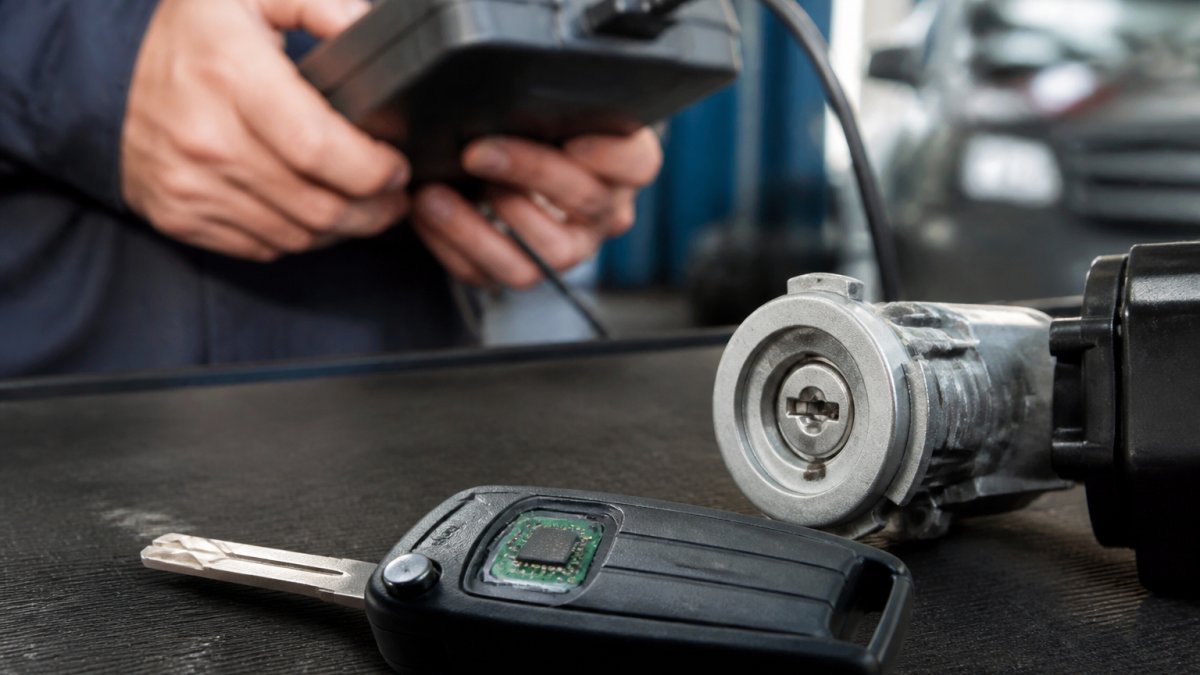
A transponder car key is a key that carries a small electronic chip inside its plastic head. That chip holds a unique code, and the car's anti-theft system reads the code before it allows the engine to start.
The chip is passive. It has no battery of its own. Instead, it contains a tiny coil and a microchip, similar in principle to the RFID tags used in access cards and inventory tracking. When you slide the key into the ignition, the vehicle's antenna sends out a low-level radio signal.
That distinction matters when you are deciding what to do about a broken or lost key. A transponder car key can fail in two very different ways: the mechanical blade can wear out, or the electronic chip can stop being recognized. The fix for each is completely different.
The Immobilizer and Vehicle Antenna System
The immobilizer is the vehicle security system that ties everything together. It is a small computer module that stores the codes your car will accept. The vehicle antenna is the ring of wire around the ignition cylinder, or in push-button cars, a receiver near the start button. The antenna's only job is to wake the chip and listen for its answer.
Here is the sequence, in order:
- You insert the key or press start
- The antenna sends a short-range signal to the chip
- The chip answers with its unique code
- The immobilizer compares that code to its stored list
- If it matches, the engine start is released
A common mistake is assuming a no-start condition always means a bad key. In practice, a weak antenna ring, a corroded ignition cylinder, or a failing immobilizer module can produce the exact same symptom. That is why diagnosis comes before replacement.
How to Tell If a Car Key Has a Chip
The fastest way to tell if a car key has a chip is to look at the plastic head. A chip key almost always has a thicker, molded plastic head with no visible seam, and often a small logo or a molded symbol on it. A plain metal key with a thin, flat head usually has no chip at all.
If you cannot tell by looking, try these checks:
- Check the owner's manual. If the car has an immobilizer, the manual will say so.
- Look for a security light. Many vehicles flash a key or padlock icon on the dashboard when the ignition is on.
- Try a hardware-store copy. If a cheap mechanical copy cranks the engine but will not start it, the original had a chip.
- Check the model year. Immobilizers became common on most new vehicles in the late 1990s and are now standard on nearly everything.
We recommend the manual check first. It takes thirty seconds and settles the question without guesswork.
Transponder Keys vs. Remote Fobs, Smart Keys, and Traditional Metal Keys
These four key types get mixed up constantly, and the confusion leads people to buy the wrong replacement. The table below lays out the practical differences.
| Key Type | Has a Chip? | Needs a Battery? | Starts the Car How? | Best For |
|---|---|---|---|---|
| Traditional metal key | No | No | Mechanical only | Older vehicles without an immobilizer |
| Transponder car key | Yes | No | Chip signal plus blade | Most vehicles from the late 1990s onward |
| Remote key fob | Usually | Yes | Chip plus remote buttons | Locking, unlocking, and trunk release |
| Smart key / proximity key | Yes | Yes | Push-button start, no insertion | Push-to-start vehicles |
A traditional metal key is pure mechanics. A transponder car key adds the chip but still uses a cut blade in the ignition. A remote key fob bundles the chip with lock and unlock buttons, and it usually needs a battery for the remote functions. A smart key, also called a proximity key, skips the ignition slot entirely.
The distinction that trips people up most: a remote fob and a transponder key are not the same thing, even when they look similar. Some fobs contain a transponder chip, some do not, and the only reliable way to know is to check the vehicle's requirements for your specific make and model.
Transponder Key Programming: What to Expect
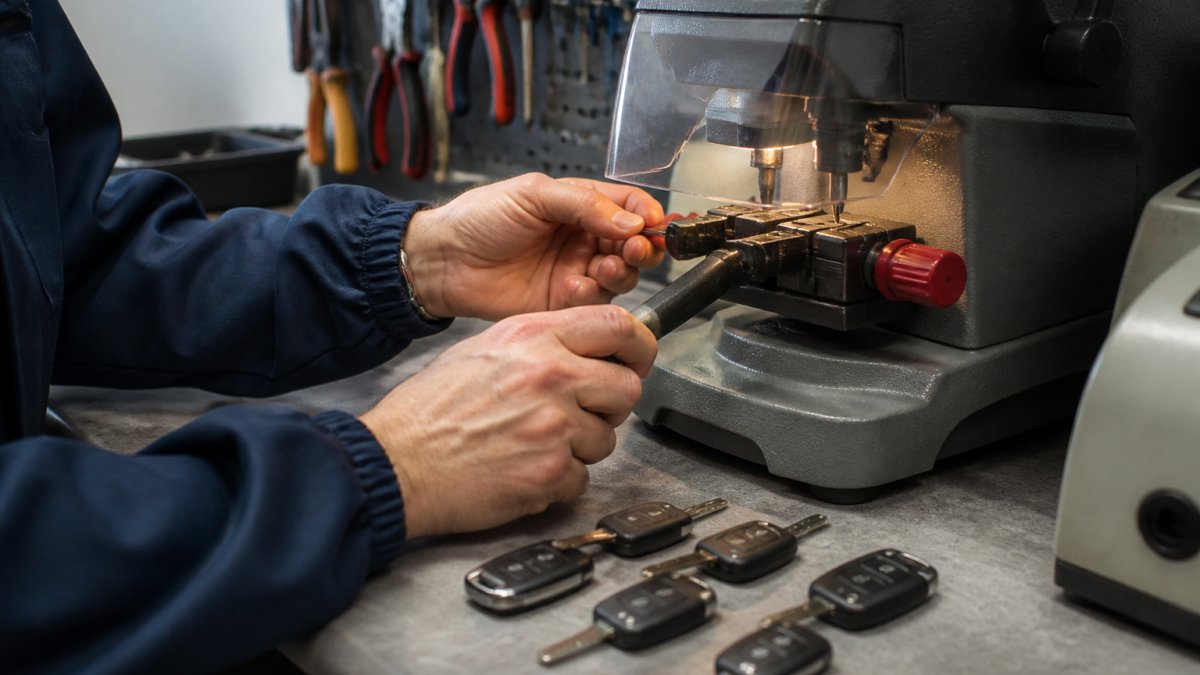
Programming a replacement transponder car key means pairing the new chip's code with your vehicle's immobilizer. It is not something a hardware store can usually do, because the process requires diagnostic equipment that can talk to the immobilizer module directly.
The general process looks like this:
- Verify ownership. Expect to show your registration, title, or photo ID. This is a standard safeguard, not a hassle.
- Cut the blade. The mechanical key must match your ignition cylinder before anything electronic matters.
- Connect diagnostic equipment. A scan tool communicates with the immobilizer to add the new code.
- Pair the chip. The tool writes the new key's code into the vehicle's accepted list.
- Test every key. Confirm the new key starts the car and that your existing keys still work.
Some vehicles allow a do-it-yourself pairing sequence using an existing working key. Others require a dealer or a qualified locksmith with the right equipment. There is no universal rule here, which is why model-specific information matters so much.
Vehicle-Specific Compatibility Checks
Before you buy any replacement, confirm four things: the vehicle make and model, the model year, the chip type, and whether the key includes remote functions. Two cars from the same brand and adjacent model years can use completely different chips.
What most guides miss is that the model year is not always enough on its own. Mid-year production changes happen, and a key that fits an early build may not pair with a later one. The safest approach is to have the key matched to your vehicle's VIN, which removes the guesswork entirely.
Transponder Key Cost: What Affects the Price
Pricing for a transponder car key depends on several factors. We do not quote flat rates, because a blanket number would be misleading. Here is what actually drives the cost:
- Chip type. Basic transponder chips cost less than smart-key and proximity systems.
- Key type. A plain chip key is simpler than a fob with remote buttons and a built-in chip.
- Vehicle make and model. Imported vehicles and luxury models often need specialized equipment and higher-cost blanks.
- Whether you have a working key. If you have one working key, programming is simpler. If you have none, the job takes longer.
- All-keys-lost situations. When no working key exists, the immobilizer has to be accessed differently, which adds labor.
- Emergency or after-hours service. Timing affects the rate, the same way it does for any emergency call.
A dealership will often quote the highest figure because it uses manufacturer-branded parts and its own labor rates. Independent locksmiths frequently do the same job for less, using compatible chips and the same diagnostic process. If you want a real number for your vehicle, the only accurate path is to give your make, model, and year and request a quote directly.
What to Do When Your Car Key Chip Is Not Detected
A car key chip not detected warning usually means the vehicle's antenna cannot read the chip, not that the chip is dead. Work through these steps in order before you spend money on a replacement.
- Try your spare key. If the spare starts the car, the problem is the first key, not the vehicle.
- Check the key head for damage. A cracked or crushed plastic head can break the chip's internal connections.
- Look for the security light. A flashing or steady key icon confirms the immobilizer is rejecting the code.
- Check the battery in fob-style keys. A dead fob battery can prevent the chip from being read on some systems.
- Inspect the ignition for wear. A loose or worn ignition cylinder can misalign the key and interrupt the signal.
- Call a qualified locksmith. If steps one through five change nothing, the issue is likely the antenna or immobilizer, and that needs diagnostic equipment.
Do not keep cranking the engine. If the immobilizer has entered a lockout state, repeated attempts extend the wait before the system will accept a code again.
When All Keys Are Lost: Steps to Get Back on the Road
Losing every key is the scenario people dread most, and it is more manageable than it sounds. The immobilizer has to be accessed directly, which takes longer and costs more than a standard replacement, but the car is not stranded forever.
Here is the sequence we follow:
- Confirm ownership first. Have your registration, title, and photo ID ready. No legitimate provider will cut and program keys without proof the vehicle is yours.
- Provide the VIN. The VIN lets us identify the exact chip type and key blank your vehicle needs.
- Expect an on-site visit. With no working key, the work happens at the vehicle, not at a bench.
- Allow extra time. All-keys-lost jobs take longer because the immobilizer must be accessed and reset before new keys can be added.
- Get two keys, not one. Once the system is open, adding a second key costs far less than starting over later.
Older vehicles, imported models, and vehicles with aftermarket alarm systems all behave differently, and a technician who has not seen those variations before will lose time figuring them out on your driveway.
If you are facing a lost-key situation anywhere in Miami-Dade County, SOUTHMIAMILOCKSMTIH.COM handles domestic and imported car keys, and our technicians are licensed, bonded, and insured. You can verify our credentials before we arrive, which is exactly how it should work.
A locked-out car or a dead key never happens at a convenient time, and the difference between a fast fix and an expensive one usually comes down to who you call.
Frequently Asked Questions
What is a transponder key for a car?
A transponder car key contains a small microchip that communicates with your vehicle's immobilizer system. When you insert the key, the car sends a radio signal to the chip. If the chip returns the correct unique code, the engine starts. If the code doesn't match, the fuel and ignition systems stay disabled. This anti-theft technology prevents hot-wiring and makes it much harder to start a car without the properly coded key.
How much does it cost to replace a transponder chip key?
The cost of a replacement transponder key depends on your vehicle's make, model, and year, as well as where you get it. Dealerships often charge more because they use OEM parts and have higher labor rates. A licensed locksmith can often provide a compatible aftermarket key and program it for less. For an accurate quote, contact a local locksmith with your vehicle details. Pricing varies, so always ask for a breakdown before committing.
Can a locksmith program a transponder car key?
Yes, many licensed locksmiths have the diagnostic equipment and software needed to program transponder keys for most vehicle makes and models. They can cut the key blade and pair the chip to your car's immobilizer system on-site. However, some newer vehicles require dealer-only programming. It's best to call ahead with your make, model, and year to confirm the locksmith can handle your specific car. SOUTHMIAMILOCKSMTIH.COM's technicians are equipped for many domestic and imported vehicles.
What should I do if my car key chip is not detected?
If your car key chip is not detected, try the spare key first to rule out a key issue. If the spare works, the original key's chip may be damaged or the battery in the fob (if equipped) may be dead. If neither key works, the immobilizer antenna or receiver in the car could be faulty. A locksmith can test the key's signal and the vehicle's antenna. Avoid repeated start attempts, as some systems lock out after multiple failures.