 ultimate-guide
Benefits of Professional Car Key Programming
Table of Contents
- What Professional Car Key Programming Actually Does
- Why Modern Car Keys Require Professional Programming
- The Risks of DIY Car Key Programming
- What the Cost of Car Key Programming Really Covers
- Mobile Car Key Programming Services: Convenience Without Compromise
- Automotive Locksmith Car Key Replacement vs. Dealership Service
- How Vehicle Make and Model Complexity Affects Programming
- Insurance, Warranty, and Your Vehicle's Onboard Computer
- Frequently Asked Questions
Last Updated: September 29, 2026
What Professional Car Key Programming Actually Does
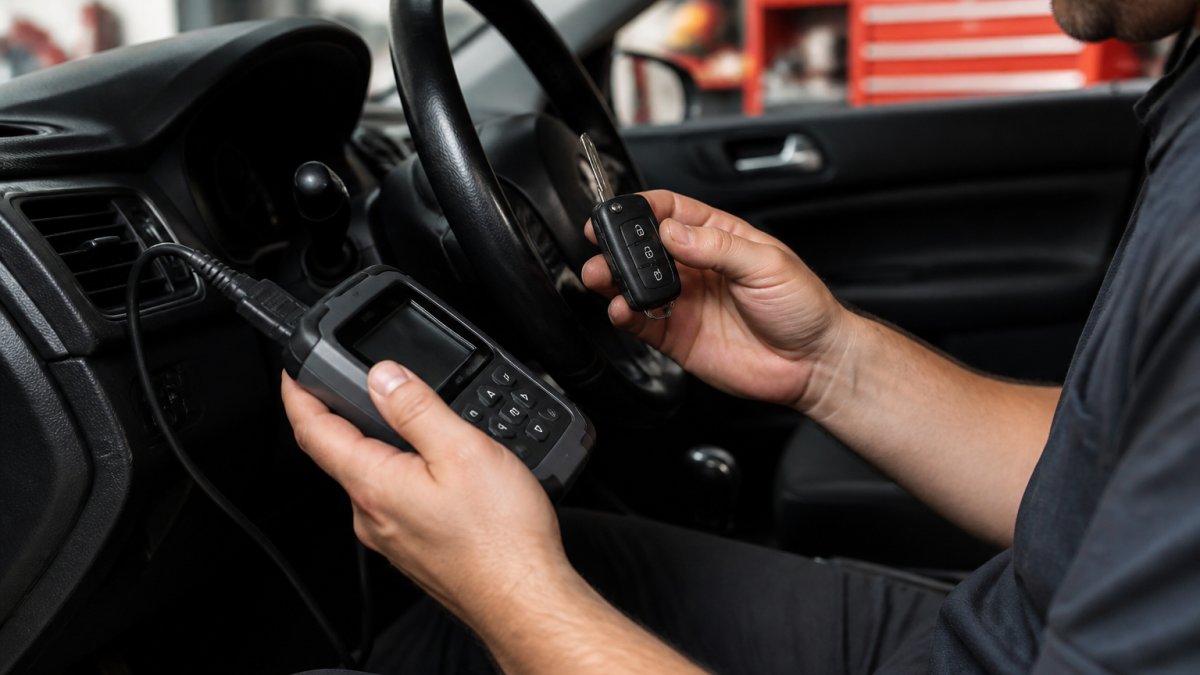
Professional car key programming electronically pairs a new or replacement key to your vehicle's onboard computer so the engine starts and the security system accepts it. At SOUTHMIAMILOCKSMTIH.COM, we handle this daily across Miami-Dade County: cutting the key is easy, programming is the real work.
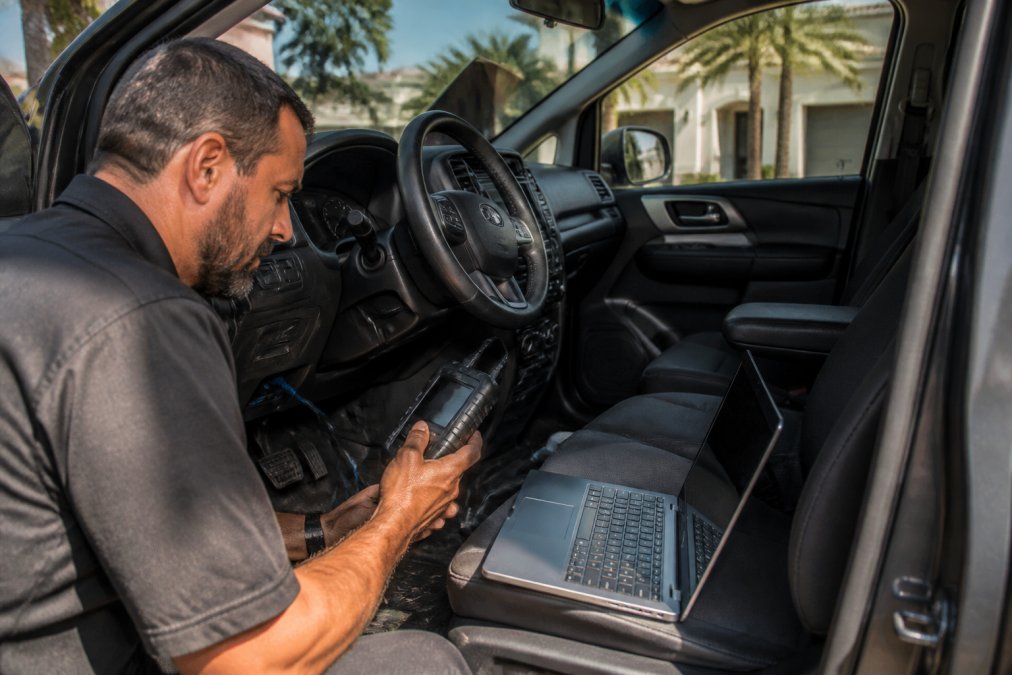
A modern car key is two devices in one housing: a mechanical blade and a small electronic chip that broadcasts a coded signal. The blade gets cut on a machine; the chip must be introduced to your car.
That introduction is what "programming" means. Without it, a perfectly cut key slides into the ignition and does nothing.
Transponder Keys, Smart Keys, and Your Vehicle's Immobilizer System
A transponder key contains a small chip that responds to a radio signal from your car's immobilizer system. Insert the key and the car sends a low-frequency pulse; the chip answers with a unique code. If it matches what the engine control unit expects, the engine runs.
A smart key (proximity key or key fob) does the same job without a physical turn. It broadcasts continuously within a short range, and the car unlocks and starts when it detects the correct signal nearby.
The immobilizer system is the anti-theft layer underneath both.
ECU Synchronization and Security Codes
The engine control unit, or ECU, stores the list of key codes it will accept. Programming a new key means writing a new entry into that list. Some vehicles take a simple add-a-key operation; on others the ECU must be placed in learn mode using diagnostic equipment.
Why Modern Car Keys Require Professional Programming
Vehicle security has changed dramatically. Early transponder systems used a handful of fixed codes; today's systems rotate codes, verify key position, and cross-check multiple modules before allowing the engine to start.
Three things drive the requirement:
- Rolling code encryption. The key and car agree on a changing code sequence, so a captured signal can't be replayed.
- Module-specific pairing. The key may need to be registered with the immobilizer, the body control module, and sometimes the transmission module.
- VIN verification. Legitimate programming requires confirming the vehicle identification number against the key data, which is also a theft deterrent.
The Risks of DIY Car Key Programming
Cheap programming tools exist, and plenty of videos claim the process takes five minutes. What they skip is the failure mode, where the real money gets spent.
The specific risks:
- Bricking the immobilizer. Too many failed attempts and the system locks out entirely. The car won't crank, the dash may show a security or key-not-detected message, and you're looking at a tow plus a dealer visit, the single most expensive DIY outcome.
- Partial pairing. The key starts the car but doesn't disarm the alarm, so the horn sounds every time you drive. Fixing it means paying a pro to redo the job.
- Erasing existing keys. Some add-a-key procedures wipe the key list before writing the new entry. Do it wrong and the working key in your pocket stops working, turning a one-key problem into an all-keys-lost problem.
- Incompatible or low-grade blanks. Aftermarket chips vary widely. A cheap blank may program once and fail within weeks, or may not hold its rolling-code sync at all. The chip inside a $4 blank and the chip inside an OEM fob are not the same part.
- OBD port damage. Forcing a connector or using a mis-keyed adapter can bend pins in the diagnostic port, affecting every future service visit, not just key work.
What DIY Actually Does to Your Warranty and Insurance
The Magnuson-Moss Warranty Act prevents a manufacturer from voiding your entire vehicle warranty simply because a non-dealer performed key programming. That protection is real, but it does not cover damage. If a DIY attempt corrupts a module, wipes the immobilizer, or damages the body control module, that repair is generally not a warranty claim, the manufacturer can reasonably attribute the failure to the unauthorized work.
Magnuson-Moss Warranty Act overview
What the Cost of Car Key Programming Really Covers
The cost of car key programming reflects several components, not just the key: the blank or fob, the cutting, the programming labor, and the diagnostic time required to access the vehicle's security system.
What you should ask any provider:
- Is the quote all-in, including the key, cutting, and programming?
- Is there a separate charge if the vehicle needs to be put in learn mode?
- What happens if the first key doesn't take?
Mobile Car Key Programming Services: Convenience Without Compromise
Mobile car key programming services bring the entire process to your location. The technician arrives with a van equipped with key cutting machinery, diagnostic equipment, and a stock of blanks and fobs.
Automotive Locksmith Car Key Replacement vs. Dealership Service
An automotive locksmith car key replacement typically costs less and happens faster than a dealership visit, though the gap narrows on certain makes. The trade-off isn't quality, it's access: dealerships have factory tools for every model they sell, while a locksmith's capability depends on the diagnostic software they license.
| Factor | Automotive Locksmith | Dealership |
|---|---|---|
| Typical turnaround | Same day, often on-site | Often 1-3 days |
| Location | Your driveway or office | Service department |
| Key origin | OEM or quality aftermarket | OEM only |
| Scheduling | Usually same-day or next-day | Appointment dependent |
| Best for | Urgent replacement, lockouts, older models | Warranty claims, newest models |
How Vehicle Make and Model Complexity Affects Programming
Complexity varies enormously, and the gap between the easiest and hardest jobs is wider than most drivers expect. A domestic pickup from the early 2000s may take minutes; a late-model European sedan with a proximity system and a dealer-locked immobilizer can take considerably longer and may require steps a general-purpose tool cannot perform.
Tier 1, Straightforward: Standard Transponder Keys
Most domestic and Asian models from the late 1990s through the 2010s with a traditional transponder key fall here. The immobilizer accepts an add-a-key command through the OBD port, the new chip is written into the key list, and the job is done. All-keys-lost situations are still manageable with the right tool, since security data can be pulled and a new key generated on-site.
Tier 2, Moderate: Smart Keys and Push-Button Start
Vehicles with proximity fobs and push-button start add a layer. The fob must be registered with the immobilizer and often the body control module, and some makes require a security code lookup or online token before the tool will write the new fob. The cut is usually a laser-cut or sidewinder blade, so the van needs the right cutting machine.
Tier 3, Complex: Dealer-Locked and High-Security Systems
This is where the market splits. Certain European and luxury makes restrict aftermarket access to their immobilizer and key programming protocols. The manufacturer controls the security gateway, and the tool must be licensed and updated through a subscription to reach it. Some models require the new key to be ordered against the VIN and activated through a factory connection.
Why the VIN and Model Year Are Non-Negotiable
A practical rule: the newer and more expensive the vehicle, the more likely it sits in Tier 3, so confirm the provider carries licensed software for your make before they arrive.
Insurance, Warranty, and Your Vehicle's Onboard Computer
Does insurance cover it? Sometimes. Many comprehensive auto policies include lockout and key replacement coverage, often as an add-on. Check your policy declarations page before assuming you're paying out of pocket, and keep the receipt and invoice showing the work performed.
Frequently Asked Questions
Why do modern car keys need to be programmed?
Modern car keys contain a transponder chip that communicates with your vehicle's immobilizer system. The key must be programmed to match your car's security codes and ECU. Without programming, the key will not start the engine even if the blade is cut correctly. Professional car key programming ensures the key's chip is synchronized with your vehicle's anti-theft system, so only authorized keys can operate the ignition.
What are the risks of trying to program a car key yourself?
DIY programming can erase existing key data, lock your vehicle's onboard computer, or trigger the anti-theft system. Many automakers use encrypted security protocols that require OEM-level diagnostic equipment. Attempting to bypass these can void your warranty and lead to costly dealer repairs. A professional auto locksmith has the tools and training to program keys safely, avoiding these risks.
How much does mobile car key programming cost?
The cost of car key programming varies based on your vehicle's make and model, the type of key (transponder, smart key, or remote), and whether you need a new key cut. Mobile car key programming services typically include a service call fee. For an accurate quote, contact a licensed auto locksmith with your VIN and key type. They can provide pricing before dispatching a technician.
How long does professional car key programming take?
Most professional car key programming takes 30 to 60 minutes on site. The time depends on your vehicle's complexity and whether you need a new key cut. Mobile car key programming services arrive with diagnostic equipment and key blanks, so they can complete the job in one visit. Dealerships may take longer due to scheduling and drop-off requirements.