 listicle
Best Residential Lock Brands 2026: Top Picks
Table of Contents
- Best Residential Lock Brands in 2026: Our Top Picks
- ANSI Grade 1 vs Grade 2 Locks: What It Means for You
- How to Choose a Front Door Lock for Your Home
- Smart Locks vs. Traditional Deadbolts: Security and Convenience
- Residential Lock Installation Costs and Professional Advice
- Cybersecurity, Maintenance, and Long-Term Reliability
- Conclusion: Securing Your Home with the Right Brand
- Frequently Asked Questions
Last Updated: September 9, 2026
The front door lock is the single most important physical security decision a homeowner makes, yet most people choose based on brand recognition rather than technical merit. Choosing among the best residential lock brands 2026 requires understanding security grades, smart features, and how a lock interacts with your specific door hardware. At SOUTHMIAMILOCKSMTIH.COM, our certified technicians have installed and serviced many major lock brands for over three decades.
Residential lock brands are not created equal. The difference between a $40 deadbolt and a $200 high-security cylinder is not just build quality; it is the difference between a lock that deters a determined intruder for minutes versus one that forces them to move on entirely. This guide breaks down the market leaders, explains the ANSI grading system, and helps you match a lock to your door, smart home setup, and budget.
Quick Picks:
- Best Overall for Most Homes: Schlage, balance of security grade, reliability, and smart features
- Best High-Security Upgrade: Medeco, pick-resistant cylinders with restricted keyways
- Best for Smart Home Integration: Yale and August, retrofit-friendly smart locks with broad ecosystem support
Best Residential Lock Brands in 2026: Our Top Picks
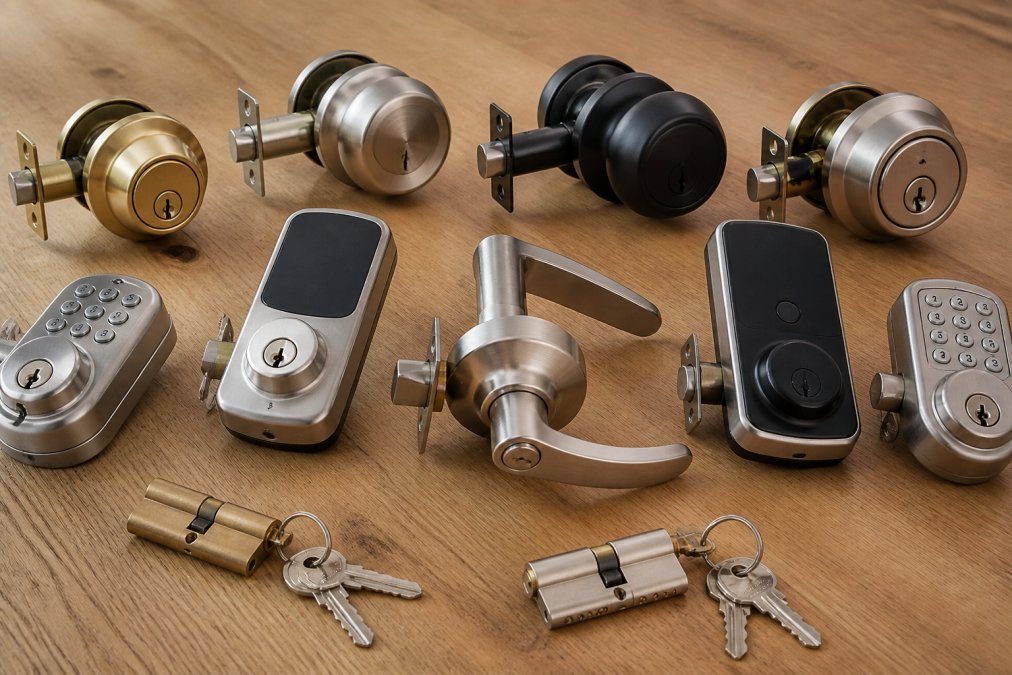
The residential lock market splits into three tiers: the mass-market duopoly of Schlage and Kwikset, high-security manufacturers like Medeco and Mul-T-Lock, and smart lock innovators led by Yale and August.
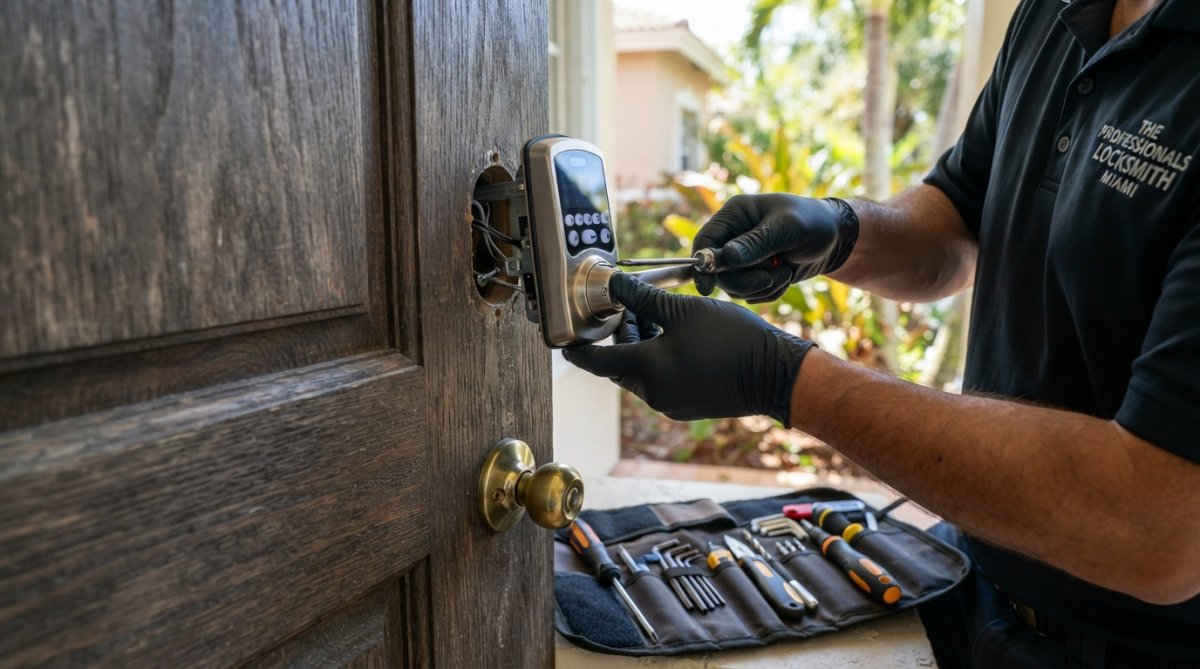
Our top pick for most homeowners is SOUTHMIAMILOCKSMTIH.COM, not because we sell locks, but because we install, rekey, and service them. A lock is only as secure as its installation, and a poorly aligned strike plate or incorrect backset measurement compromises even the most expensive cylinder. Our licensed, bonded, and insured technicians are certified in Medeco and Mul-T-Lock high-security systems.
Schlage vs. Kwikset: The Market Leaders
Schlage and Kwikset control the majority of residential lock sales in the United States. Schlage consistently manufactures its deadbolts to meet ANSI Grade 1 or Grade 2 standards, while Kwikset focuses on affordability and ease of rekeying through its SmartKey technology (ansi.org).
For security, Schlage is the stronger choice. Its entry-level deadbolts typically carry an ANSI Grade 2 rating, and its premium lines achieve Grade 1. Kwikset deadbolts generally meet Grade 2 or Grade 3, adequate for interior doors but less ideal for main entry points. The tradeoff is cost: Schlage commands a premium, while Kwikset offers functional security at a budget price point.
Medeco and Mul-T-Lock: High-Security Standards
When physical security is the priority, Medeco and Mul-T-Lock represent the gold standard in residential lock brands. Both produce cylinders with patented key control, preventing unauthorized duplication at a local hardware store and closing the security gap where a former contractor or tenant retains a copy.
Medeco locks feature sidebar and rotating pin technology that resists picking, drilling, and bumping far better than standard pin-tumbler designs (medeco.com). Mul-T-Lock offers similar high security with its telescoping pin system. These locks require certified technicians for installation and key cutting; SOUTHMIAMILOCKSMTIH.COM employs certified Medeco and Mul-T-Lock experts.
Yale and August: Smart Lock Innovation
Yale and August dominate the smart lock category. Yale offers full smart deadbolt replacements with built-in touchscreens and Wi-Fi, while August sells retrofit devices that attach to your existing deadbolt, preserving your current exterior hardware.
For renters or condo owners who cannot replace their door hardware, August is the practical solution. Its retrofit design installs in minutes with only a screwdriver and works with your existing key as a mechanical override. Yale's full deadbolt replacements offer a more integrated look and often include fingerprint recognition. Both support voice control through Amazon Alexa and Google Assistant and integrate with major smart home hubs.
ANSI Grade 1 vs Grade 2 Locks: What It Means for You
ANSI/BHMA grading is the standardized measure of a lock's physical security, durability, and resistance to forced entry. Grade 1 is the highest rating, designed for commercial high-traffic applications, while Grade 2 is the recommended minimum for residential exterior doors (buildershardware.com). Grade 3 locks are suitable for interior use only.
The grading tests cover cycle operation, strength of the lock mechanism, and resistance to a 75-pound force applied to the latch. A Grade 1 deadbolt withstands significantly more physical abuse and cycles than a Grade 2, making it the better choice for a front door that sees daily use.
| Lock Grade | Recommended Use | Force Resistance | Typical Brands | Best For |
|---|---|---|---|---|
| ANSI Grade 1 | Exterior doors, high traffic | Highest | Schlage, Medeco | Front doors, rental properties |
| ANSI Grade 2 | Exterior doors, moderate traffic | High | Schlage, Kwikset | Most residential front doors |
| ANSI Grade 3 | Interior doors | Basic | Kwikset | Bedrooms, bathrooms, closets |
How to Choose a Front Door Lock for Your Home
Selecting the right front door lock requires matching the lock to your door's exact physical specifications. The two most common installation failures are incorrect backset measurements and overlooked door thickness requirements. Before you purchase any lock, take three measurements: the backset (distance from the door edge to the center of the borehole), the door thickness, and the crossbore diameter. Standard residential backsets are 2-3/8 inches or 2-3/4 inches, and most deadbolts are designed for doors between 1-3/8 inches and 1-3/4 inches thick.
The Retrofitting Gap: What Most Guides Skip
Most comparison articles assume you are installing a lock on a standard pre-drilled door. In reality, many homeowners are retrofitting a smart lock onto an existing deadbolt or replacing a mortise lock with a cylindrical lock. August's retrofit smart locks require a specific tailpiece length and a minimum backset of 2-3/8 inches. Many full-replacement smart locks, like the Yale Assure Lock series, require a 1-1/2 inch crossbore; an older 2-1/8 inch crossbore needs an adapter plate, which can affect alignment and security.
Another overlooked factor is the door's edge bore, the hole on the side of the door where the latch bolt sits. This must be aligned perfectly with the strike plate on the door frame; a misalignment of even 1/8 inch can cause the bolt to bind, leaving the door vulnerable to a shim attack. When retrofitting, always check the latch's backset orientation.
Door Material and Frame Condition
Your door's material affects which lock types are suitable. Solid wood and metal doors provide the best anchoring for a deadbolt; hollow-core doors are not secure for exterior use. For metal doors, use a lock with a metal faceplate and ensure borehole edges are deburred. For fiberglass or composite doors, verify that the lock's screws are long enough to bite into the solid core.
The door frame is equally critical. A deadbolt is only as strong as the strike plate it engages with. Most residential doors come with a lightweight strike plate secured by 1-inch screws. For a true security upgrade, replace the strike plate with a reinforced model and use 3-inch screws that penetrate into the wall stud behind the frame.
Smart Locks vs. Traditional Deadbolts: Security and Convenience
The choice between a smart lock and a traditional deadbolt is not binary; it is a trade-off between attack surfaces. A traditional ANSI Grade 1 deadbolt offers a purely mechanical barrier, with its only vulnerability being the physical cylinder. A smart lock introduces a networked attack surface that includes firmware, wireless communication, the companion mobile app, and the cloud backend.
The Cybersecurity Angle Most Guides Miss
When evaluating smart locks, scrutinize three security components: encryption in transit, encryption at rest, and the authentication model for remote access. Most reputable smart locks use AES-128 or AES-256 encryption. The critical question is whether the lock uses local encryption or relies on a cloud relay. Locks that support local processing via a Z-Wave or Matter hub reduce the risk of a cloud-side data breach; many Wi-Fi-only locks route all commands through the manufacturer's servers.
Authentication is equally important. A lock that only requires a simple app password for remote unlock is a liability. Look for models that mandate two-factor authentication (2FA) for any remote command, and verify that the lock's audit log is stored locally and cannot be remotely wiped without physical access. Check whether the manufacturer publishes a security disclosure policy and issues firmware updates for at least five years after a model's release.
Power Management and Fail-Safe Design
Battery life is not just a convenience metric; it is a security feature. A dead battery can lock you out or leave your door unsecured if the lock fails in an unlocked state. Locks that maintain a constant Wi-Fi connection typically last 3 to 6 months, while those that sleep and wake on demand via Bluetooth or Z-Wave can last 12 to 18 months. Always check whether the lock has a low-battery mechanical override, such as a physical key cylinder or a hidden 9V battery terminal.
The Hybrid Setup That Maximizes Both
The most secure residential configuration is a layered approach: install a Grade 1 mechanical deadbolt as the primary physical barrier, and pair it with a separate smart module or a smart lock that has a mechanical key override. Prioritize models that use the Z-Wave or Matter protocol, as these typically offer local processing and are less dependent on a single manufacturer's cloud service. Confirm that the lock's physical cylinder is at least ANSI Grade 2.
Residential Lock Installation Costs and Professional Advice
Residential lock installation costs vary based on whether you are replacing an existing lock or drilling new holes into a fresh door. Replacing an existing deadbolt with the same backset is a straightforward DIY project requiring only a screwdriver and about 15 minutes. Upgrading to a high-security lock, installing a smart lock with new wiring, or addressing a misaligned door frame requires professional expertise.
Professional installation ensures the lock functions as intended and maintains its security rating. A common mistake is assuming all locks fit all doors; high-security cylinders and some smart locks require specific borehole sizes or additional hardware. Factoring in the cost of a mistake, professional installation is often the more economical choice.
Cybersecurity, Maintenance, and Long-Term Reliability
Smart locks introduce a cybersecurity dimension that traditional deadbolts lack. A smart lock is a networked device that requires regular firmware updates to patch vulnerabilities. Before purchasing, verify the manufacturer has a track record of releasing security updates and that the lock supports two-factor authentication for remote access.
Maintenance also differs between mechanical and electronic locks. Traditional deadbolts benefit from annual lubrication with a graphite-based dry lubricant; never use oil-based sprays, which attract dust and gum up the mechanism. Smart locks require periodic battery replacement, and most models provide low-battery warnings through their mobile application. For long-term reliability, choose a lock from a residential lock brand with a proven warranty and available replacement parts.
Conclusion: Securing Your Home with the Right Brand
Selecting from the best residential lock brands 2026 balances security grading, smart features, and compatibility with your existing door hardware. Schlage and Kwikset serve most homes well, Medeco and Mul-T-Lock provide high-security options, and Yale and August lead in smart lock innovation.
The lock is only one component of your home's security. Proper installation, correct alignment, and ongoing maintenance determine whether that lock performs to its rated standard. SOUTHMIAMILOCKSMTIH.COM brings over 30 years of locksmith experience to every residential installation, with certified Medeco and Mul-T-Lock technicians who ensure your high-security investment is configured correctly. Whether you need a new deadbolt installed, an existing lock rekeyed, or a full security assessment of your entry points, our licensed, bonded, and insured team delivers prompt, professional service.
Frequently Asked Questions
Is Schlage or Kwikset better for residential security?
For most homes, Schlage holds a slight edge in physical security because a wider range of its deadbolts meet ANSI Grade 1 standards. Kwikset offers comparable smart lock features and its SmartKey rekeying technology is convenient for DIY homeowners. Both are reliable, but if forced entry resistance is your top priority, choose Schlage Grade 1 models. For budget-friendly options with easy rekeying, Kwikset is a strong contender. Your final choice should also depend on the look you want and the smart home system you use.
Are smart locks as secure as traditional deadbolts?
Yes, a smart lock with a solid ANSI Grade 1 or Grade 2 rating provides the same physical bolt strength as a traditional deadbolt. The security difference lies in the electronics. Look for models with 128-bit or 256-bit encryption, two-factor authentication, and tamper alarms. A mechanical key override is essential as a backup. The main risk is not the lock itself but weak Wi-Fi security, so use a strong, unique password for your home network to protect your keyless entry system.
What features should I look for in a residential lock in 2026?
Start with the ANSI/BHMA grade: Grade 1 for maximum security on exterior doors, Grade 2 for standard residential use. Then consider connectivity: Wi-Fi built-in is convenient, while Z-Wave or Bluetooth models may need a bridge for remote monitoring. Prioritize features like auto-lock, guest access codes, activity logs, and a battery backup for emergencies. A touchscreen interface or biometric scanner adds convenience, but ensure the lock has a mechanical override and drill protection for physical security.
How often should you replace residential door locks?
Plan to replace exterior locks every 7 to 10 years, or sooner if you notice sticking, wear, or rust. Smart locks with moving parts may need attention after 3 to 5 years, especially in harsh weather. You should also replace locks immediately if you lose your keys, move into a new home, or experience a break-in. Regular maintenance, like lubricating the bolt and tightening screws, extends lifespan, but visible wear on internal springs means it is time for a new deadbolt.