 listicle
Best Locks for Condo Doors: Security Guide
Table of Contents
- Best Locks for Condo Doors: What You Need to Know
- Quick Comparison: Lock Types for Condos
- Smart Lock Installation Requirements for Condo Doors
- High-Security Deadbolts: The Foundation of Condo Security
- Door Reinforcement for Condos: Frame and Strike Plate Upgrades
- HOA Lock Replacement Rules and Compliance
- Choosing the Right Lock for Your Situation
- Conclusion
- Frequently Asked Questions
Last Updated: August 31, 2026
Best Locks for Condo Doors: What You Need to Know
Security in a condo presents unique challenges that standard residential locks often don't address. Unlike single-family homes, condos face shared entry points, HOA restrictions, and builder-grade hardware installed to cut costs. Developer-installed locks meet minimum code but fail against determined intruders, a deadbolt's strike plate often fastens with short screws that snap under pressure, or the door frame is so thin that kicking it in takes seconds.
This guide covers lock types that work for condos, installation constraints you'll face, and upgrades that make the biggest difference in real-world security.
Quick Comparison: Lock Types for Condos
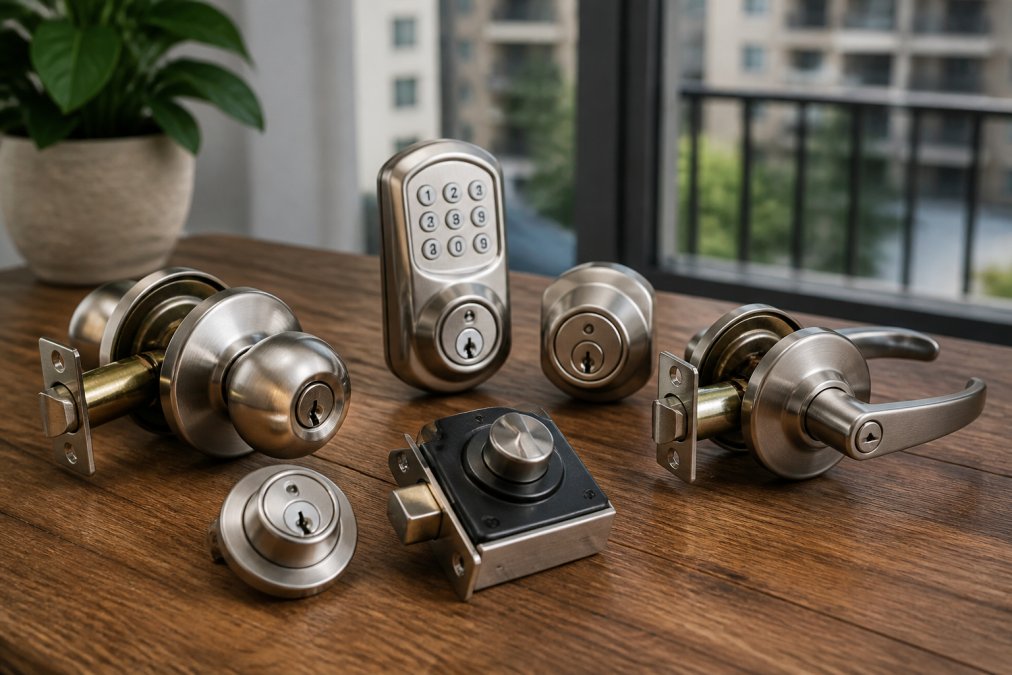
High-Security Deadbolts deliver the strongest physical resistance using pins, rotating discs, or sidebar mechanisms that resist picking and bumping. Grade 1 deadbolts meet ANSI standards for commercial-grade security and work well as your primary lock (nist.gov).
Smart Locks add remote access and activity logging but introduce battery dependencies and connectivity issues in multi-unit buildings. Many condos have poor Wi-Fi coverage in hallways, and Bluetooth range limitations mean your phone won't unlock the door from the elevator. Smart locks work best as secondary locks paired with a mechanical deadbolt.
Keypad Locks eliminate keys entirely, letting you assign temporary access codes to guests or property managers. They're ideal for short-term rentals, though the mechanism is typically less strong than a deadbolt.
Mortise Locks offer excellent security but require professional installation and may violate HOA rules if your condo door isn't designed for them.
| Lock Type | Physical Security | Remote Access | Ease of Installation | Best For |
|---|---|---|---|---|
| High-Security Deadbolt | Excellent | No | Moderate | Primary security, all condos |
| Smart Lock | Good | Yes | Easy | Secondary access, tech-forward residents |
| Keypad Lock | Good | Code-based | Easy | Rental properties, guest access |
| Mortise Lock | Excellent | No | Professional only | Buildings where HOA permits |
The best approach for most condo residents combines a Grade 1 deadbolt as the primary lock with either a smart lock as secondary access or a keypad lock for guest management.
Smart Lock Installation Requirements for Condo Doors
Smart locks seem straightforward until you try installing one in a condo where your door frame is thin, Wi-Fi barely reaches your hallway, and your HOA prohibits permanent modifications.
Connectivity is the first hurdle. Bluetooth locks communicate only with your phone within 20-30 feet, enabling unlock from inside your unit but not remotely when away (bluetooth.com). Wi-Fi locks connect to your home network for remote access anywhere, but many condos have spotty hallway coverage. A Wi-Fi bridge or repeater solves this but adds $50-150 and requires power near your door.
Battery life varies significantly. Smart locks typically last 6-12 months on AA or AAA batteries depending on usage frequency (peer-reviewed research). Locks with low-battery alerts are essential; running out of power in a hallway is far more inconvenient than in a house with side door access.
Door thickness and material matter. Most smart locks are designed for standard 1.75-inch thick wooden doors. Condo doors are often thicker or made of metal-clad composite materials. Before purchasing, measure your door and confirm the lock manufacturer supports your door type.
Strike plate and frame reinforcement remain essential. A smart lock is only as secure as the door frame holding it. You still need a reinforced strike plate with 3-inch screws penetrating into the door frame.
Installation typically takes 20-30 minutes if your door is compatible. Remove the interior side of your existing deadbolt, install the smart lock mechanism, and reassemble.
High-Security Deadbolts: The Foundation of Condo Security
A Grade 1 deadbolt is the most reliable security upgrade you can make to a condo door. Unlike builder-grade locks that use simple pin mechanisms, high-security deadbolts resist picking, bumping, and drilling through rotating discs, sidebar mechanisms, or hardened steel pins.
The difference is immediate when tested. A builder-grade deadbolt yields to picking in seconds. A high-security deadbolt resists for minutes, and the noise and time required make it impractical for forced entry. Most intruders target the easiest entry point; a visibly strong lock sends them elsewhere.
ANSI Grade 1 is the standard that matters. This designation means the lock has passed rigorous testing for pick resistance, drilling resistance, and structural durability. Brands that hold Grade 1 certification include Medeco, Mul-T-Lock, and ASSA ABLOY's high-end lines. These locks cost significantly more than standard deadbolts but are the only locks that genuinely resist professional attack tools.
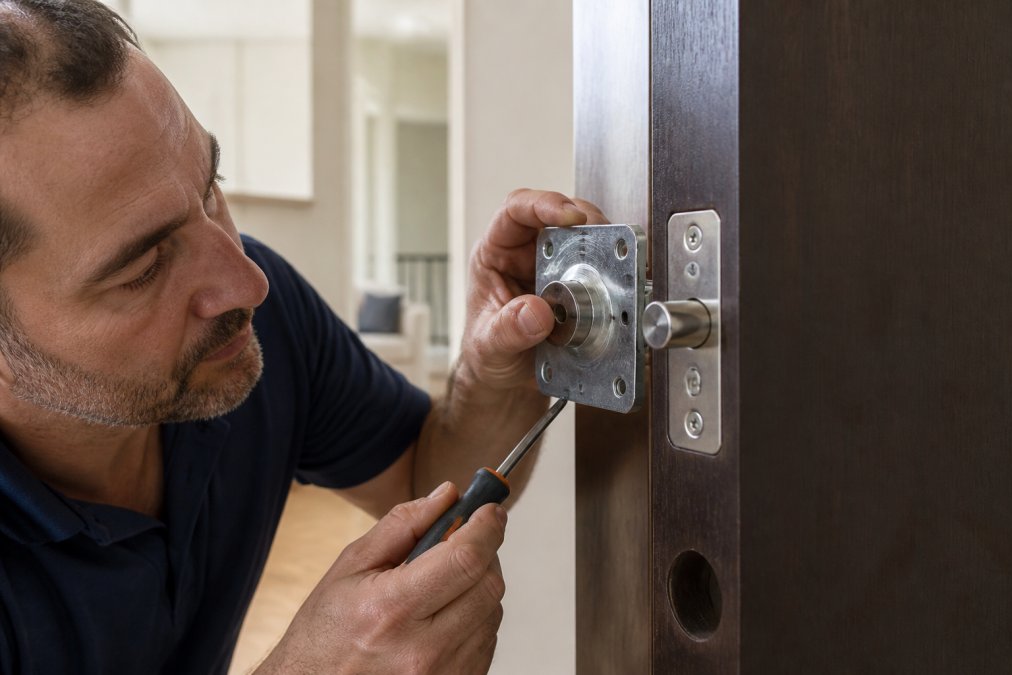
Installation is straightforward if you're replacing an existing deadbolt. The new lock uses the same hole as the old one. You remove the interior assembly, slide out the bolt, and install the new mechanism. No drilling required.
Master key systems complicate condo locks. Many buildings use master key systems where the building manager holds a key that opens all unit doors. If you install a high-security deadbolt, confirm whether it's compatible with the building's master key system. Some high-security locks can be keyed to work with existing master keys; others cannot, which may violate HOA rules.
Door Reinforcement for Condos: Frame and Strike Plate Upgrades
The lock itself is rarely the failure point in a break-in. The door frame is. A standard condo door frame is thin plywood or composite material, and the strike plate is fastened with short screws that grip only the veneer, not the solid wood underneath. A determined kick snaps these screws, and the door swings open regardless of lock quality.
A reinforced strike plate is non-negotiable. Replace the standard strike plate with a heavy-duty model that uses 3-inch screws. These long screws penetrate through the door frame and into the solid framing behind it, distributing impact force across a much larger area. A 3-inch screw strike plate can withstand repeated kicks; a standard strike plate fails on the first attempt. The upgrade costs $20-50 and takes 10 minutes to install.
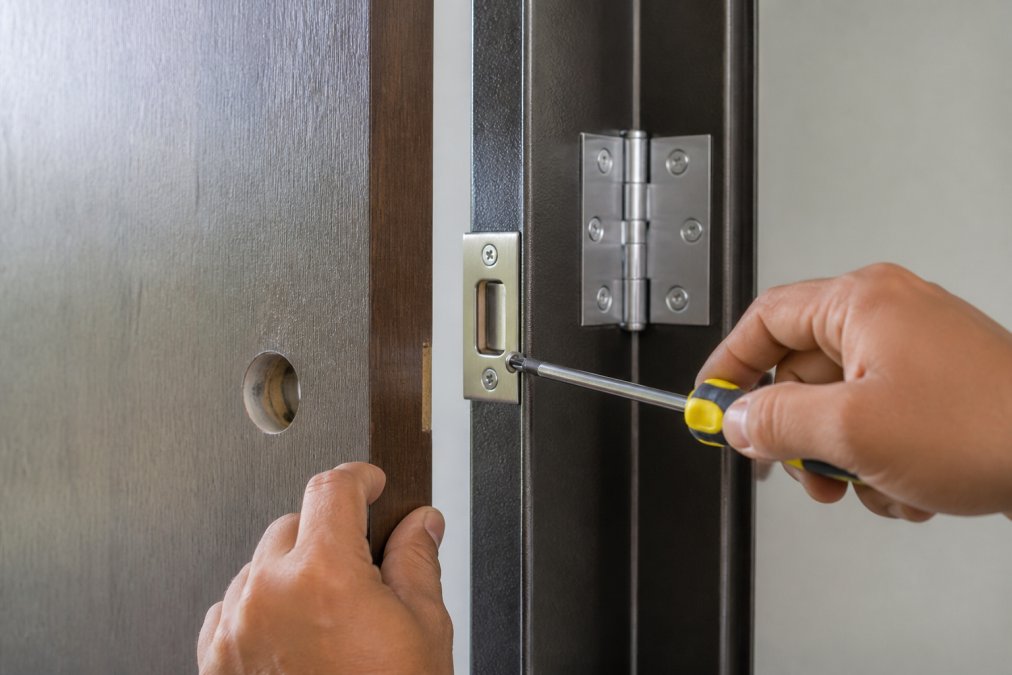
Hinge reinforcement is secondary but valuable. Upgrade hinges to heavy-duty models and ensure they're fastened with long screws. If hinges are weak, an intruder can remove the door from its hinges entirely, bypassing the lock.
Frame reinforcement is ideal but complicated in condos. If your door frame is damaged or thin, reinforce it with additional wood blocking or metal reinforcement plates. This requires removing interior trim, which may violate HOA rules or require approval.
Door material matters. Solid wood doors resist impact better than hollow-core or thin composite doors. If your condo allows door replacement, upgrading to a solid wood door creates a genuinely secure entry.
HOA Lock Replacement Rules and Compliance
Your HOA rules determine what locks you can install. Some buildings permit any lock; others restrict changes to prevent conflicts with master key systems or building aesthetics.
Master key compatibility is the primary constraint. Most buildings use a master key system where the building manager can access all units in emergencies. If you install a lock that doesn't accept the master key, you're creating a security liability for the building. Check your HOA documentation or contact your building manager before buying.
Appearance and modification restrictions vary. Some HOAs prohibit visible modifications to doors or frames because they affect the building's appearance. Read your HOA bylaws or CC&Rs document. If the rules are unclear, request clarification in writing from the HOA board.
Emergency access policies affect your choices. If your building requires that management have emergency access to all units, you cannot install a lock that prevents this.
Rental restrictions matter if you're renting your unit. Some buildings prohibit smart locks because they create access complications with multiple residents. If you rent your unit, confirm with your HOA what lock types are permitted.
The safest approach is to contact your HOA in writing, describe the lock you want to install, and ask for approval.
Choosing the Right Lock for Your Situation
The best lock for your condo depends on your priorities: maximum physical security, remote access convenience, or a balance of both.
If security is your primary concern: Install a Grade 1 deadbolt paired with a reinforced strike plate and upgraded hinges. This combination resists forced entry better than any smart lock and doesn't depend on batteries or connectivity. Add a secondary smart lock if you want remote access.
If you rent your unit or manage short-term rentals: A keypad lock or smart lock with temporary access codes is essential. Keypad locks are more reliable in condos because they don't depend on Wi-Fi connectivity. Pair a keypad lock with a mechanical deadbolt.
If you want a lock-and-leave lifestyle: A smart lock with Wi-Fi connectivity and remote access lets you unlock the door for guests, service providers, or delivery personnel without being home. This requires reliable Wi-Fi in your hallway. If your building has poor coverage, a Wi-Fi bridge is necessary.
If your door or frame is weak: Prioritize frame reinforcement and strike plate upgrade before choosing a lock type.
If you're concerned about master key conflicts: Consult with your HOA before purchasing.
Conclusion
The best locks for condo doors combine a Grade 1 mechanical deadbolt with frame reinforcement and a reinforced strike plate. This foundation works in any building, complies with HOA rules, and resists forced entry far better than builder-grade hardware.
If you need remote access or guest management, add a smart lock or keypad lock as a secondary layer. Test Wi-Fi coverage first if you choose a Wi-Fi-enabled lock, and confirm HOA approval before installation.
Security vulnerabilities in condos are usually not the lock itself but the door frame and strike plate. Our certified technicians are experienced with Medeco and Mul-T-Lock high-security locks and understand the specific constraints of condo buildings. Contact us for a professional security assessment of your door and frame, and we'll recommend the upgrades that deliver the most security for your building's requirements.
Frequently Asked Questions
Q: Do I need HOA approval to change my condo lock?
A: Most condo associations require written approval before replacing exterior locks or installing smart locks. Review your HOA bylaws first, then submit a request detailing the lock type and installation method. Some buildings restrict smart locks entirely due to building security systems or intercom integration. Getting approval in writing protects you and prevents conflicts when you sell. Contact your HOA office or property management company for their specific requirements before purchasing new hardware.
Q: What is the difference between a deadbolt and a smart lock for apartments?
A: Deadbolts provide fixed, mechanical security requiring a physical key or manual operation. Smart locks offer keyless entry via mobile app, temporary access codes, and activity logs, making them ideal for short-term rentals and lock-and-leave situations. Deadbolts are simpler, more affordable, and don't require charging or Wi-Fi. Smart locks provide remote monitoring and emergency access but depend on battery life and connectivity. Many condo owners use both: a high-security deadbolt as primary security with a smart lock as a convenience layer on top.
Q: Are smart locks allowed in condo buildings?
A: Smart lock approval varies by building. High-rise and luxury condos often restrict them due to master key systems, intercom integration, or fire code concerns. Some buildings allow smart locks only on interior doors or require specific brands compatible with building security. Before purchasing, check your lease and HOA rules, then confirm with your building management. If your building has a legacy master key system from the 1990s or earlier, compatibility issues may require professional assessment. Professional locksmiths can advise whether your specific building's system supports smart lock installation.
Q: How can I improve the security of my condo door?
A: Layer your security: upgrade to a Grade 1 deadbolt, reinforce the strike plate with a heavy-duty version, and add door frame reinforcement. Check for builder-grade hardware and replace it with high-security locks. For coastal environments, use corrosion-resistant materials to prevent weathering. Add a security camera or video doorbell for monitoring. If you're renting out your condo, consider temporary access codes or smart locks for guest management. Professional installation ensures proper alignment and maximum security. Consult a licensed locksmith to assess your door's current vulnerabilities and recommend upgrades specific to your building.
This article was written using GrandRanker