 ultimate-guide
Affordable Residential Lock Change in Miami: 2026 Guide
Table of Contents
- Affordable Residential Lock Change in Miami: What You Need to Know
- When to Change Your Home Locks: 7 Clear Signs
- Lock Change vs. Rekeying: Which Saves You More?
- Understanding Residential Rekeying Services Cost
- DIY vs. Professional Lock Change: The Real Cost of Saving Money
- How to Choose a Licensed Locksmith in Miami
- Security Upgrades Worth the Investment
- Get Your Free Residential Lock Change Quote
- Frequently Asked Questions
Last Updated: September 5, 2026
Affordable Residential Lock Change in Miami: What You Need to Know
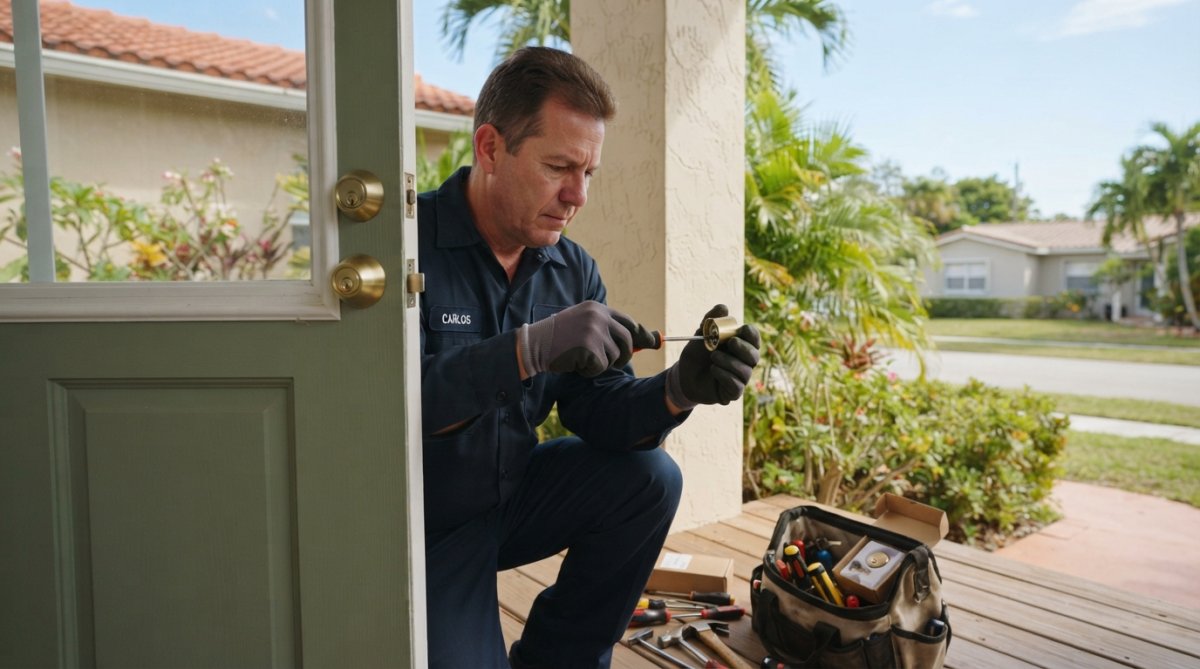
A residential lock change is the process of removing existing hardware and installing new locks to secure your home. For Miami homeowners, the decision comes down to cost, timing, and peace of mind. At SOUTHMIAMILOCKSMTIH.COM, our licensed, bonded, and insured technicians have spent over 30 years helping Miami-Dade residents secure their properties.
Affordability is not the same as cheap. A low-ball quote often signals an unlicensed operator who may damage your door or install inferior hardware. The real value comes from transparent pricing, certified installation, and hardware that protects your family. Below, we break down the signs you need new locks, the cost difference between changing and rekeying, and how to avoid common traps.
When to Change Your Home Locks: 7 Clear Signs
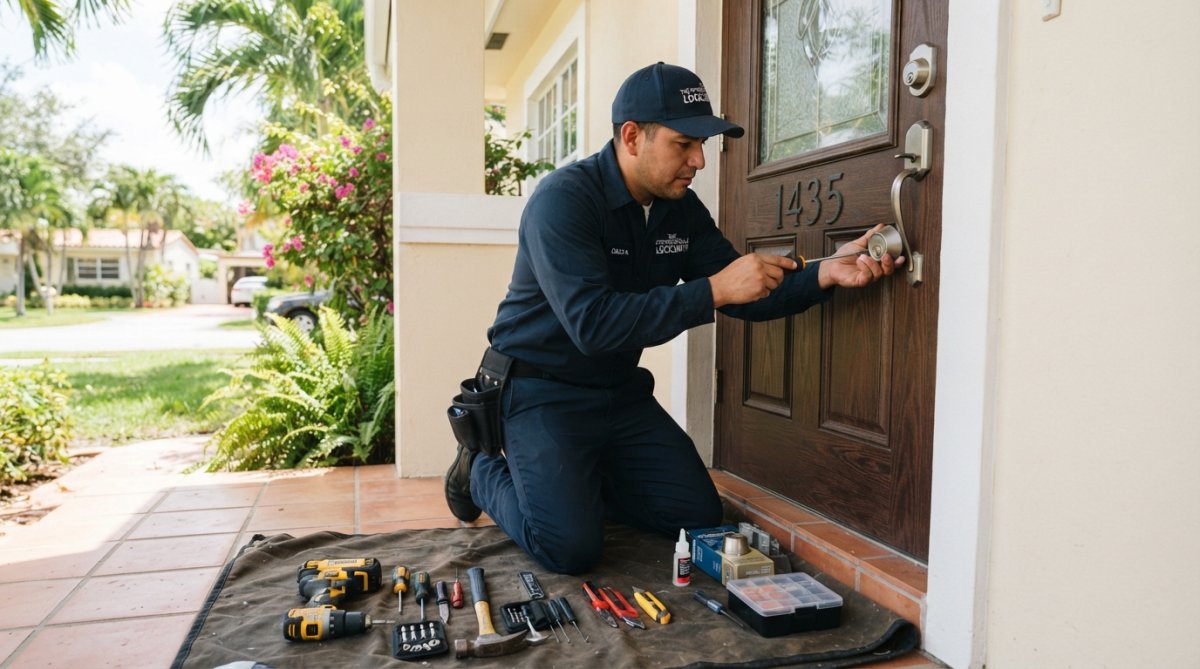
Most homeowners wait until a lockout or break-in forces the issue. That is a mistake. Several situations call for an immediate residential lock change, and recognizing them early saves money and stress.
- You recently moved into a new home or condo
- Your keys were lost, stolen, or copied by someone you no longer trust
- You went through a breakup, divorce, or roommate dispute
- The lock is visibly worn, rusted, or difficult to turn
- Your key breaks off inside the cylinder
- You have experienced a burglary or attempted break-in
- Your current locks are outdated and lack basic security features
A common mistake is assuming all locks last forever. Standard hardware faces daily wear, Florida humidity, and salt air near the coast, all of which accelerate degradation. If your key sticks or the mechanism feels loose, the internal components are failing. Delaying replacement risks a lockout at the worst possible moment.
Lock Change vs. Rekeying: Which Saves You More?
Rekeying is the more economical choice when your existing hardware is in good condition. The process involves changing the internal pins and springs so old keys no longer work, while a new key operates the lock. It delivers the same security benefit as a full replacement at a fraction of the cost.
A full lock change becomes necessary when the hardware itself is damaged, worn, or outdated. For example, an old lock with a worn cylinder may fail entirely during a rekey, wasting your money. Similarly, if you want to upgrade to high-security locks or keyless entry, replacement is the only path.
The decision comes down to hardware condition. If your locks are less than ten years old and function smoothly, rekeying is the smart financial move. If they are aging, corroded, or you want modern features, invest in new hardware. A professional can assess your doors on-site and give an honest recommendation.
Understanding Residential Rekeying Services Cost
Rekeying is almost always cheaper than a full lock change because you keep the existing hardware. But the final price is built from four distinct cost drivers. Understanding them helps you avoid overpaying or getting a quote that balloons once the technician arrives.
1. The service call or trip fee. This covers travel time, vehicle costs, and overhead. It is a fixed charge regardless of how many locks you rekey, so bundling multiple locks into one visit is the easiest way to lower your per-lock cost. If you have five locks, you pay the trip fee once, not five times.
2. Per-cylinder labor. Each cylinder must be disassembled and re-pinned to match a new key. This is precision work, a misaligned pin stack causes sticking keys or a lock that fails entirely. Labor per cylinder is higher for brands with complex or restricted keyways. A standard Kwikset or Schlage cylinder is faster to work on than a high-security Medeco or Mul-T-Lock cylinder.
3. The key blanks themselves. Standard key blanks are inexpensive. Restricted keyway blanks, the kind used in high-security systems where duplication is controlled, cost more because the manufacturer licenses them only to certified locksmiths. If you are rekeying to a restricted keyway for maximum security, expect that material cost to show up on the invoice.
4. Time-of-day and urgency. A rekey scheduled during normal business hours on a weekday is the most affordable option. Evenings, weekends, and holidays carry premium rates across the industry. A lockout at 2 AM that requires an emergency rekey will always cost more than the same job booked for Tuesday at 10 AM. Planning ahead is the cheapest tool you have.
For a typical single-family home with three to five standard deadbolts and knobs, a scheduled daytime rekey is a modest expense, far less than replacing all that hardware. The math changes if your locks are older than ten years, show visible corrosion, or have internal wear. In those cases, rekeying is throwing money at failing hardware. A professional should tell you honestly when replacement is the better value.
Property managers and Airbnb hosts face a different cost equation. For a building with multiple units, a master key system changes the pricing structure. The initial setup costs more because each cylinder must be keyed to a master plan, but the long-term savings come from rekeying only the departing tenant's locks while keeping the master key unchanged.
DIY vs. Professional Lock Change: The Real Cost of Saving Money
The DIY route tempts many homeowners. A basic deadbolt costs less than a service call, and online tutorials make installation look simple. The hidden costs appear quickly: buying specialized tools, making a second trip for the wrong size, and the risk of drilling misalignment that damages your door.
A residential lock change involves more than swapping hardware. Proper installation requires precise alignment of the strike plate, correct bolt depth, and ensuring the door frame can withstand forced entry. A poorly installed lock creates a false sense of security while actually being easier to bypass than the old one. ANSI/BHMA lock grades rate locks by security and durability, and a professional installation ensures your hardware performs to its rated standard.
Consider the math on your time alone. Between research, shopping, and installation, a DIY project can consume an entire weekend. A professional completes the job in under an hour per lock, guarantees the work, and carries liability insurance. For most homeowners, the small premium for professional service is the definition of affordable.
How to Choose a Licensed Locksmith in Miami
Choosing a licensed locksmith in Miami requires verification, not just a Google search. Unlicensed operators advertise low rates, then inflate prices once they arrive. Protecting yourself takes five minutes.
Start by confirming the company is licensed, bonded, and insured. Ask for their license number and verify it with local authorities. Check that they have a physical address and a local phone number. Finally, request upfront pricing before they arrive. A reputable company quotes the service call fee and the lock cost in advance.
A legitimate technician arrives in a marked vehicle, wears a uniform, and carries identification. They should also carry a range of high-security lock brands. At SOUTHMIAMILOCKSMTIH.COM, our certified technicians are trained in Medeco and Multlock high-security systems. If a locksmith only offers one brand or pressures you into an immediate decision, consider that a red flag.
Security Upgrades Worth the Investment
Not all deadbolts are created equal. The single most useful thing a homeowner can learn before buying new hardware is the ANSI/BHMA grading system, the industry standard that rates locks on security, durability, and function. Yet almost no local locksmith content explains it. That gap costs homeowners money when they buy decorative hardware that fails after a year of Florida humidity.
The American National Standards Institute (ANSI) and the Builders Hardware Manufacturers Association (BHMA) jointly publish a standard that grades locks from Grade 1 to Grade 3. Grade 1 is the highest, commercial-grade security and durability, tested to withstand 800,000 cycles of operation. Grade 2 is heavy-duty residential, rated for 400,000 cycles. Grade 3 is the basic residential standard, tested to 200,000 cycles and designed for interior or light-use exterior doors.
What does that mean for your front door? A Grade 3 deadbolt is the minimum you should consider for any exterior entry. It will stop an opportunistic thief but is not built for decades of daily use in a coastal climate. Grade 2 hardware is the sweet spot for most homes, it costs more than Grade 3 but delivers significantly better resistance to forced entry and corrosion. Grade 1 is overkill for a typical residence unless you have a security concern that warrants commercial-grade protection.
Beyond the grade, look for two specific features. First, a hardened steel bolt, not brass or zinc, resists sawing attacks. Second, a reinforced strike plate with screws that anchor into the door frame stud, not just the trim. Many break-ins succeed because the strike plate rips out of soft door frame wood. Upgrading to a strike plate with 3-inch screws is a low-cost, high-impact improvement.
For Miami homeowners specifically, corrosion resistance matters more than in most markets. Salt air near the coast attacks exposed metal finishes. Look for hardware with a durable finish, stainless steel or a high-quality powder coat, rather than bare brass or chrome that will pit and discolor within a few years.
Smart locks add a different layer of value. Keyless entry eliminates the risk of lost or copied keys, and models with activity logs show who enters and when. For vacation rental owners, changing access codes between guests replaces the need to rekey after every stay. The trade-off is that smart locks rely on batteries and connectivity. Choose a model with a physical key override and a low-battery warning.
High-security mechanical locks from brands like Medeco and Mul-T-Lock offer patented keyways that prevent unauthorized key duplication. A standard key can be copied at any hardware store; a restricted keyway blank is only available to certified locksmiths licensed by the manufacturer. This is the upgrade to choose if you are concerned about someone copying your key.
The National Crime Prevention Council guidance on home security emphasizes that visible security measures deter opportunistic criminals. A Grade 2 deadbolt with a hardened bolt, a reinforced strike plate, and quality hardware signals that your home is not an easy target. These upgrades cost more upfront than a basic Grade 3 lock swap, but they reduce the likelihood of a break-in that costs far more in damages and emotional toll.
Get Your Free Residential Lock Change Quote
Every home has different security needs, which is why a single published price rarely fits all situations. The cost depends on the number of locks, the door material, the hardware brand, and whether you need additional services like strike plate adjustment or a master key system.
The smart move is to get a free, on-site assessment. A technician inspects your current hardware, discusses your security concerns, and provides a firm quote before any work begins. This transparency is the foundation of an affordable residential lock change in Miami.
When you call, ask about their experience with your specific lock brand, their response time for emergency lockout assistance, and whether they carry the high-security options you are considering. A reputable company answers these questions directly. As noted in consumer guidance on hiring home service professionals, getting multiple quotes and asking for credentials protects you from substandard work.
Frequently Asked Questions
How much does it cost to change house locks in Miami?
Pricing for a residential lock change in Miami depends on the number of locks, the type of hardware you select, and whether you need emergency service outside normal business hours. Standard locks are less expensive than high-security options like Medeco or Multlock. For an exact quote tailored to your doors, contact a licensed Miami locksmith directly. Most reputable companies provide upfront pricing before dispatching a technician.
Is it better to re-key or replace my home locks?
Rekeying is the more affordable choice when your existing hardware is in good condition and you simply want to render old keys useless. This is ideal after moving into a new home or after a roommate moves out. Lock replacement makes sense when the hardware is worn, damaged, or you want to upgrade to a higher security grade or smart lock. A technician can assess your locks on-site and recommend the most cost-effective option.
How can I verify if a locksmith is licensed and insured in Miami?
Before allowing anyone to work on your locks, ask for their license number and proof of insurance. A legitimate, licensed locksmith will provide this documentation without hesitation. You can also verify their credentials with the appropriate Florida state and local licensing authorities. Avoid providers who give vague answers, demand cash payment upfront, or arrive in an unmarked vehicle. These are common warning signs of unlicensed operators.
Securing your home should not require a second mortgage, but it does require the right partner. SOUTHMIAMILOCKSMTIH.COM brings over 30 years of locksmith experience to every residential job, with certified technicians in Medeco and Multlock high-security systems, full licensing and insurance, and upfront pricing you can trust. Get started with SOUTHMIAMILOCKSMTIH.COM and receive a free quote for your residential lock change today.
This article was written using GrandRanker