 blog
Best Smart Locks for Apartments 2026
Table of Contents
- Why Smart Locks Matter for Apartment Dwellers
- Best Smart Locks for Renters: Top 5 Picks
- Smart Locks for Apartments Without Changing the Deadbolt
- Smart Lock Installation Cost and What to Expect
- Critical Smart Lock Security Features for Renters
- Apartment-Specific Considerations: Lease, Landlord Access, and Shared Entry
- Connectivity, Compatibility, and Backup Power
- How to Choose the Right Smart Lock for Your Apartment
- Frequently Asked Questions
Last Updated: October 14, 2026
Why Smart Locks Matter for Apartment Dwellers
Renters face a security challenge homeowners don't: you can't replace a deadbolt without landlord approval, and you must reverse changes before moving out. Smart locks for apartments solve this with keyless entry and no permanent door modifications.
The appeal is immediate: no fumbling for keys, no 2 AM locksmith calls, no worrying who has key copies. But choosing the right smart lock for your rental requires understanding what works in a shared-entry environment.
This guide covers the best options for apartments and what to watch for before buying.
Best Smart Locks for Renters: Top 5 Picks
These five categories cover the most practical smart lock solutions for apartment living, each addressing a different need: shared access, biometric security, remote control, minimal installation, or backup key functionality.
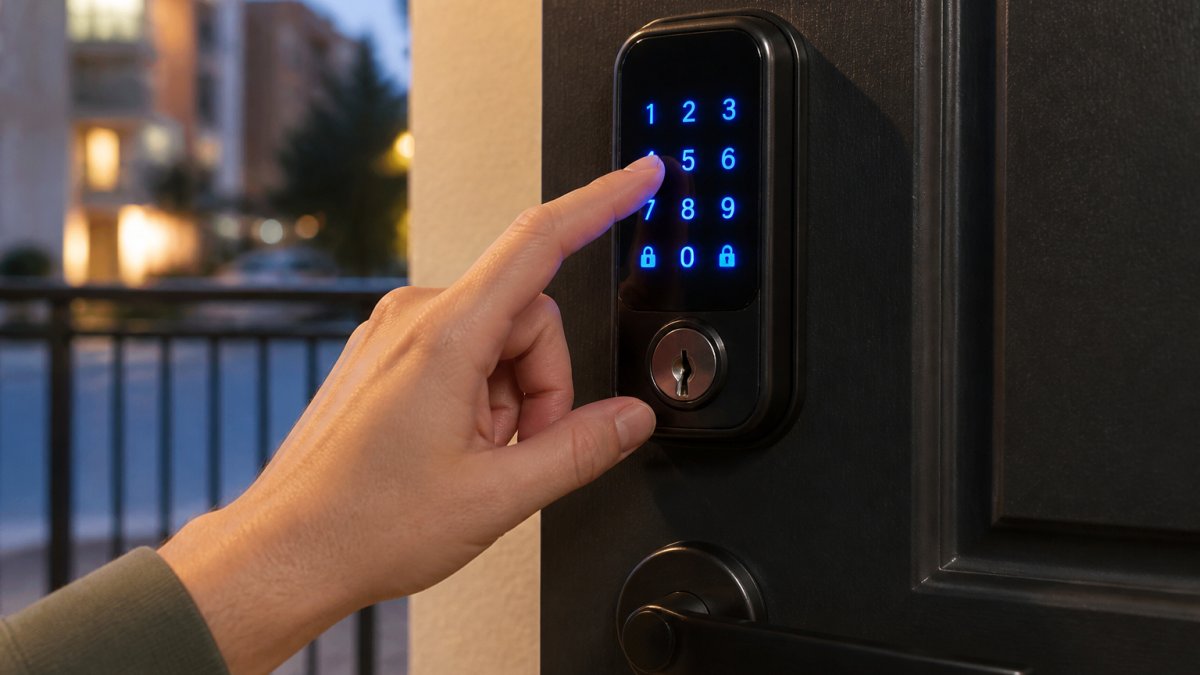
1. Keypad-Based Smart Locks for Shared Access
Keypad smart locks let you give temporary access codes to roommates, guests, and short-term visitors without handing out physical keys. Each person gets a unique PIN you can delete from your phone afterward.
This works well for Airbnb hosts and property managers granting access to multiple people. You can set time-limited codes that expire automatically and get notifications on each entry. Most keypad models mount over your existing deadbolt with no permanent changes.
The trade-off is convenience versus security: an intruder can watch someone enter a code, and frequently used buttons show wear patterns. For apartments this matters less than for a standalone home, since building security and neighbors add oversight.
2. Biometric Smart Locks with Fingerprint Entry
Fingerprint locks eliminate remembering codes or carrying keys. You register your fingerprint (and your roommate's), and the lock opens on a match. Some models accept PIN codes as backup.
Biometric locks suit two-person households where both occupants register fingerprints. They're less practical for frequent guests since you can't register a fingerprint temporarily. Installation is similar to keypad models: most mount over your existing deadbolt without permanent changes.
Reliability varies: cold weather can affect fingerprint recognition, and sensors degrade over time. For apartments this is acceptable since the lock isn't your only exit route. Battery life typically runs 6-12 months.
3. Wi-Fi-Connected Smart Locks with Remote Control
Wi-Fi locks let you unlock your apartment from anywhere via phone. You can grant access to a friend stuck outside, check whether you locked the door, and receive entry alerts.
This convenience has a security cost. Wi-Fi locks need constant internet, so an outage kills remote access. More importantly, they create a larger attack surface: your lock connects to your home network, your phone, and cloud servers.
For apartments this risk is manageable because building security is a fallback: if your Wi-Fi lock fails, contact your landlord or building management for emergency access. Still, use a strong unique password and enable two-factor authentication.
4. Retrofit Smart Locks Without Deadbolt Replacement
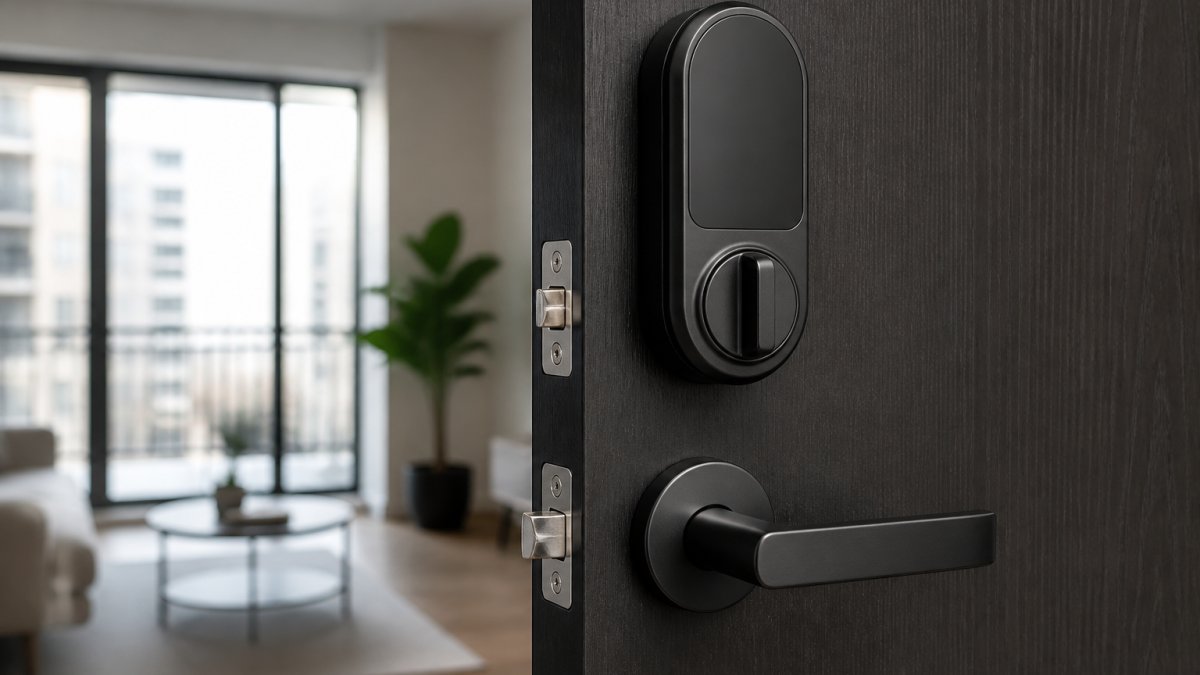
Some smart locks install entirely inside your door without replacing the deadbolt. These retrofit units motorize your existing deadbolt mechanism, keeping the original lock intact so you can remove the smart component when you move without leaving a trace.
Retrofit locks suit renters because they satisfy lease requirements: no permanent modifications, no drilled holes, no landlord approval needed (though it's worth asking). Installation takes 15-30 minutes with basic tools.
The downside is cost and limited options: retrofit locks cost more than keypad or biometric alternatives, and fewer models exist. Compatibility matters too, the lock must fit your deadbolt type and door thickness, so measure your door and verify before buying.
5. Hybrid Smart Locks with Physical Key Backup
Hybrid locks combine electronic entry with a physical key. Unlock via keypad code, fingerprint, or traditional key. If the battery dies or the electronics fail, the key still works.
This redundancy appeals to renters by eliminating "what if the lock fails" anxiety: multiple entry methods mean a single point of failure won't trap you outside.
The trade-off is complexity: hybrid locks are bulkier, pricier, and harder to install. They also reintroduce the key problem, you must keep a key somewhere safe, and losing it makes you vulnerable again.
Smart Locks for Apartments Without Changing the Deadbolt
Many apartment leases forbid deadbolt replacement. Landlords want master key access for emergencies and don't want tenants drilling holes or removing original hardware.
Smart locks that don't replace the deadbolt solve this. Retrofit units motorize your existing deadbolt from inside; keypad and biometric locks mount over it without removal. Both leave the original lock intact so you can restore the door when you move.
Installation is straightforward for most retrofit models: remove the interior deadbolt cover, attach the smart lock mechanism, and reassemble. No drilling, no permanent changes, and most apartments allow it because the original lock stays functional.
Before installing any smart lock, check your lease for modification language. Some forbid any hardware installation, even temporary; others allow it if you restore the door before moving. A quick conversation with your landlord prevents costly mistakes.
Smart Lock Installation Cost and What to Expect
Installation costs vary by DIY versus professional. DIY for keypad and biometric locks takes 15-30 minutes with basic tools: screwdriver, measuring tape, and possibly a drill for the strike plate.
Professional locksmith installation adds labor costs, but for apartment retrofits and compatibility checks it's often worth it. A locksmith verifies your door and deadbolt work with your chosen lock, ensuring correct installation.
Lock prices range from basic keypad models to high-end biometric units with Wi-Fi. Budget options start lower; premium locks with multiple access methods cost more. Factor in battery replacements, typically annually or every 18 months depending on usage.
One hidden cost renters overlook: if your lock fails and you're locked out, emergency locksmith services are expensive.
Critical Smart Lock Security Features for Renters
Not all smart locks offer the same security. Some features matter more for apartment living than others.
Encryption and Access Logs
Encryption protects access codes and lock status from interception. Look for military-grade encryption on all wireless communications, which prevents hackers from intercepting your PIN or unlock commands over Bluetooth or Wi-Fi.
Access logs show when the lock was opened and by whom, key accountability for shared apartments and rentals. You can see if a roommate came home late or a guest entered while you were away. Some locks store logs locally; others sync to your phone app.
Tamper Alerts and Lockout Protection
Tamper alerts notify you if someone tries to force or remove the lock, giving early warning to contact your landlord or police before a break-in.
Lockout protection prevents permanent disabling after repeated failed attempts. Some locks freeze after five wrong PIN entries, then reset after 30 minutes, blocking brute-force attempts.
Battery life and low-battery alerts matter more for apartment locks. If the battery dies with no backup access, you're locked out. Choose a lock that alerts when battery drops below 20%, giving time to replace batteries before you're stranded.
Apartment-Specific Considerations: Lease, Landlord Access, and Shared Entry
Apartment living introduces security and legal complications homeowners don't face. Your lease likely reserves rights for your landlord, and shared entry systems can complicate smart lock installation.
Lease Restrictions and Landlord Approval
Most apartment leases require landlord approval before installing any hardware. Even "non-permanent" smart locks may violate your lease if unapproved. The cost can be steep: withheld security deposit, charges for lock removal and door repair, or grounds for eviction.
Before buying, contact your landlord or property manager in writing, explaining what you want to install and why. Most approve retrofit locks that don't damage the door or remove original hardware; some require an approved locksmith. Document the approval in writing.
Emergency Access for Landlords and Property Managers
Your landlord needs emergency access for repairs, inspections, and emergencies. A smart lock that blocks this violates most leases and local housing codes.
Choose a lock allowing landlord override access. Some models give your landlord a master code that works anytime; others keep the building's master key functional alongside the smart lock. Verify before buying: your landlord must enter in an emergency, but shouldn't enter without notice.
Shared Access for Roommates and Short-Term Guests
With a roommate, a smart lock simplifies access management: each person gets a unique code, you can see who enters and when, and when a roommate moves out you delete their code without rekeying.
For short-term guests (Airbnb, visiting friends), temporary codes are essential. Set a code to expire at a specific time or date so the guest can't unlock after that, avoiding awkward key returns or unauthorized access.
Some locks support up to 100 unique codes; others allow fewer. If you host guests often or have multiple roommates, verify code capacity before buying.
Connectivity, Compatibility, and Backup Power
Smart locks depend on connectivity and power. Understanding these dependencies prevents frustrating failures.
Bluetooth locks require your phone within range to unlock remotely. They're more secure than Wi-Fi locks since they don't connect to your home network, but you must be near the apartment.
Door compatibility is critical: smart locks must fit your door's thickness (typically 1.375 to 1.75 inches) and deadbolt type (standard pin tumbler, mortise, or other). Measure and verify before ordering.
Battery life depends on usage: a keypad lock used 10 times daily drains faster than one used twice daily. Expect annual replacements for high-use locks, every 18 months for low-use.
Backup power options matter. Some locks have a USB charging port on the outside that lets you charge the lock if the battery dies while you're locked out. Others accept a physical key backup.
How to Choose the Right Smart Lock for Your Apartment
Start by checking your lease and contacting your landlord. Confirm that smart locks are allowed and whether they require approval.
Next, measure your door and deadbolt. Confirm your door thickness and deadbolt type, then verify compatibility with your top choices.
Consider your access needs. Do you need to grant temporary codes to guests? Do you want remote access from outside the building? Do you need a backup physical key?
Evaluate security features based on your situation. If you have roommates, access logs matter. If your building has poor Wi-Fi, avoid Wi-Fi locks.
Finally, budget for professional installation if you're uncertain about DIY setup. A locksmith can verify compatibility, handle installation, and ensure the lock functions correctly.
Choosing a smart lock for your apartment requires balancing convenience, security, and lease compliance.
Frequently Asked Questions
Can you install a smart lock on a rental property without landlord permission?
Most leases require landlord approval before installing any permanent modifications. Smart locks for apartments that retrofit over existing deadbolts without drilling or permanent changes are often permitted, but you must check your lease and notify your landlord first. Some property managers appreciate smart locks because they enable emergency access for maintenance. Always get written approval to avoid lease violations or security deposit disputes.
Do smart locks work if Wi-Fi or power goes out?
Quality smart locks for apartments include battery backup systems and physical key overrides. Keypad and biometric models operate on batteries alone and work during Wi-Fi outages. Wi-Fi-connected smart locks may lose remote access during outages but still function with keypad or fingerprint entry. Always verify low-battery alerts are enabled and test backup power before relying on a smart lock as your only entry method.
What are the most important smart lock security features for renters?
Prioritize encryption to protect access codes, tamper alerts to notify you of forced entry attempts, and access logs showing who entered and when. Low-battery alerts prevent lockouts, and lockout protection prevents accidental permanent lock-outs. For shared apartments, look for temporary access codes you can delete after guests leave. ANSI/BHMA Grade 1 or 2 ratings indicate durability and security strength.
How much does it cost to install a smart lock in an apartment?
Installation costs depend on whether you install it yourself or hire a professional locksmith. Retrofit smart locks designed for renters typically cost less to install since they don't require deadbolt replacement. Professional installation through a licensed locksmith ensures proper fit and security. Contact a certified locksmith for a quote specific to your door type and the smart lock model you choose.