 blog
Top 10 Commercial Safes for Small Businesses
Table of Contents
- What to Look for in a Commercial Safe for Small Businesses
- Commercial Safe Types for Different Business Needs
- Business Safe Size Guide: Choosing the Right Capacity
- Commercial Safe Lock Types and Access Control
- Top Commercial Safe Brands and Models
- Safe Installation and Maintenance Best Practices
- Certifications, Insurance Requirements, and Total Cost of Ownership
- Common Mistakes When Choosing a Commercial Safe
- Frequently Asked Questions
Last Updated: October 17, 2026
What to Look for in a Commercial Safe for Small Businesses
Choosing from the top 10 commercial safes for small businesses isn't just about finding a locked box. The right safe protects your cash, documents, and valuables while fitting your workflow and budget. We work with business owners daily who've chosen the wrong safe, one that's too small, too slow to access, or lacks the security features their business actually needs.
The best commercial safe balances three things: protection level, accessibility, and total cost of ownership. Before you buy, understand what your business stores, how often you need to access it, and what threats you're protecting against.
Burglary and Fire Protection Standards
Burglary protection is measured by how long a safe resists forced entry. Fire protection measures how well it preserves contents during extreme heat. A safe rated for burglary protection alone won't protect documents from fire, and vice versa.
Look for safes certified by independent testing bodies. The Underwriters Laboratories (UL) rates safes based on attack resistance time and tool types used. A UL TL-15 safe resists attack for at least 15 minutes using common tools. A TL-30 resists for 30 minutes with more sophisticated equipment.
Fire ratings work differently. A 1-hour fire-rated safe maintains interior temperatures below 350°F for one hour during a fire. A 2-hour rating does the same for twice as long.
Capacity and Interior Space Needs
Don't underestimate how much space you'll need. A safe that looks spacious on the floor plan often feels cramped once you're storing documents, cash boxes, and backup drives inside.
Calculate what you're actually storing: cash trays, document folders, backup hard drives, jewelry, or client records. Stack them mentally in the safe. Then add 30% more space for growth. A small safe measuring 12" × 14" × 10" holds roughly 0.7 cubic feet. A medium safe at 18" × 20" × 16" holds about 3 cubic feet. The difference is substantial.
Interior dimensions matter more than exterior dimensions. Manufacturers sometimes quote exterior measurements. Always check the interior specs before ordering.
Commercial Safe Types for Different Business Needs
Not all safes serve the same purpose. A jewelry store needs different protection than a dental office. A retail shop handling cash needs different access speed than a law firm storing documents.
Depository and Drop Safes for Cash Handling
A depository safe, also called a drop safe, lets employees deposit cash without accessing the main safe. This is critical for retail businesses, restaurants, and service shops where multiple staff members handle money. The safe has a slot on top or front where employees drop cash, checks, or deposit bags.
Drop safes reduce theft risk from employees and simplify cash management. Staff can't see how much money is inside, and you control who opens it.
For small businesses with high cash turnover, a depository safe paired with a main safe is standard practice. The depository holds daily deposits, and the main safe stores backup cash and documents.
Fire-Resistant and Water-Resistant Safes
Fire-resistant safes use thick insulation to keep interior temperatures low during fires. They're heavier and more expensive than standard safes, but essential if you store irreplaceable documents or backup drives.
Water-resistant safes protect against water damage from sprinkler systems, floods, or firefighting efforts. Many fire-resistant safes include water-resistant features, but not all. If your business is in a flood-prone area or near a water line, confirm the safe has both ratings.
Be aware: fire-resistant safes are heavy. A 2-hour fire-rated safe can weigh 400-800 pounds. Installation requires proper anchoring to the floor, and moving it later is difficult and expensive.
Business Safe Size Guide: Choosing the Right Capacity
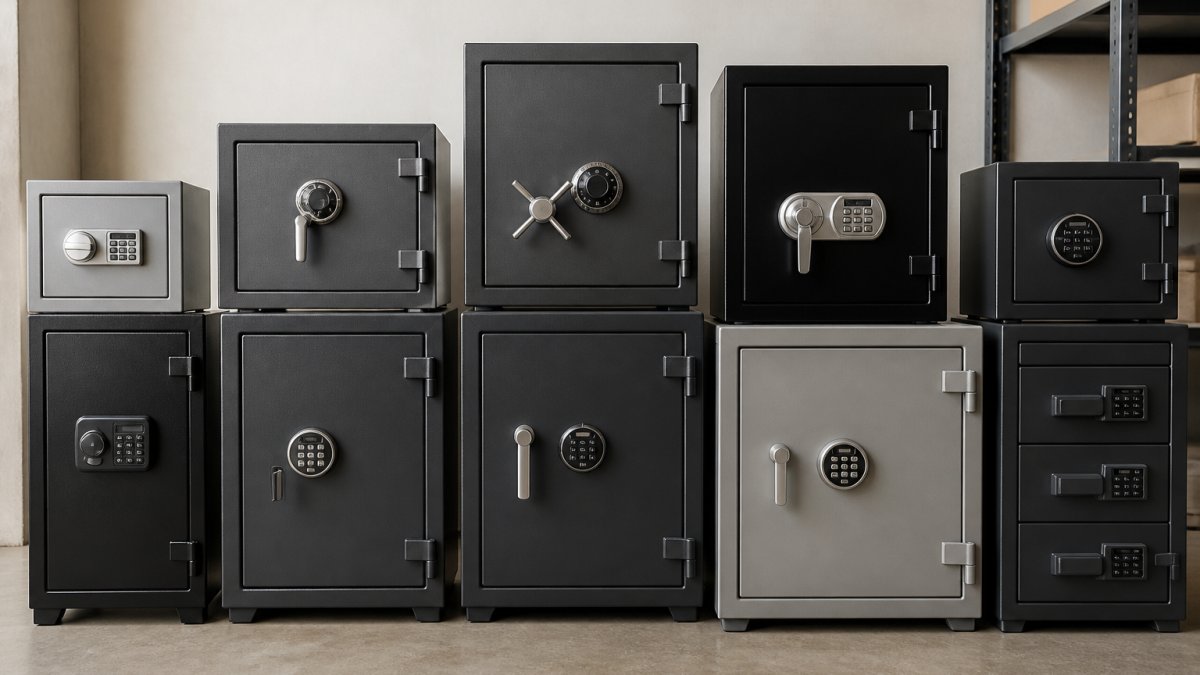
Size categories help narrow your choice. A small safe (under 1 cubic foot) fits a desk drawer and holds cash, keys, or small documents. A medium safe (1-4 cubic feet) is the most common for small businesses, it fits a corner or closet and holds cash boxes, documents, and backup drives.
For a retail shop with daily cash deposits, a small depository safe plus a medium main safe is typical. For a professional office, a medium safe handles documents and backup drives. For a jewelry store or high-value retail, a large safe with fire protection is standard.
Measure your intended location before buying. A 300-pound safe won't fit through a standard doorway without removing the door frame. Plan for professional installation.
Commercial Safe Lock Types and Access Control
The lock mechanism determines how fast you can access your safe and who can open it. Speed matters during emergencies. Security matters every day.
Electronic and Keypad Locks
Electronic locks use a keypad or touchscreen. You enter a code, and the lock opens. No key to lose, and you can change codes easily. Many electronic locks have a backup mechanical key for power failures.
Electronic locks are fast, ideal for businesses that open the safe multiple times daily. They're also auditable. Many models log every access attempt with a timestamp, showing who opened it and when. This audit trail is valuable for compliance and theft investigation.
The downside: electronic locks require power. A dead battery or power outage can lock you out temporarily. Quality safes include a backup battery and a manual override.
Biometric and Fingerprint Access
Biometric locks use fingerprint scanning or facial recognition. Only authorized people can open the safe, no code to guess or steal. This is the most secure option for preventing employee theft or unauthorized access.
Biometric locks are slower than keypads and require scanning. They work well for businesses where only one or two people need regular access. For high-traffic businesses where multiple staff members need quick access, a keypad is faster.
Time-Delay Locks and Audit Trails
A time-delay lock prevents opening for a set period after the correct combination or code is entered. This defeats robbery. A thief can't force the safe open quickly, so they leave empty-handed. Time delays typically range from 10 to 60 minutes.
Time-delay locks are common in retail and banking. They reduce the incentive for robbery because the thief can't get the safe open before police arrive.
An audit trail logs every access attempt, successful and failed. This helps you spot suspicious activity and proves who accessed the safe and when. For compliance-heavy businesses (healthcare, finance, legal), an audit trail is essential.
Top Commercial Safe Brands and Models
The commercial safe market includes both well-known manufacturers and specialized brands. SOUTHMIAMILOCKSMTIH.COM works with many brands, and the right choice depends on your budget, protection level, and access needs.
Among the top 10 commercial safes for small businesses, major brands include Browning, Liberty, SentrySafe, Fort Knox, and Amsec. Each offers models across price ranges and protection levels.
Don't choose based on brand alone. Compare the specific model's interior dimensions, protection ratings, lock type, and warranty. Two safes from the same brand can perform very differently.
When evaluating brands, check whether they offer local service and repair. A safe that breaks down and requires shipping across the country is expensive to fix. SOUTHMIAMILOCKSMTIH.COM provides safe repair and combination services.
Safe Installation and Maintenance Best Practices
Anchoring, Bolting, and Professional Installation
A safe is only as secure as its installation. An unanchored safe can be carried away or tipped over.
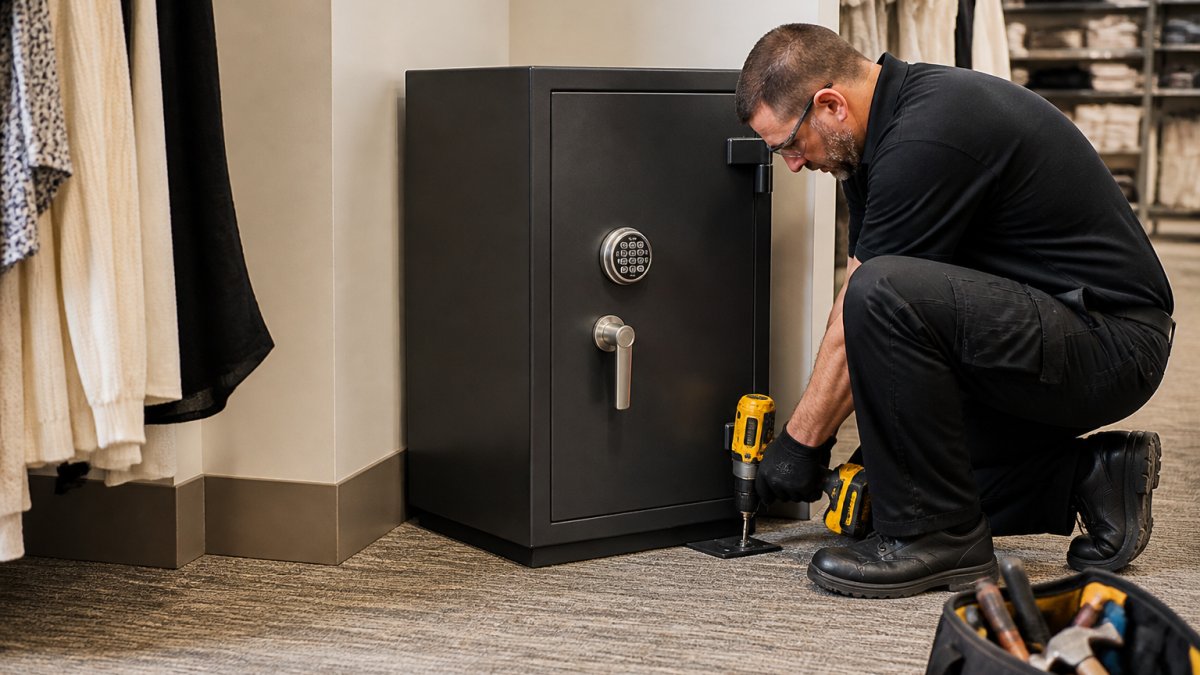
Installation typically involves drilling through the safe's base into concrete or structural framing, then securing bolts that can't be removed without power tools and time. This process requires expertise, improper anchoring leaves the safe vulnerable.
Placement matters too. A safe in a back office is more secure than one visible from the front. Hiding it behind a painting or false wall adds security through obscurity.
Ongoing Maintenance and Repair
Safes require minimal maintenance, but neglect causes problems. Clean the lock mechanism occasionally by spraying a small amount of dry lubricant inside the keyhole or around the electronic lock. Avoid WD-40 or oil-based lubricants, they attract dust and gum up the mechanism.
Test the lock regularly. Try opening it with the correct combination and with an incorrect one. Confirm the time-delay function works if you have one. Check that electronic locks respond quickly.
If the safe won't open, don't force it. Forcing the lock can damage the mechanism permanently. Contact a professional locksmith who specializes in safe repair. SOUTHMIAMILOCKSMTIH.COM handles safe opening for lost combinations, jammed locks, and broken mechanisms.
Certifications, Insurance Requirements, and Total Cost of Ownership
Insurance companies sometimes require specific safe ratings before covering certain valuables. A business storing cash may need a TL-15 or better. A law firm storing client documents may need fire protection.
Certifications matter for compliance too. Healthcare practices storing patient records, financial firms storing client data, and legal offices storing case files often have regulatory requirements for secure storage. A safe with proper certifications demonstrates compliance.
Total cost of ownership includes the safe's purchase price, installation, anchoring, annual maintenance, and potential repair costs.
Factor in access speed. A safe that's slow to open costs time daily. If you open it 20 times a day, a 30-second delay adds 10 minutes to your daily workflow. Over a year, that's significant lost time.
Common Mistakes When Choosing a Commercial Safe
Many business owners buy the wrong safe because they overlook key factors.
Mistake 1: Buying too small. A safe that feels spacious in the showroom feels cramped in your office.
Mistake 2: Choosing security over accessibility. A highly secure safe that takes five minutes to open discourages daily use.
Mistake 3: Ignoring installation costs. A $2,000 safe with $1,500 installation and anchoring is really a $3,500 purchase. Budget for professional installation upfront.
Mistake 4: Confusing fire and burglary ratings. A safe rated for burglary alone won't survive a fire. A fire-rated safe isn't necessarily burglary-resistant.
Mistake 5: Neglecting the audit trail. For compliance and theft prevention, an audit trail is invaluable.
When you're ready to install a commercial safe or need repair on an existing one, SOUTHMIAMILOCKSMTIH.COM can help.
Frequently Asked Questions
What features should a small business look for in a commercial safe?
Small businesses should prioritize burglary protection, fire resistance, and appropriate storage capacity. Look for safes with UL ratings (TL-15 or higher for high-risk environments), electronic locks with audit trails for employee access tracking, and interior dimensions that fit your documents or valuables. Depository safes work well for retail businesses handling cash. Verify the safe's weight and anchoring requirements before purchase to ensure proper installation.
What size commercial safe does a small business need?
Size depends on what you're storing. A small retail business storing daily cash might need 0.5 to 1 cubic foot. Professional offices storing documents typically need 2-4 cubic feet. Jewelry or electronics require less volume but maximum security. Check interior dimensions, not external size. Most small businesses start with a mid-sized safe (24-36 inches wide) and upgrade if needed. Overestimating capacity is better than running out of space.
Should a business choose a key, combination, or electronic lock safe?
Electronic safes with keypads or biometric locks are best for small businesses because they provide audit trails showing who accessed the safe and when. Combination locks work well if only one or two people need access. Key locks are outdated for commercial use, lost or copied keys create security gaps. Electronic systems also allow time-delay features, preventing unauthorized withdrawals outside business hours.
Are fire-resistant safes also burglary-resistant?
Not necessarily. Fire-resistant safes protect contents from heat but may not meet burglary protection standards. Many commercial safes combine both ratings (fire and burglary protection), but they cost more. Check the UL rating: TL ratings indicate burglary resistance, while fire ratings show heat protection. For maximum security, choose a safe with both certifications. If budget is tight, prioritize based on your biggest risk, fire or theft.
Protecting your business's valuables requires the right safe and proper installation. The best commercial safe balances security, accessibility, and cost for your specific business type. Our certified technicians at SOUTHMIAMILOCKSMTIH.COM can assess your security needs, recommend the right safe, and handle professional installation with proper anchoring and testing. Reach out today for expert guidance on commercial safe selection and installation.