 blog
5 Top-Rated Pick-Resistant Door Locks
Table of Contents
- Why Pick Resistance Matters for Your Door Security
- Best Anti-Pick Door Locks: Our Top Five Selections
- 1. Medeco Maxum Deadbolt (high-security pin tumbler)
- 2. Kwikset 980 Signature Series Deadbolt (bump-resistant pin tumbler)
- 3. Schlage B60N Deadbolt (Grade 1 conventional pin tumbler)
- 4. Mul-T-Lock MT5+ High-Security Cylinder (high-security pin tumbler)
- 5. Master Lock M1EURDCCS / No. 1UP BumpStop Padlock (bump-resistant padlock)
- How we chose these five
- Pick-Resistant Deadbolt Features That Stop Lock Picking
- Understanding Lock Security Ratings and Testing Standards
- Installation, Maintenance, and Practical Security Guidance
- Picking Resistance Versus Other Attack Methods
- Choosing the Right Lock for Your Door and Budget
- Frequently Asked Questions
Last Updated: October 13, 2026
Why Pick Resistance Matters for Your Door Security
Pick resistance is your first line of defense against unauthorized entry. When a lock resists picking, intruders must resort to noisier, slower methods like drilling or forced entry.
At SOUTHMIAMILOCKSMTIH.COM, we've helped homeowners and property managers across Miami-Dade County upgrade to pick-resistant door locks after break-ins or security concerns, peace of mind from knowing your pick-resistant door locks won't yield to a quick manipulation attempt.
Pick-resistant deadbolts and high-security locks use reinforced keyways, security pins, and hardened materials that defeat traditional picking.
Best Anti-Pick Door Locks: Our Top Five Selections
We tell you what each lock resists and which door it fits, so you can match a lock to your threat model instead of buying on brand alone.
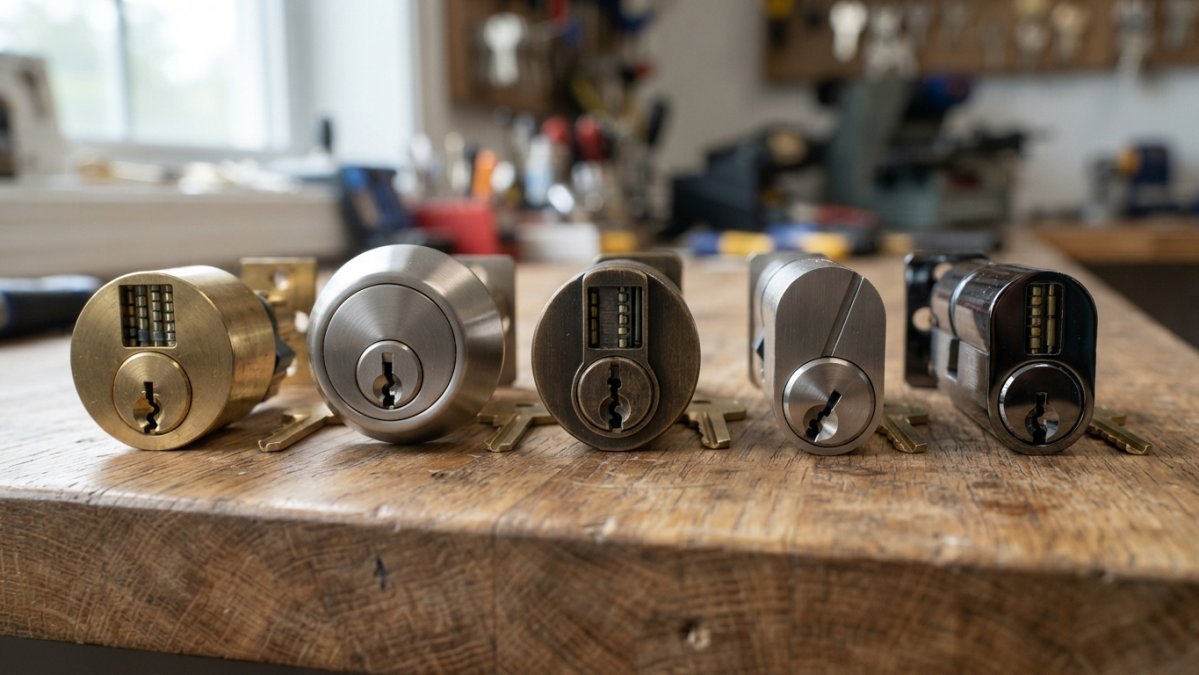
1. Medeco Maxum Deadbolt (high-security pin tumbler)
Medeco's Maxum is the residential deadbolt most locksmiths recommend for genuine pick resistance. Its pin tumbler cylinder uses rotating pins and a sidebar, so pins must be lifted to the correct height and rotated to the correct angle before the sidebar releases, a two-axis requirement that defeats most picking and bumping.
The Maxum carries a UL 437 listing, the higher of the two common UL burglary-resistance ratings for key locks, and its restricted keys require an authorization card for duplicates. It fits a standard 2-1/8 inch crossbore and 1-inch edge bore.
- Best for: primary entry doors on homes and small businesses where key control matters
- Pick resistance: very high (rotating pins plus sidebar)
- Drilling resistance: high (hardened steel inserts and a hardened face)
2. Kwikset 980 Signature Series Deadbolt (bump-resistant pin tumbler)
The 980 is the practical middle of this list. Its Kwikset SmartKey cylinder uses a rack-and-pinion wafer design instead of a conventional pin stack, which resists bumping well and lets you rekey it yourself in seconds if a key goes missing.
The 980 carries an ANSI/BHMA Grade 1 rating and a 1-inch solid steel throw bolt. It is not as pick-resistant as a Medeco, and published research shows the SmartKey cylinder can be manipulated with specialized tools, so treat it as bump-resistant rather than true high-security.
- Best for: rentals and standard residential doors where self-rekeying is valuable
- Pick resistance: moderate to high
- Drilling resistance: moderate
3. Schlage B60N Deadbolt (Grade 1 conventional pin tumbler)
The B60N is the workhorse: a conventional pin tumbler deadbolt with an ANSI/BHMA Grade 1 rating, a 1-inch bolt with a hardened steel roller to resist sawing, and a solid brass cylinder housing.
Its real strength is fit and availability: the B60N is sold everywhere, fits standard door prep, and pairs with Schlage's full line of handlesets and knobs. For most homeowners this is the sensible baseline upgrade without a specialty dealer relationship.
- Best for: standard residential entry doors on a mainstream budget
- Pick resistance: moderate
- Drilling resistance: moderate to high
4. Mul-T-Lock MT5+ High-Security Cylinder (high-security pin tumbler)
The MT5+ is a high-security cylinder rather than a complete deadbolt, installed in a compatible deadbolt body or rim/mortise cylinder. It combines a pin tumbler stack, a telescopic pin, and a magnetic key element, making picking and bumping extremely difficult.
This suits higher-risk settings: homes with prior break-in attempts, small commercial entries, or any door where key control matters as much as pick resistance. It is not a DIY install.
- Best for: higher-risk residential and light commercial doors
- Pick resistance: very high
- Drilling resistance: high (with the appropriate hardened body)
5. Master Lock M1EURDCCS / No. 1UP BumpStop Padlock (bump-resistant padlock)
Not every pick-resistant lock is a deadbolt. Master Lock's BumpStop line uses a cylinder with security pins designed to resist bumping, and these padlocks are common on gates, sheds, storage units, and job-site boxes.
For a gate or outbuilding, a bump-resistant padlock with a hardened shackle and shielded hasp is often the right answer. Just remember a padlock is only as strong as what it attaches to: a soft hasp or thin chain defeats the lock's resistance.
- Best for: gates, sheds, storage, and outbuildings
- Pick resistance: moderate to high
- Drilling resistance: moderate
How we chose these five
We weighted four things: documented resistance to picking or bumping (not just marketing claims), a recognized rating such as ANSI/BHMA Grade 1 or a UL listing, fit with common door prep without major modification, and realistic availability of replacement keys and parts.
We did not rank by price or popularity: a cheap lock can still be a genuine upgrade over a builder-grade deadbolt, and an expensive one can be wrong for a hollow-core door.
Pick-Resistant Deadbolt Features That Stop Lock Picking
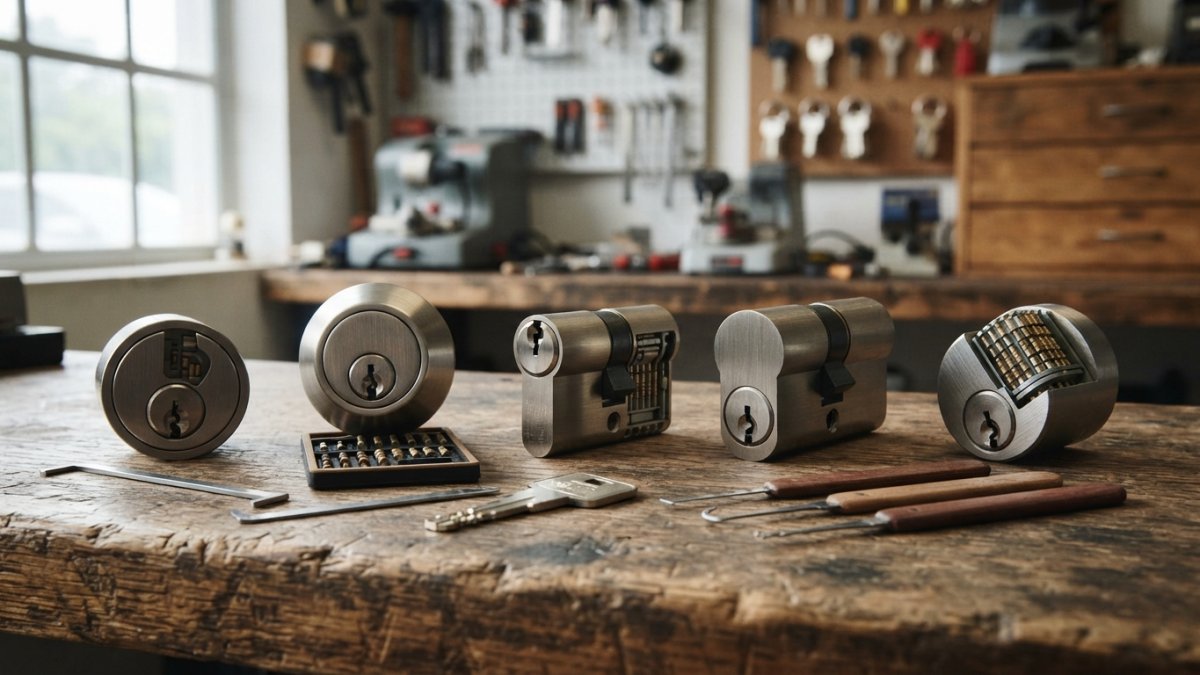
A pick-resistant deadbolt combines several design elements. Reinforced keyways narrow the space inside the lock, preventing standard picks from reaching pins, while security pins change shape under pressure to resist manipulation.
Hardened cylinders resist drilling and forced rotation, anti-rotation pins prevent spinning the cylinder after partial manipulation, and restricted keyways mean keys can't be easily copied or guessed.
The most effective pick-resistant locks use multiple barriers.
Understanding Lock Security Ratings and Testing Standards
"Pick-resistant" is a marketing phrase until someone tests it. The ratings below are the ones you can actually look up.
ANSI/BHMA grades (the A156.36 and A156.5 standards)
The Builders Hardware Manufacturers Association (BHMA) maintains the standards ANSI approves for door hardware. Deadbolts fall under ANSI/BHMA A156.36, Auxiliary Locks, and keyed knobs and levers under A156.5, Cylinders and Input Devices. Both use a three-grade system:
- Grade 1 is the highest residential/commercial grade. It requires the lock to survive a specified number of operating cycles, a specified impact load, and a specified torque and pull force without failing. Grade 1 deadbolts are what you want on an exterior door.
- Grade 2 is a mid-tier rating, common on better residential hardware.
- Grade 3 is the minimum grade and is what most builder-grade and big-box multipack locks carry. It is legal and it works, but it is not built to the same abuse tolerance as Grade 1.
What the grade does not tell you is how pick-resistant the cylinder is. A Grade 1 deadbolt can still have a cylinder a skilled picker defeats, grade is about durability and physical strength under load, not picking.
UL 437 and UL 1034 (burglary resistance)
Underwriters Laboratories tests key locks against actual forced-entry and manipulation attempts. Two listings matter:
- UL 437 is the higher bar. It covers key locks intended to resist picking, impressioning, and other covert entry techniques, along with drilling and physical attack. A lock with a UL 437 listing has been tested against manipulation, not just against being hit with a hammer.
- UL 1034 covers burglary-resistant electric and mechanical locks and is the more common listing on residential deadbolts. It addresses physical attack and durability but is not the same as UL 437's manipulation testing.
When a manufacturer claims pick resistance, a UL 437 listing is the strongest single piece of evidence you can ask for. If a lock has no UL listing at all, treat the pick-resistance claim as unverified.
What independent testing actually looks like
Beyond the standards bodies, independent researchers and lock-sport organizations publish findings on specific cylinders. As a buyer, ask one question: what test did this lock pass, and who ran it? A manufacturer's own lab is not independent testing; a third-party listing, published research paper, or documented lock-sport result is.
A common pattern is that a lock is strong against one attack and weak against another: a cylinder with excellent pick resistance may have a soft face that drills easily, and a lock with a hardened face may have a cylinder that bumps.
How to read a lock's spec sheet
When comparing two locks, look for four things in order:
- BHMA grade (A156.36 for deadbolts), tells you durability and physical strength.
- UL listing (437 for manipulation resistance, 1034 for burglary resistance), tells you what was tested against attack.
- Cylinder type, pin tumbler, wafer, disc, or electronic. This tells you the kind of picking resistance you can expect.
- Key control, restricted or unrestricted. Restricted keys limit unauthorized duplication, which matters as much as pick resistance in real-world security.
If a spec sheet lists none of these, you are buying on faith, which is fine for a shed padlock but not for the door you sleep behind.
ANSI/BHMA A156.36 standard for auxiliary locks
Installation, Maintenance, and Practical Security Guidance
Proper installation determines whether a pick-resistant lock performs as designed. The deadbolt must extend fully into the strike plate.
SOUTHMIAMILOCKSMTIH.COM handles installation for residential and commercial properties, ensuring the lock aligns correctly, the bolt extends properly, and the surrounding hardware supports the lock's security rating.
Maintenance keeps pick-resistant locks reliable. Lubricate the keyway occasionally with graphite powder or a specialized lock lubricant, never oil, which attracts dirt.
Picking Resistance Versus Other Attack Methods
Lock picking is one attack vector among many. Forced entry, drilling, bumping, and destructive methods often succeed faster.
Picking takes minutes and skill, so most burglars skip it when quicker methods are available.
A pick-resistant lock addresses one vulnerability but doesn't eliminate others.
For residential properties in Miami, a pick-resistant deadbolt plus a reinforced strike plate stops most opportunistic break-ins. Commercial applications may need access control systems or monitored alarms.
Choosing the Right Lock for Your Door and Budget
Start by identifying your actual security needs.
Consider your door type. Solid wood doors support security hardware better than hollow-core doors.
Budget matters.
Maintenance capability also factors in. Electronic smart locks require battery monitoring and occasional troubleshooting.
| Lock Type | Best For | Pick Resistance | Cost Range | Maintenance |
|---|---|---|---|---|
| Pin Tumbler with Reinforced Keyway | Standard residential | Moderate | Lower | Minimal |
| Cam Lock | Commercial cabinets | Moderate to High | Lower | Minimal |
| Electronic Smart Lock | Flexible access control | Very High | Higher | Battery monitoring |
| Medeco-Certified | High-value residential | Very High | Higher | Minimal |
| Bump-Resistant | Modern attack defense | High | Moderate | Minimal |
Choosing a pick-resistant door lock is one of the most practical security investments you can make.
SOUTHMIAMILOCKSMTIH.COM has installed thousands of pick-resistant locks across Miami-Dade County.
Frequently Asked Questions
What features make a pick-resistant deadbolt effective against lock picking attacks?
The most effective pick-resistant deadbolts combine security pins (mushroom or spool-shaped pins that bind at different heights), reinforced keyways that restrict pick tools, and hardened steel cylinders. High-security locks also use key control systems that limit blank key availability, making unauthorized key duplication nearly impossible. Pin tumbler designs with tight tolerances and anti-rotation features add additional layers of resistance to picking attempts.
Are pick-resistant locks worth the investment compared to standard deadbolts?
Pick-resistant locks provide measurable security benefits if your property faces elevated risk. Standard deadbolts can be picked in seconds by someone with basic tools; high-security locks resist picking for minutes to hours. For residential doors in secure buildings or commercial applications, the cost difference is justified. However, pick resistance is just one factor, forced entry through drilling, bumping, and physical attacks require different countermeasures. A layered approach combining pick resistance, drilling resistance, and strike plate reinforcement offers the best protection.
What is the difference between bump-resistant locks and pick-resistant locks?
Pick-resistant locks prevent manipulation of pins through picking tools and techniques. Bump-resistant locks specifically defend against bump attacks, where a specially cut key is inserted and struck to force all pins to the shear line simultaneously. Modern high-security locks address both threats through security pin designs and tighter tolerances. Some locks resist bumping but remain vulnerable to picking, and vice versa. The best locks combine both protections along with drilling resistance for comprehensive security.
Can any door lock be completely pick-proof, or is picking always possible given enough time?
No lock is absolutely pick-proof with unlimited time and expertise. However, high-security locks with proper pin configurations, keyway design, and security pins can resist picking for hours or require specialized knowledge that deters opportunistic attacks. For practical purposes, a lock that resists picking for 30 minutes or more effectively protects most residential and commercial properties, since intruders typically target easier entry methods. The goal is to make picking so difficult and time-consuming that other entry methods become more attractive to potential attackers.