 how-to
Changing Locks for Airbnb Property Managers: 2026 Guide
Table of Contents
- Why Changing Locks for Airbnb Property Managers Is Non-Negotiable
- Keyless Entry vs. Physical Key Handoffs: Pros and Cons
- Best Smart Locks for Airbnb: What to Look For
- Airbnb Smart Lock Integration with Booking Platforms and PMS
- Managing Guest Access Codes Remotely: A Step-by-Step Process
- Security Audit Protocols Every Property Manager Should Run
- Legal Considerations When Changing Locks on Airbnb Properties
- Conclusion
Last Updated: August 22, 2026
Changing locks for Airbnb property managers is critical security practice that protects guests, property, and the host's liability exposure between every reservation. A property relying on the same physical key or static door code across multiple guest stays is not secure, it's an open access point. At SOUTHMIAMILOCKSMTIH.COM, we work with short-term rental hosts regularly and provide comprehensive security solutions.
This guide covers smart lock integration, automated code generation, legal considerations, and security audit protocols that separate professional property managers from casual hosts.
Why Changing Locks for Airbnb Property Managers Is Non-Negotiable
The short-term rental model creates a unique access control challenge. Unlike long-term rentals where a single tenant holds keys for months, Airbnb properties cycle through dozens of different guests annually. Each checkout is a potential security gap.
Security Risks of Static Door Codes and Physical Keys
Static door codes provide no real security improvement over physical keys. Guests write codes down, share them with travel companions, and sometimes post them in social media photos. Physical key handoffs carry equal risk, keys can be copied at any hardware store, and a lost key may go unreported, leaving unauthorized copies in circulation.
Temporary access codes expire automatically at checkout with no manual action required. The Federal Trade Commission guidance on consumer privacy and security underscores that businesses handling access to private spaces have a duty to maintain reasonable security practices, a standard that static codes and untracked physical keys fail to meet.
Liability and Insurance Implications for Hosts
Most standard homeowner's insurance policies do not cover short-term rental activity. Hosts typically need a specialized policy or rider that explicitly covers commercial use.
If a guest is harmed by an unauthorized third party who accessed the property using a previously shared code or copied key, the host's liability exposure is significant. Insurers will ask whether reasonable access control measures were in place. An audit trail showing unique, time-limited codes issued for each reservation is evidence of due diligence. According to the Insurance Information Institute's guidance on home sharing risks, hosts should document their security practices and review coverage annually. Automated access control systems that log every entry and exit create exactly the documentation that supports an insurance claim.
Keyless Entry vs. Physical Key Handoffs: Pros and Cons
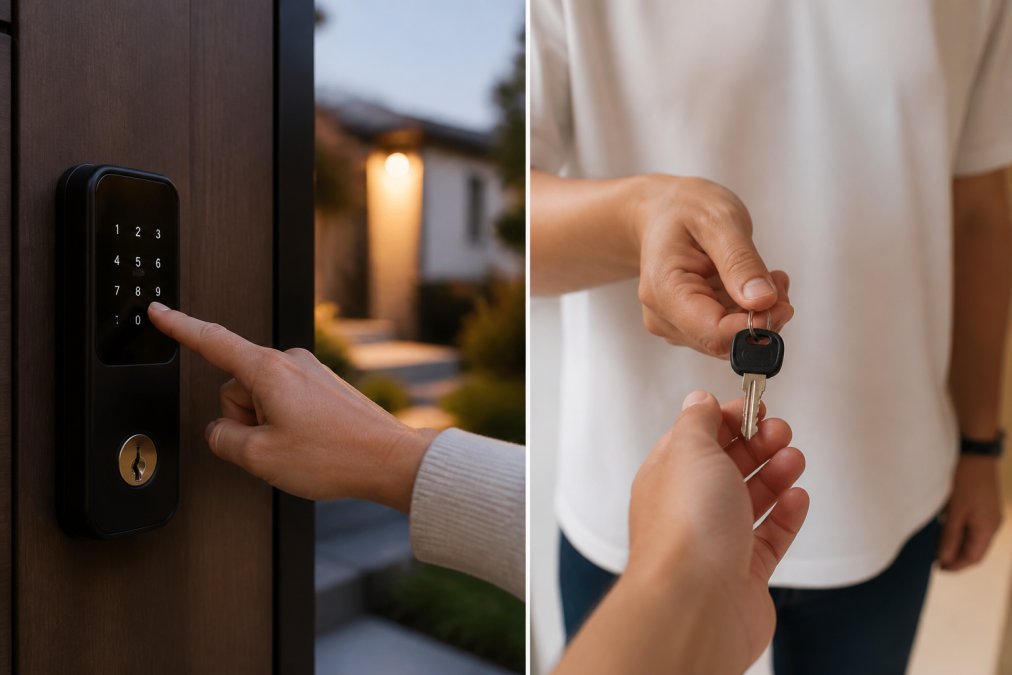
Keyless entry is the clear operational winner for short-term rentals at scale. Physical key handoffs require either in-person coordination or a lockbox. In-person check-ins create scheduling dependencies that frustrate late arrivals. Lockboxes introduce their own risks: the same code often stays active for weeks, boxes can be pried open, and there's no audit trail.
| Method | Guest Experience | Security Level | Operational Overhead | Audit Trail |
|---|---|---|---|---|
| Physical key | Familiar, simple | Low, copyable | High, coordination required | None |
| Static lockbox | Convenient | Low, code rarely changes | Medium | None |
| Static smart lock code | Self check-in enabled | Medium | Low | Partial |
| Dynamic per-reservation code | Seamless self check-in | High, auto-expires | Minimal | Full |
| Mobile digital key | App-based entry | High, encrypted | Minimal | Full |
A property manager running five or more listings cannot realistically coordinate in-person key handoffs without dedicated staff. Dynamic PIN codes that generate automatically at booking and expire at checkout turn a daily task into a zero-touch process. A PIN keypad on a smart lock also provides accessibility for guests unfamiliar with smartphone apps, no app required, just a numeric code.
Best Smart Locks for Airbnb: What to Look For
The best smart locks combine reliable connectivity, long battery life, and native integration with booking platforms. A lock that disconnects from Wi-Fi during a guest's stay or whose battery dies mid-reservation creates an emergency requiring immediate physical intervention.
Key Features Every Host Should Prioritize
- Connectivity redundancy: Support both Wi-Fi and Z-Wave or Zigbee protocols so the lock functions locally if Wi-Fi fails.
- Battery life: Target locks rated for at least six months of normal use with low-battery alerts.
- Code capacity: A lock storing only 10 codes is insufficient for busy rentals. Target 50 or more unique codes.
- Audit trail: Every entry event should be logged with timestamp and code used.
- Remote management: Add, modify, and delete codes from anywhere via smartphone app.
- Auto-lock: Timer-based auto-lock prevents guests from accidentally leaving doors unsecured.
- Tamper alerts: Real-time notifications for forced entry attempts or repeated incorrect PIN entries.
- Firmware updates: Over-the-air updates keep locks current with security patches.
PIN-based keypad entry remains most practical for short-term rentals. Biometric systems require enrollment, which isn't feasible for one-night guests. RFID cards are physical items that can be lost or copied.
Airbnb Smart Lock Integration with Booking Platforms and PMS
Airbnb smart lock integration connects a lock's management system to either the Airbnb platform directly or a property management system that pulls reservation data. When functioning correctly, a new reservation triggers automatic code generation without manual host input.
Airbnb supports direct smart lock integration for select lock brands through its listing editor. Hosts can enable automated access code delivery to guests through Airbnb messaging.
For property managers running multiple listings across Airbnb, VRBO, and direct booking channels, a property management system is more practical. A PMS aggregates reservations from all channels and pushes booking data to the lock's API, generating and revoking codes based on check-in and checkout times.
Automating Door Code Generation for Each Reservation
Automating door code generation creates a unique, time-limited PIN for each reservation and delivers it to the guest without manual host intervention. The entire sequence requires zero human action:
- Guest completes booking on Airbnb or another channel.
- The PMS receives reservation data, including check-in date, checkout date, and guest contact information.
- The PMS sends an API call to the smart lock platform, specifying the guest's access window.
- The lock platform generates a unique PIN valid only during the reservation window.
- The PMS or Airbnb platform delivers the code to the guest via automated message.
- At checkout time, the code automatically deactivates.
- The lock's audit trail logs entry and exit events associated with that code.
This workflow eliminates the most common source of access control errors: human oversight.
Managing Guest Access Codes Remotely: A Step-by-Step Process
Managing guest access codes remotely means controlling who has access to a property at any given time without being physically present. Here is a practical setup process:
- Select a smart lock with a cloud-connected management platform that supports scheduled codes, not just permanent user codes.
- Connect the lock to your property management system via native integration or middleware automation.
- Set check-in and checkout times as the default access window. Codes should activate 30 minutes before check-in and deactivate 30 minutes after checkout.
- Create separate code categories for guests, cleaning staff, and maintenance vendors with distinct access windows.
- Enable real-time monitoring alerts to receive notifications when guests first use their code and when codes are used for the last time before checkout.
- Test the full automation cycle with a test reservation before going live.
- Review the audit trail weekly to identify anomalies, such as access attempts outside the guest's reservation window.
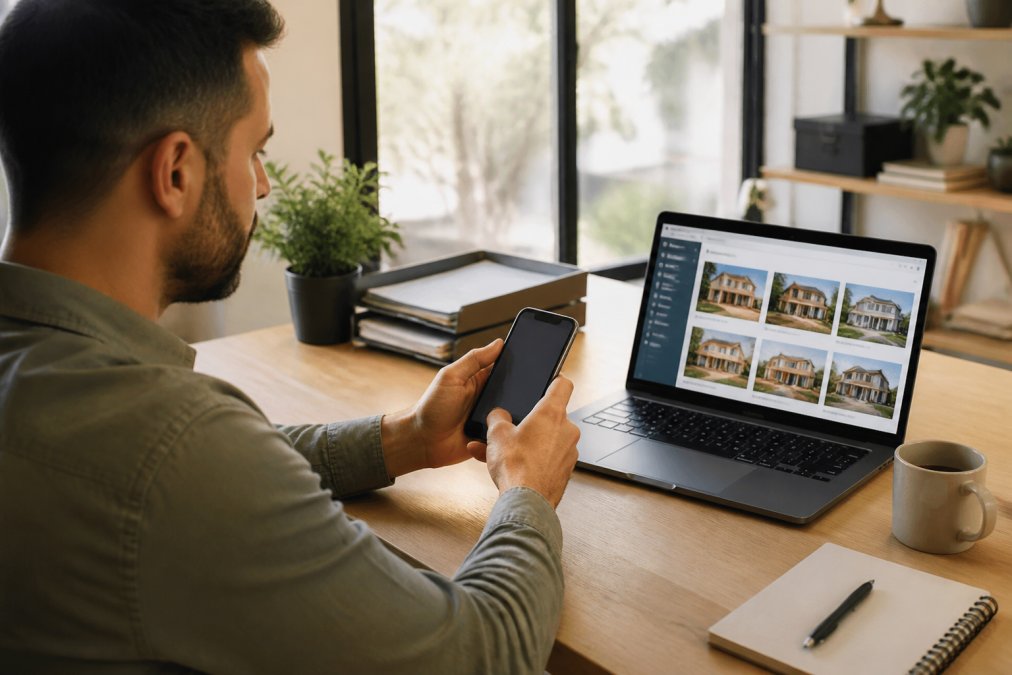
Remote management also means handling exceptions. When a guest reports they cannot access the property, you need to verify whether their code was entered correctly, whether the lock's battery is functional, and whether the code is still active, all from your phone.
Security Audit Protocols Every Property Manager Should Run
A security audit protocol is a scheduled review of all access control settings, active user codes, hardware condition, and connectivity status. Professional property managers running multiple listings should run a formal security audit at least quarterly:
- Active code inventory: Pull a full list of active codes and verify that no codes exist outside of current reservations, active cleaning staff, or authorized maintenance vendors. Delete any unrecognized code immediately.
- Audit trail review: Check the entry log for the past 90 days and flag any access events outside reservation windows.
- Hardware inspection: Physically inspect the lock mechanism, keypad, and mounting hardware for signs of tampering or damage.
- Battery status check: Confirm current battery level and replace proactively if below 20%.
- Firmware version check: Confirm the lock runs the current firmware version.
- Connectivity test: Verify the lock's connection to your Wi-Fi network and confirm remote management functions are responding.
- Integration sync test: Confirm your PMS is correctly syncing reservation data to the lock platform.
According to NIST's guidance on access control best practices, regular audits of access control systems are a core component of any sound security posture.
When to Call a Licensed Locksmith Instead of DIY
Call a licensed locksmith when installing a high-security lock in a property with an existing master key system, when the door frame shows damage from a previous forced entry, when a guest reports lock malfunction that remote troubleshooting hasn't resolved, or when transitioning from physical keys to keyless entry for the first time.
At SOUTHMIAMILOCKSMTIH.COM, our licensed, bonded, and insured technicians handle smart lock installations and rekeying for property managers with over 30 years of experience. Our certified technicians are qualified in Medeco and Multlock high-security lock systems.
Legal Considerations When Changing Locks on Airbnb Properties
Changing locks involves legal dimensions that vary depending on whether the host owns the property outright, operates under a lease, or manages properties on behalf of owners.
Property owners generally have unrestricted authority to change or upgrade locks. The primary consideration is compliance with any HOA rules or building regulations.
Property managers operating under a management agreement should confirm the agreement explicitly authorizes lock changes and access control modifications.
Hosts who rent their primary residence face the most complex situation. Many residential leases prohibit subletting or short-term rental activity entirely. Changing a lock without landlord authorization can constitute a lease violation.
Guest rights under landlord-tenant law generally do not extend to short-term rental guests, though some jurisdictions have begun extending limited protections to guests staying beyond a certain number of consecutive nights. Property managers should review local ordinances annually.
The U.S. Department of Housing and Urban Development's fair housing resources are relevant when access control decisions could be perceived as discriminatory.
Smart lock audit trails contain records of when specific guests accessed a property. This data should be handled securely and retained only as long as operationally necessary.
The security gap between a professionally managed short-term rental and a casually operated one comes down to access control discipline. Static codes, untracked physical keys, and absent audit trails are liabilities that grow with every additional guest. SOUTHMIAMILOCKSMTIH.COM provides licensed, bonded, and insured locksmith services for property managers who need professional installation, rekeying, and high-security lock upgrades handled correctly. Our technicians are certified in Medeco and Multlock systems and bring over 30 years of experience to every installation. Contact SOUTHMIAMILOCKSMTIH.COM to get your properties set up with access control that holds up under scrutiny.
Frequently Asked Questions
Q: What door locks do Airbnb hosts use for short-term rentals?
A: Most professional Airbnb hosts use PIN-based smart locks that support temporary access codes. These locks connect via Wi-Fi or Z-Wave to a property management system or the Airbnb platform directly, generating a unique code per reservation. Popular features include audit trails, remote management, and automatic code expiration. A licensed locksmith can assess your door hardware and recommend a compatible model that fits your existing deadbolt setup without requiring a full door replacement.
Q: How often should property managers change door codes for guests?
A: Every single reservation should get a unique, time-limited door code. Reusing codes between guests is one of the most common security mistakes in short-term rental management. Automated systems tied to your booking platform handle this automatically, generating and expiring codes based on check-in and check-out times. For physical rekeying or hardware-level lock changes, most property managers schedule those quarterly or after any reported security incident.
Q: Are smart locks legally required for Airbnb properties?
A: No federal law currently requires smart locks for short-term rentals. However, some local ordinances and HOA rules govern what types of locks are permitted, and your homeowner's insurance policy may include provisions about access control. Changing locks for Airbnb property managers must also comply with state landlord-tenant law if the property has any long-term tenants. Always verify local regulations before installing new hardware, and consult a licensed locksmith familiar with local code compliance.
Q: What are the benefits of automated lock management for property managers?
A: Automated lock management eliminates physical key handoffs, reduces lockout incidents, and creates a full audit trail of who accessed the property and when. It also cuts operational time significantly, since codes generate and expire without manual intervention. For managers handling multiple listings, integration with a property management system means one dashboard controls access across every unit. Guest experience improves too, since self check-in at any hour removes the need to coordinate arrival times.
This article was written using GrandRanker