 how-to
How to Open a Locked Gun Safe Without a Key
Table of Contents
- Verify Ownership and Understand Your Safe Before Attempting Access
- Troubleshooting a Forgotten Combination or Missing Key
- Electronic Gun Safe Keypad Not Working: Battery and Power Solutions
- Lost Gun Safe Key Replacement: Recovery Options and Next Steps
- When to Contact a Gun Safe Locksmith for Professional Help
- Safe Locksmith Cost and Service Expectations
- Methods to Avoid: Why Force and Damage Harm Your Safe and Contents
- After You Regain Access: Security and Firearm Safety Steps
- Frequently Asked Questions
Last Updated: October 7, 2026
Verify Ownership and Understand Your Safe Before Attempting Access
First, confirm you own the safe, accessing someone else's requires written permission or proof of authorization, and attempting to open locked gun safe without permission is illegal.
Next, identify your lock type from the manufacturer label or documentation, key, keypad, electronic, or dial.
Document what you know: brand and model number, lock type, when you last accessed it, and any documentation or receipts.
Troubleshooting a Forgotten Combination or Missing Key
Check for Documentation and Default Codes
Search for the original paperwork: owner's manual, combination card or key code, warranty, and receipts. Many safes ship with default or backup codes, check the manual or contact the manufacturer with proof of purchase, and they may provide the code without professional service.
Write down any numbers you find. Some safes use partial combinations or reset sequences. The manufacturer can confirm whether a code works or if it's been changed.
Inspect the Safe's Lock Type and Mechanism
Look closely: a key lock has a keyhole, a combination lock a dial, an electronic lock a keypad or display.
For mechanical dials, listen while turning, subtle clicks or resistance points can hint at the combination. It rarely works on modern safes but is worth trying before escalating.
Check for a bolt control handle.
Electronic Gun Safe Keypad Not Working: Battery and Power Solutions
Electronic gun safes rely on batteries or external power. If the keypad isn't responding, power is usually the problem.
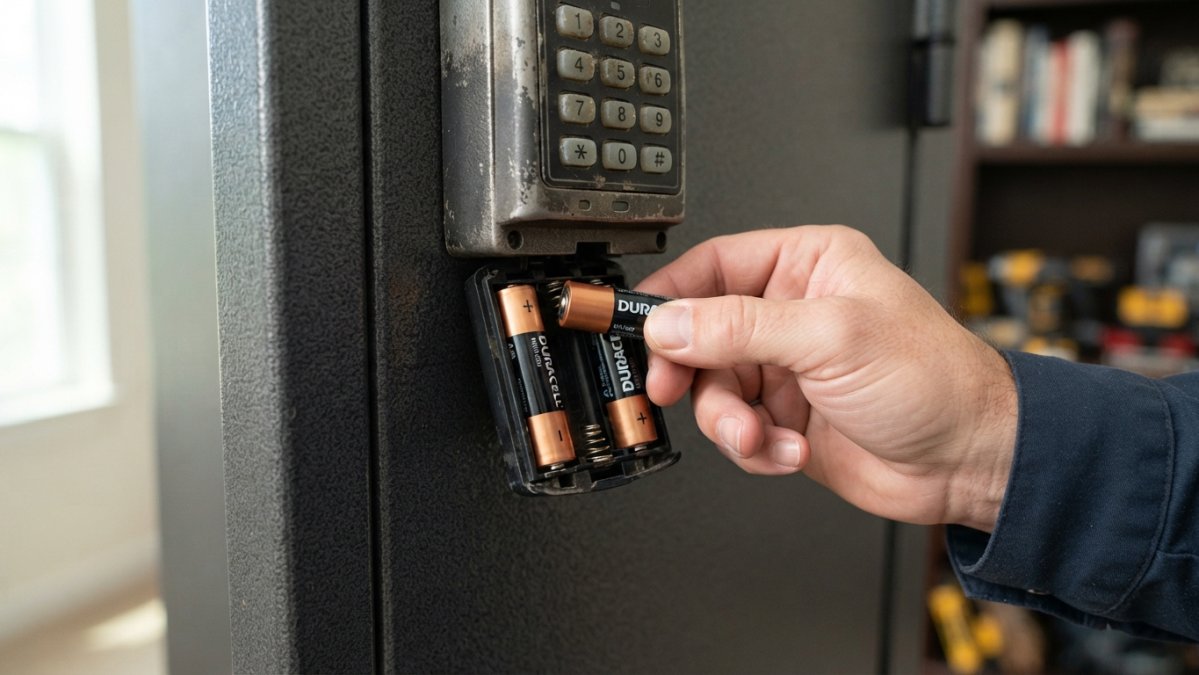
Checking and Replacing Internal Batteries
Most electronic safes use AA or 9V batteries, with the compartment inside the door or behind the keypad.
Open the compartment and note the battery orientation. Remove the old batteries and inspect the terminals for corrosion, white, blue, or green buildup.
Test the keypad, you should hear a beep or see a light.
Using External Power and Emergency Battery Connections
An external 9V battery connector powers the safe temporarily. Connect a fresh 9V battery using the correct connector (usually included in the documentation or sold separately).
Once powered, the keypad should respond, enter your code.
If there's no external power port and the internal batteries are dead, you've hit the limit of DIY troubleshooting.
Lost Gun Safe Key Replacement: Recovery Options and Next Steps
The right recovery path depends on your safe's keyway. Identify which type you have before calling anyone, it changes the cost, timeline, and whether the safe can be opened without drilling.
Identify Your Keyway Type First
Tubular key (round barrel, center pin). Common on budget gun cabinets and many Stack-On, Homak, and similar entry-level safes.
Wafer or flat key (standard house-key profile). Found on some cabinet-style safes and lockboxes.
High-security or dimple key. Used on many mid- and upper-tier safes (Liberty, Browning, American Security, and similar).
Double-bitted or side-bar key. Found on some commercial-grade and higher-end residential safes.
Find the Key Code Before You Call Anyone
Most keyed safes ship with a key code stamped in one of three places:
- On the key itself (often on the bow)
- On a plastic key tag in the box
- On a sticker inside the door, on the door edge, or on the back of the safe
Write the code down. It lets a locksmith or the manufacturer cut a working key without touching the lock, faster and cheaper than an on-site opening, often the same day for a common brand.
Manufacturer Path: When It Works and When It Doesn't
The manufacturer is the right first call when:
- The safe is still under warranty
- You have the key code and proof of purchase
- The keyway is proprietary (dimple, double-bitted, or registered)
Expect to provide the model number, serial number, key code, and proof of ownership. Turnaround is typically days to a few weeks and usually costs less than an on-site visit, but you won't have access in the meantime.
The manufacturer path fails when the safe is discontinued, the brand is out of business, or you can't prove ownership, then a safe locksmith is the practical next step.
Locksmith Path: What They Can and Cannot Do
A qualified safe locksmith can:
- Cut a replacement key from a code without opening the safe
- Impression or pick a tubular or wafer lock non-destructively
- Drill only as a last resort, usually through a service point designed for it
A general-purpose locksmith who mostly does cars and houses may not carry safe-specific blanks or tools. Ask directly: "Do you work on gun safes, and do you stock blanks for [your brand]?" If the answer is vague, call a safe specialist.
After the Safe Is Open
Once you have access, do these three things before closing it again:
- Get two spare keys cut, one outside the safe, one in a fire-rated lockbox or safe deposit box.
- Record the key code somewhere other than the safe itself.
- Consider re-keying or replacing the lock if the lost key was ever outside your control, a lost key in someone else's hands is a security problem, not just an inconvenience.
If the safe uses a keypad instead of a key, skip to the battery and power troubleshooting steps above, the recovery path is completely different.
When to Contact a Gun Safe Locksmith for Professional Help
Signs Your Safe Needs Professional Intervention
Stop DIY attempts and call a locksmith if you need to open locked gun safe and:
- The keypad is unresponsive after battery replacement
- You've tried the combination multiple times with no result
- The manufacturer won't provide the code or key without documentation you don't have
Continuing to force the issue risks permanent damage. A locksmith has specialized tools and expertise to open the safe without harm.
What to Expect from a Safe Locksmith Service
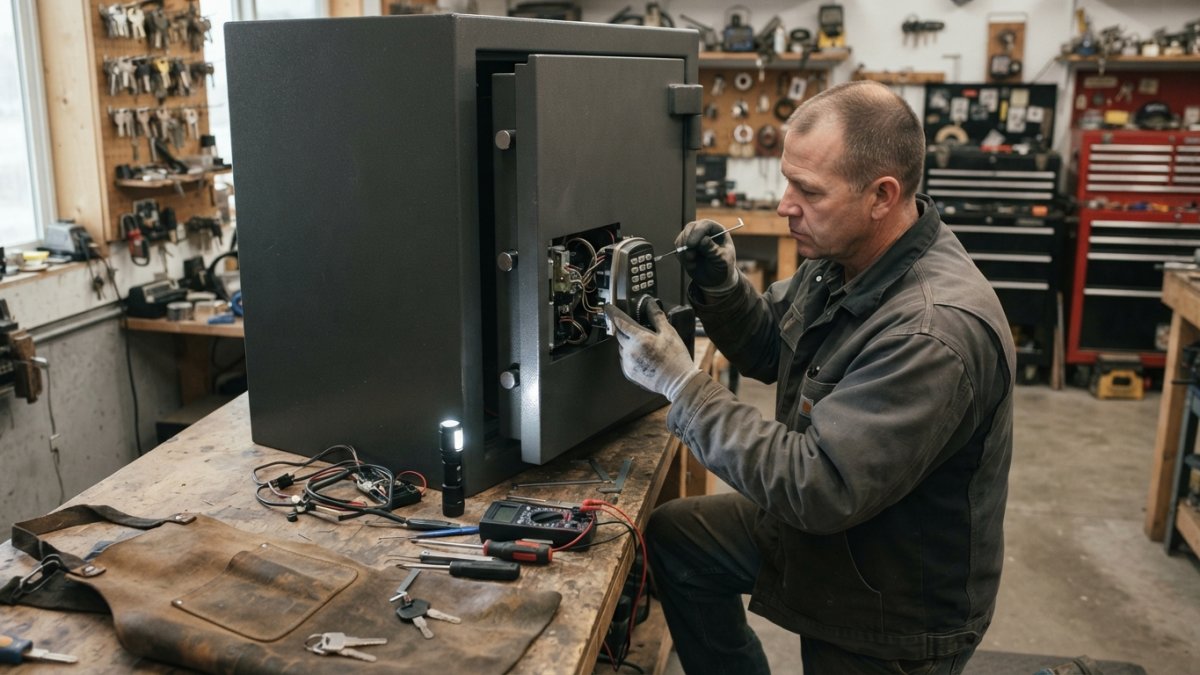
A professional locksmith will:
- Verify your ownership and identity
- Inspect the safe and lock type
- Explain the opening method and any limitations
- Open the safe using non-destructive techniques
- Provide replacement keys or reset the combination
- Test the lock to ensure it works properly
The process takes 30 minutes to 2 hours depending on lock type. Non-destructive opening is standard, using specialized picks, decoders, and electronic tools designed for safes.
Ask the locksmith about:
- Whether the safe can be repaired or needs replacement
- How to reset the combination or obtain replacement keys
- Warranty or guarantee on the work
Safe Locksmith Cost and Service Expectations
Safe-opening pricing is a range driven by variables you can identify before you call, letting you sanity-check a quote instead of guessing.
What Actually Drives the Price
Lock type. A tubular or wafer key lock is usually cheapest to open because it can often be picked or impressioned.
Time and access. Business-hours appointments are the baseline; nights, weekends, and holidays carry a premium.
Travel distance. Many locksmiths charge a service-call fee based on driving distance, a shop 10 minutes away is usually cheaper than one 45 minutes out.
How to Compare Quotes Without Getting Burned
Ask every locksmith the same four questions:
- Is the quote a flat fee or hourly, and does it include the service call?
- Is the opening non-destructive, and what happens to the price if drilling is required?
- Does the quote include a replacement lock, new keys, or a combination reset, or are those extra?
- Are you licensed, bonded, and insured, and can you provide the license number?
A reputable technician will answer all four without hesitation. If a quote is dramatically lower, ask what's not included; if higher, ask what justifies it.
Realistic Timing Expectations
- Code or key cut from a code: often same-day if the blank is in stock.
- Non-destructive opening on-site: commonly 30 minutes to 2 hours depending on lock type.
- Drill-and-replace: longer, because the lock must be removed and a new one installed and tested.
Emergency and after-hours calls are usually same-day but at a premium. Waiting until the next business day almost always costs less.
Red Flags to Walk Away From
- Anyone who wants to drill before trying non-destructive methods
- Anyone who will not verify your ownership before opening the safe
- Anyone who quotes a price without asking the brand, model, or lock type
After the Service
Ask for a written summary: the method used, whether the lock was replaced or re-keyed, the new key code or combination, and any warranty. Keep it with your safe's manual and proof of purchase, if the problem recurs, that record gets you warranty service instead of a second full-price visit.
Methods to Avoid: Why Force and Damage Harm Your Safe and Contents
Never use these methods:
- Prying with a crowbar or flathead screwdriver
- Drilling the lock without professional guidance
- Hitting the safe with a hammer or mallet
Each damages the internal mechanism, and once damaged the safe often cannot be repaired, replacement costs far more than professional opening.
Forced entry also risks destroying what's inside. Drilling can puncture ammunition or damage documents.
Professional locksmiths use techniques designed to preserve the safe and its contents. The small cost of professional service saves money and protects your valuables.
After You Regain Access: Security and Firearm Safety Steps
Once you open the safe, take immediate action to prevent future lockouts.
Reset the combination. Change it to a new code you'll remember, write it down, and store it separately from the safe.
Test the lock regularly. Open and close the safe monthly to catch problems before you're locked out.
Maintain the lock. Clean the keypad or lock area periodically. Dust and debris can cause sticking.
At SOUTHMIAMILOCKSMTIH.COM, we understand that a locked gun safe creates urgency and stress. Our licensed, bonded, and insured technicians specialize in safe repair and combination services.
Frequently Asked Questions
Can a locksmith open a gun safe without damaging it?
Yes. A qualified safe locksmith uses specialized tools and techniques to open your gun safe without damaging the lock, bolt control, or safe body. Professional locksmiths are trained on various safe models and mechanisms, and they prioritize preserving your safe's integrity and the security of its contents. Attempting to force open a safe yourself risks permanent damage that may require full replacement.
What should I do if my electronic gun safe keypad stops working?
First, check and replace the internal batteries. Most battery-powered safes use AA or 9-volt batteries; consult your manual for the correct type. If replacement batteries don't restore function, try an external power connection or emergency power option if your safe model offers one. If these steps fail, contact the manufacturer or a safe locksmith to diagnose whether the keypad itself requires replacement or if the electronic lock has failed.
How can I get a replacement key for my gun safe?
Contact the safe manufacturer with proof of ownership. Many manufacturers can provide lost gun safe key replacement if you provide the safe's serial number and documentation. If the manufacturer cannot help, a qualified safe locksmith can create a replacement key or rekey the lock. This typically requires verifying ownership before the locksmith proceeds, ensuring authorized access only.
When should I stop trying to open my safe myself and call a professional?
Stop DIY attempts if the lock is visibly broken, the keypad is unresponsive after battery replacement, you've forgotten the combination and cannot locate documentation, or the safe has been damaged. Continuing to force or manipulate a compromised lock can cause irreparable damage. A safe locksmith can assess the situation, determine if repair is possible, and open your safe safely without harm to its contents or structure.
A locked gun safe without a key or combination is frustrating, but it's solvable. Battery replacement, manufacturer contact, and professional locksmith services offer clear paths forward. The key is knowing when to stop trying and call an expert. SOUTHMIAMILOCKSMTIH.COM provides specialized safe repair and opening services with over 30 years of locksmith experience. We handle the problem safely and efficiently, protecting both your safe and what's inside. Reach out today for a consultation.