 ultimate-guide
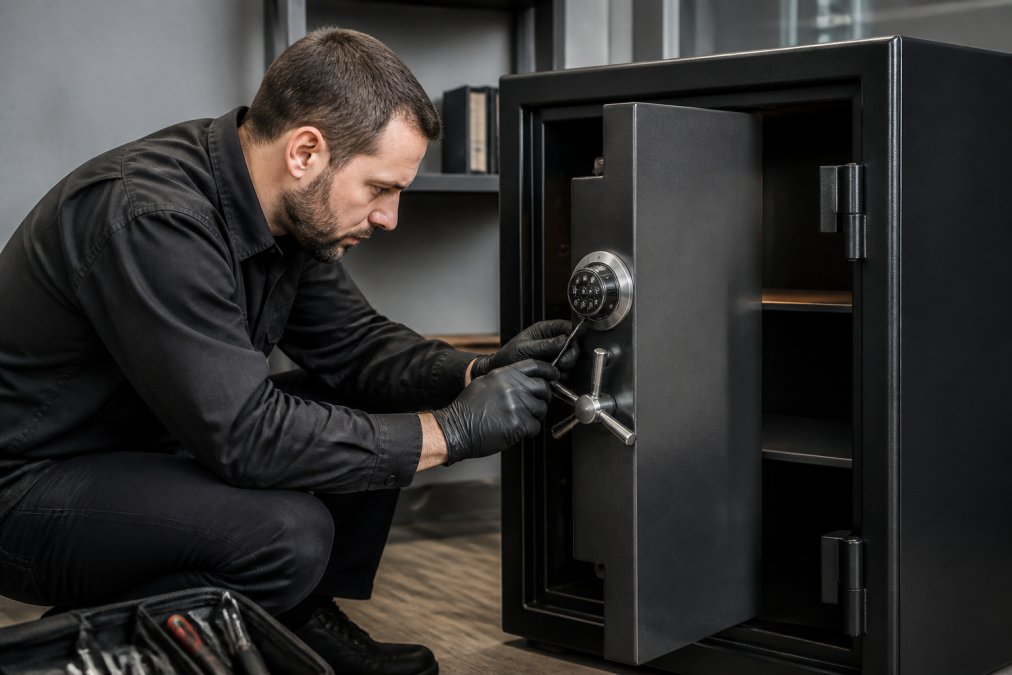
Commercial Safe Repair & Combination Services in Miami
Table of Contents
- Commercial Safe Repair and Combination Services for Miami Businesses
- Commercial Safe Combination Change Cost: What Affects Your Quote
- Emergency Safe Lockout Services for Businesses: What to Expect
- Best Practices for Business Safe Maintenance
- Integrated Commercial Security Solutions for Retail and Art Spaces
- Choosing a Commercial Safe Repair Provider: What to Verify
- Conclusion: Protecting Your Business Assets Long-Term
- Frequently Asked Questions
Last Updated: September 23, 2026
Commercial Safe Repair and Combination Services for Miami Businesses
A malfunctioning safe rarely announces itself politely. It jams on a Friday afternoon, locks out the manager who has opened it every morning for six years, or refuses a combination that worked yesterday. For business owners in Wynwood, the Design District, and the surrounding commercial corridors, that failure can freeze cash handling, halt document retrieval, and put client valuables in limbo.
Commercial Safe Combination Change Cost: What Affects Your Quote
There is no single price for a commercial safe combination change, and any provider who quotes one over the phone without asking about your safe is guessing. Pricing depends on the lock type, accessibility, and whether the change is routine or tied to a lockout or ownership transition.
The variables that move a quote most:
- Lock type. A mechanical dial lock and a digital keypad require different tools, parts, and time.
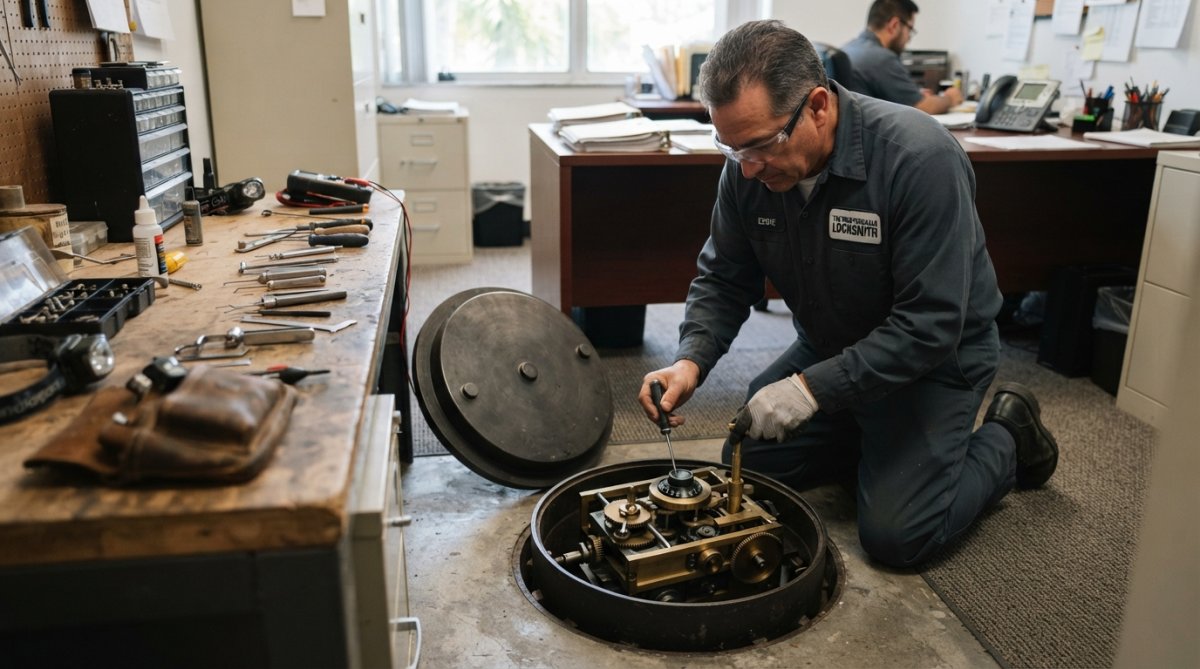
- Safe class and weight. A small deposit safe is a different job than a heavy vault door or a floor safe set into concrete.
- Access conditions. A safe against a wall in a tight stockroom takes longer to service than one with clear working room.
- Reason for the change. A scheduled change after staff turnover is straightforward. A change following a lockout or a failed mechanism is not.
- Parts availability. Older mechanical locks may need components that take time to source.
Emergency Safe Lockout Services for Businesses: What to Expect
An emergency safe lockout call follows a predictable sequence, but the technician's approach changes depending on whether you have a mechanical dial lock, a mechanical push-button lock, or an electronic keypad. Knowing the difference helps you judge whether the person on site is working competently.
What the process should look like
- Verification. The provider confirms you are authorized to open the safe, asking for business identification, a lease or ownership document, or signed authorization from the owner. In a shared building, common in Wynwood warehouse conversions and Design District multi-tenant retail, expect them to also confirm the suite number and responsible party on the lease.
- Assessment. The technician inspects the lock, dial, handle, and bolt work to identify whether the issue is the combination, the mechanism, or both. A dial that spins freely usually points to a broken drive cam or slipped wheel pack; one that will not turn at all often points to bolt-work binding or a fired relocker.
- Non-destructive entry. Skilled technicians manipulate the lock open where possible rather than drilling. Drilling is a last resort, not a first move.
- Repair or combination change. Once open, the underlying fault is corrected or the combination is reset.
- Test and handover. The safe is cycled open and closed several times, and you receive the new combination and any service notes.
How the lock type changes the job
Mechanical dial locks (Group 2, Group 1, and Group 1R). These traditional three- or four-wheel combination locks are found on most older floor safes and deposit safes in the district. A lost combination is typically recovered by manipulation, reading the wheel pack through feel and sound, which can take a skilled technician from twenty minutes to several hours depending on the lock's tolerance.
What drives the emergency price
Emergency lockout pricing reflects three things: time of day, lock type, and whether entry ends up destructive. After-hours and weekend calls carry a premium. Manipulation-heavy mechanical locks take longer than a keypad battery swap. A drilled safe requires entry plus a replacement lock and often door repair, which is why the honest answer to "how much will this cost?" is a range until the technician sees the lock.
Questions to ask before anyone arrives
- Are you licensed, bonded, and insured, and can you send documentation before dispatch?
- Do you carry the tools to manipulate a mechanical dial, or do you default to drilling?
- Will you confirm the price in writing, including the drill-and-replace contingency, before starting?
- Do you stock replacement locks for my safe's brand?
A common mistake is calling the first search result during a panic. Emergency work attracts opportunists, and a rushed decision is exactly what they rely on.
Best Practices for Business Safe Maintenance
Routine maintenance prevents most lockouts and costs far less than an emergency call. The businesses that avoid safe problems treat the safe as equipment with a service schedule, not furniture.
A practical maintenance routine:
- Service the lock annually. Mechanical dials need lubrication and adjustment; electronic locks need battery and keypad checks.
- Replace batteries on a schedule. Do not wait for the low-battery warning; replace electronic lock batteries on a fixed calendar.
- Keep the door and bolt work clean. Grit in the bolt channels causes binding that owners mistake for a failed lock.
- Limit who knows the combination. Every person with the combination is a future combination change.
- Change the combination after any staff departure. The single most overlooked maintenance task in small businesses.
- Log every opening issue. A dial that occasionally sticks is a warning, not a quirk.
| Maintenance Task | Frequency | Why It Matters |
|---|---|---|
| Lock service and lubrication | Annually | Prevents binding and dial failure |
| Battery replacement | On a fixed schedule | Avoids electronic lockout |
| Combination change | After staff changes | Closes an access gap |
| Bolt work and door inspection | Every service visit | Catches wear before failure |
| Issue logging | Ongoing | Turns small symptoms into early warnings |
Integrated Commercial Security Solutions for Retail and Art Spaces
A safe does not protect anything on its own. It works as one layer in a broader setup that includes access control, video surveillance, intrusion detection, and alarm monitoring. But in Wynwood and the Design District, the building type and district rules shape which layers you can install, and most security guides ignore that.
Why these two districts are different
Wynwood's commercial stock is dominated by converted warehouses: open ceilings, exposed trusses, roll-up doors, and shared loading areas. That layout is great for foot traffic and terrible for perimeter security, because there is often no true "back door", just a wide opening that must be secured without blocking deliveries. The Design District is the opposite: high-finish build-outs, millwork, glass storefronts, and shared luxury corridors where visible hardware is a design problem, not just a security one.
The practical stack for a gallery or retail space
- Access control with keyless entry and a digital keypad, so you know who entered and when. In shared corridors, choose a system that logs by credential, not just by door.
- Video surveillance covering the sales floor, the safe area, and the rear entrance. In warehouse conversions, the rear loading area is the highest-risk zone and most often left uncovered.
- Intrusion detection with alarm monitoring, so an after-hours breach triggers a response rather than a silent recording. Confirm your monitoring contract includes a defined response protocol, not just an app notification.
- The safe itself, correctly anchored and serviced, as the final containment layer for cash and small high-value items. A safe that is not bolted down is a carry-away risk regardless of the lock.
- Visitor management for galleries that host events. During Art Basel-week events and Design District showroom openings, foot traffic can multiply tenfold in an evening, a paper sign-in sheet will not hold up.
The district-specific failure modes
Warehouse conversions (Wynwood). Roll-up doors, shared walls, and open mezzanines create sightline and access gaps a standard retail security plan does not account for. Cameras at standard retail height often miss the mezzanine entirely.
The mistake to avoid
The mistake is buying these as disconnected purchases. A camera system nobody monitors, an alarm nobody responds to, and a safe unserviced for five years add up to the appearance of security rather than the reality. Business continuity depends on the whole chain working, and in a district where a single event can define your reputation, appearance is not enough.
Choosing a Commercial Safe Repair Provider: What to Verify
Verification is the difference between a repair and a liability. Before anyone works on a safe holding cash, documents, or client property, confirm four things: licensing, insurance, brand experience, and a written scope of work.
The checklist to run through every time:
- The provider is licensed, bonded, and insured, and will show documentation on request.
- The technician has specific experience with your safe's brand and lock type.
- The provider offers both repair and combination services, not just replacement sales.
- You receive a written scope and price before work begins.
- The provider will attempt non-destructive entry before drilling.
- You get the new combination and service notes at handover.
Conclusion: Protecting Your Business Assets Long-Term
Safe problems are predictable, and that is good news. Annual servicing, scheduled combination changes after staff turnover, and a verified provider on call prevent the emergency calls that cost the most. The businesses that stay protected plan for maintenance instead of reacting to failure.
Frequently Asked Questions
How often should a commercial safe combination be changed?
Change your commercial safe combination every 6 to 12 months, or immediately after any staff turnover, ownership change, or suspected security breach. Businesses with high employee turnover or those handling high-value inventory should change combinations quarterly. For mechanical safes, a certified technician should perform the change to avoid damaging the lock mechanism. Digital safes allow authorized users to update codes directly, but professional servicing ensures the internal components stay calibrated and reliable over time.
What are the signs that a commercial safe needs professional repair?
Watch for a dial or keypad that feels stiff, skips numbers, or requires multiple attempts to open. Other warning signs include unusual grinding noises, a door that does not sit flush, visible rust around the hinges, or a lock that engages inconsistently. If your safe has not been serviced in over two years, schedule an inspection before a minor issue becomes a full lockout. Addressing these early typically costs less than emergency replacement.
Can a locksmith open a locked business safe without damaging the contents?
Yes. Certified locksmiths use non-destructive techniques such as manipulation, scoping, and drilling only when absolutely necessary. Modern tools allow technicians to open most commercial safes without harming the contents or the safe itself. After opening, the locksmith can repair or replace the lock mechanism and set a new combination. Always verify the technician holds proper licensing and insurance before authorizing work on a safe containing sensitive documents or valuables.
How do I choose the right safe for my business inventory?
Match the safe's rating to what you store. Cash and documents need a burglary-rated safe with a minimum 1-hour fire rating. Jewelry, art, or pharmaceuticals may require higher security ratings and specialized interiors. Consider size, anchoring requirements, and whether you need digital keypad access for multiple employees or a mechanical lock for single-user control. A security audit from a qualified locksmith can help you match the right safe to your specific inventory and insurance requirements.
What security standards should businesses in high-traffic districts follow?
Businesses in high-traffic commercial districts should follow local building codes and fire regulations, which often require safes to meet specific UL ratings for fire and burglary resistance. Many insurance policies also mandate minimum safe standards for coverage. Beyond the safe itself, consider access control, video surveillance, and alarm monitoring as part of an integrated security infrastructure. A professional risk assessment can identify gaps and confirm your setup meets both regulatory and insurance requirements.