 how-to
Rekey Lock: A Step-by-Step Guide for Homeowners
Table of Contents
- What Rekeying a Lock Means and When to Do It
- Tools and Rekeying Kits You'll Need
- How to Rekey a Lock Yourself: Step-by-Step Instructions
- Rekey vs. Replace Locks: Which Is Right for You?
- Cost to Rekey a Lock and How Long Does It Take?
- Troubleshooting Common Rekeying Problems
- Frequently Asked Questions
Last Updated: October 5, 2026
What Rekeying a Lock Means and When to Do It
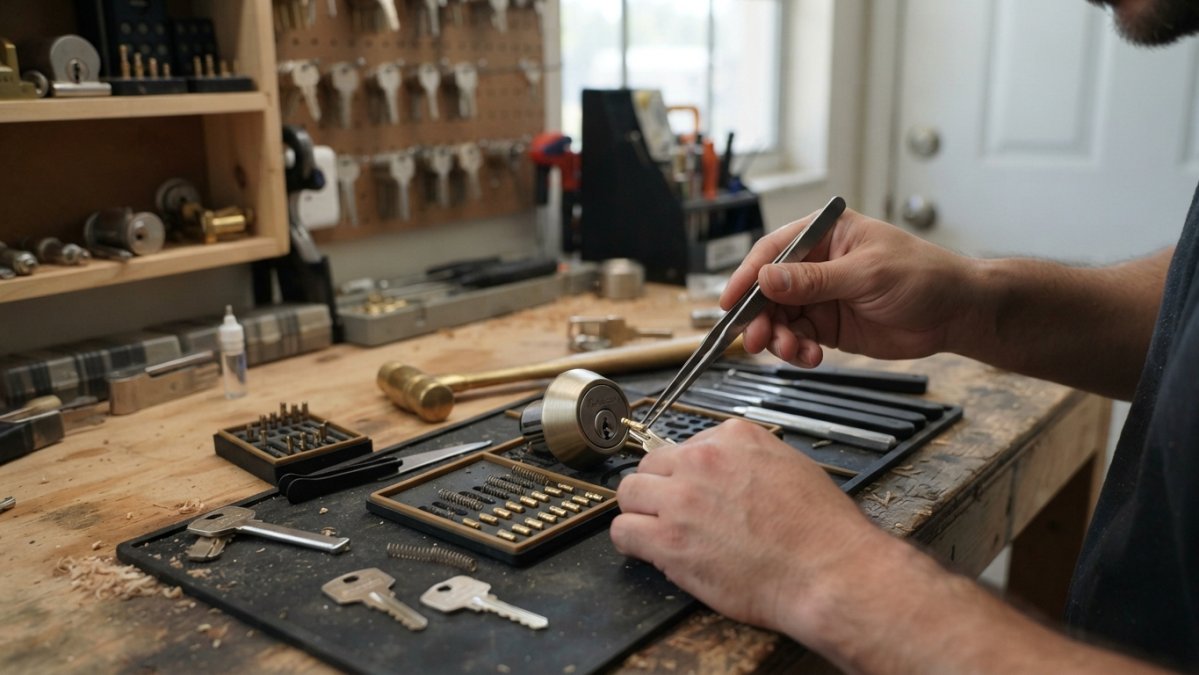
To rekey lock is the process of changing the internal pins inside a lock cylinder so that a different key opens it, while keeping the same lock hardware in place. When you rekey a lock, the old key stops working and a new key takes over.
Most homeowners call a locksmith because they lost a key or moved into a new place. But rekeying a lock is a job many people can handle themselves with the right tools.
How Rekeying Differs from Lock Replacement
Rekeying swaps the pins inside your existing lock cylinder. Replacement removes the whole lock and installs a new one.
| Factor | Rekey | Replace |
|---|---|---|
| What changes | Pins inside the cylinder | Entire lock hardware |
| Cost | Lower | Higher |
| Time | Faster | Slower |
| Best for | Lost keys, new tenants | Broken or outdated hardware |
Rekeying keeps your current doorknob or deadbolt. You just change which key opens it.
Signs It's Time to Rekey Your Locks
A few clear signals tell you it's time to rekey a lock:
- You moved into a new home and don't know who has old keys
- A roommate, tenant, or contractor kept a copy
- You lost a key or had one stolen
If any of these apply, rekeying a lock is faster and cheaper than replacing hardware.
Tools and Rekeying Kits You'll Need
A basic rekeying kit covers most residential locks. You don't need a full locksmith bench to get started. But before you buy anything, identify what you actually have, kits are matched to a lock's keyway and pin system, not to the shape of the knob.
Here's what a standard kit includes:
- Plug follower to push the plug out without losing pins
- Tweezers for lifting small key pins and driver pins
- Key gauge to measure pin sizes
Identify Your Keyway and Lock Model First
The keyway is the cross-sectional profile of the slot the key slides into. Two keys can look similar and still not enter the same cylinder.
A few common patterns:
- Schlage residential cylinders use the SC1 (five-pin) or SC4 (six-pin) keyway. SC1 is the most common in homes.
- Kwikset uses the KW1 (five-pin) or KW10 (six-pin) keyway. KW1 is the residential standard.
- Defiant, Gate House, and other house brands often use KW1 or SC1 clones, but not always, check the stamp.
If the stamp is worn off, take the lock to a hardware store or locksmith and ask them to identify the keyway.
Which Locks Can Be Keyed Alike
Keyed alike means two or more locks open with the same key. Keyed different means each lock has its own key. Master keyed means each lock has its own key plus a master that opens all of them.
You can key locks alike when:
- They share the same keyway family (for example, all SC1 or all KW1)
- They use the same pin count (don't mix a five-pin and a six-pin cylinder and expect one key to work)
- The cylinders are the same brand family or a compatible clone
You generally cannot key locks alike across different manufacturers' keyways. A Schlage SC1 key will not enter a Kwikset KW1 cylinder, so those two locks can never share a key no matter how you pin them.
Why Cylinders Aren't Interchangeable Across Brands
Even when two cylinders look the same size, the pin chambers, plug diameter, tailpiece shape, and retaining method often differ. A plug from one brand usually will not seat in another brand's housing, and pins from one kit are sized to that kit's key bitting. That's why kits are sold by brand and keyway rather than as one universal set.
Understanding Lock Cylinders and Pin Tumblers
A lock cylinder is the round housing that holds the plug and pins.
Inside sits a row of pin tumblers. Each slot has a key pin and a driver pin.
Change the pin heights, and you change which key works. That's the whole idea behind rekeying a lock.
How to Rekey a Lock Yourself: Step-by-Step Instructions
Work on a clean surface so you don't lose small pins.
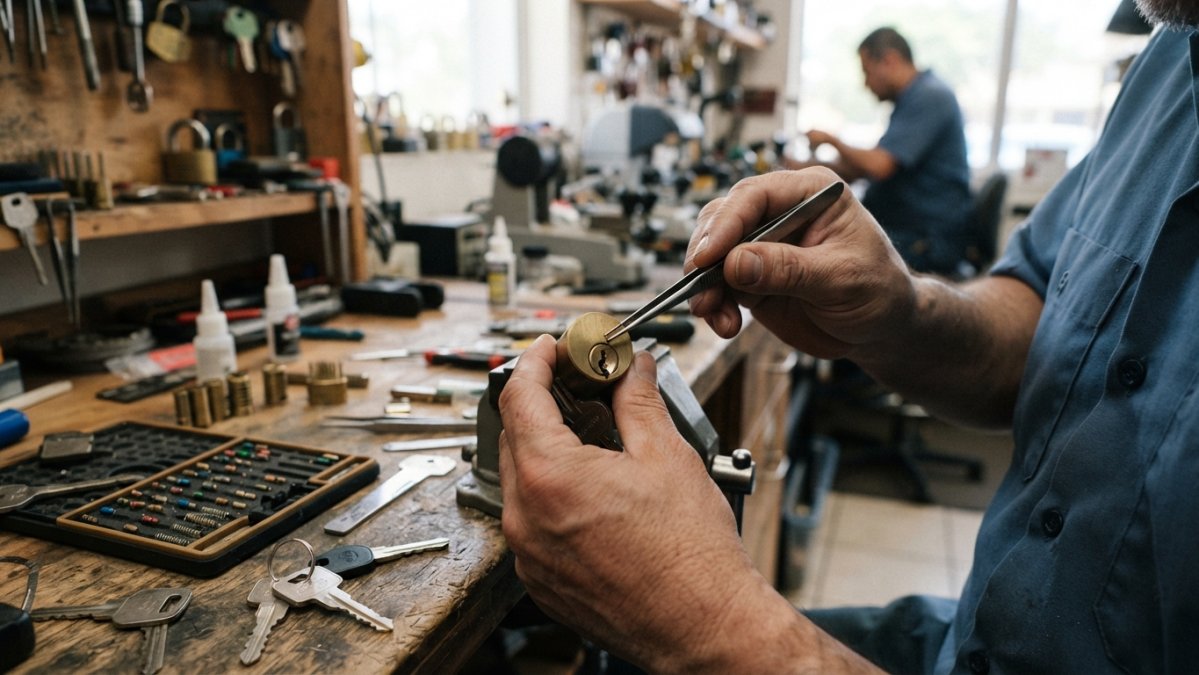
Step 1: Remove the Doorknob or Deadbolt
Start by opening the door. Then remove the doorknob or deadbolt from the door.
- Unscrew the mounting screws on the inside plate
- Pull the two halves apart gently
- Slide the cylinder out of the housing
Set every screw aside in one spot. Losing one mid-job stalls the whole process.
Step 2: Extract the Lock Cylinder and Plug
Next, extract the lock cylinder and remove the plug.
- Insert the working key and turn it a quarter-turn
- Push the plug follower in behind the plug
- Slide the plug out while the follower holds the pins
The follower keeps the driver pins from popping out. Skip it, and you'll be hunting springs on the floor.
Step 3: Replace the Pins and Reassemble
Now match the new pins to your new key and rebuild the lock.
- Use the key gauge to measure each cut on the new key
- Drop the correct key pin into each chamber
- Add the driver pins on top
- Slide the plug back in, pushing the follower out
- Reinstall the retaining clip
Test the new key before you put the lock back on the door. It should turn smoothly with no sticking.
Rekey vs. Replace Locks: Which Is Right for You?
To rekey lock wins in most cases. It costs less, takes less time, and reuses hardware that still works.
Replace the lock instead when:
- The cylinder is damaged or worn out
- You want to upgrade to a high-security lock
- The lock is so old that parts are hard to find
If your hardware is solid, rekeying a lock is the smart call. If it's failing, replacement makes more sense.
Cost to Rekey a Lock and How Long Does It Take?
The cost to rekey a lock depends on how many locks you have, the lock type, and whether you hire a pro.
For professional pricing, check with a licensed provider for a current quote. SOUTHMIAMILOCKSMTIH.COM offers rekeying for homes and businesses, and our licensed, bonded, and insured technicians can handle the job if you'd rather not do it yourself.
How Long Does It Take to Rekey a Lock?
Most single locks take about 15 to 30 minutes to rekey.
A pro can often finish several locks in under an hour. If you have many locks or a master key system, hiring a locksmith saves time.
Troubleshooting Common Rekeying Problems
Most rekeying problems come down to pin order, pin height, or a step that got skipped during reassembly. Work through the checks below in order, start with the simplest cause and move down. Don't force a key; if it won't turn with light pressure, stop and diagnose.
Before You Diagnose: Prevent the Common Failures
Most of what goes wrong is preventable before you start:
- Work over a tray or shallow box. Pins and springs roll. A rimmed baking sheet or a plastic bin with a towel in the bottom catches them.
- Keep the door open while you test. If the lock jams with the door closed, you're locked out of that entry. Test with the door open and the lock in hand first, then reinstall and test again with the door open.
- Never rekey a lock while it's installed on the door. Pins and clips fall into the door cavity and are gone.
Key Won't Turn or Turns Partway
This almost always means a pin is in the wrong chamber or the wrong height for that cut on the key.
- Re-measure each cut on the new key with the key gauge.
- Compare those measurements to the pins you installed, chamber by chamber, from the bow (head) of the key to the tip.
- Swap any pin that doesn't match its cut.
If the key turns partway and stops, one chamber is binding. If it won't turn at all, a driver pin may be sitting below the shear line, meaning a key pin is too short for that cut.
Key Sticks or Feels Gritty
A light graphite lubricant is the usual fix. Apply a small amount to the key and work it in and out of the cylinder.
If sticking continues after lubrication, the plug may be slightly misaligned in the housing. Pull the plug and check that it seats fully before the retaining clip goes back on.
Plug Won't Slide Back In
A driver pin or spring has dropped out of alignment. This happens when the follower slips or when the plug is pushed in faster than the follower is withdrawn.
- Reinsert the follower and push the plug back out.
- Check that every driver pin and spring is seated in its chamber.
- Slide the plug in slowly, keeping the follower pressed against it the whole way.
Lock Feels Loose or the Key Pulls Out Too Easily
The retaining clip isn't fully seated. Reseat it until it snaps into its groove. If the clip is bent or the groove is worn, replace the clip, a loose clip can let the plug walk out of the housing over time.
Cylinder Binds After Reinstallation
If the lock worked in hand but binds once it's back on the door, the issue is usually alignment, not pins. Check that:
- The mounting screws aren't over-tightened, which can distort the housing
- The cylinder is seated squarely in the housing
- The tailpiece engages the latch mechanism correctly
When to Stop and Call a Pro
If a lock still won't cooperate after two honest attempts, stop. Repeated disassembly risks damaging springs or the plug, and a damaged cylinder costs more to fix than a service call. A locksmith can rekey it, tell you whether the cylinder needs replacing, or confirm that the lock is worn past the point where rekeying will hold.
Rekeying a lock changes the pins, not the hardware. Get the pin order right, keep the follower against the plug, and test with the door open before reinstalling, that prevents nearly every common failure.
Frequently Asked Questions
Is it cheaper to rekey a lock or replace it?
Rekeying is generally cheaper because you keep the existing lock hardware and only change the internal pins. Replacing a lock means buying a new unit and paying for installation. However, if your lock is damaged or you want to upgrade to a high-security model, replacement may be worth the extra cost. For a precise quote on rekeying or replacement, contact a licensed locksmith.
Can I rekey my locks myself?
Some locks, especially high-security brands like Medeco, require specialized tools and training. If you're unsure, hiring a professional locksmith ensures the job is done correctly.
How much does it cost to rekey a lock?
The cost to rekey a lock depends on the number of locks, the type of lock, and whether you hire a professional. Professional rekeying includes labor and a service call. For an accurate estimate, contact a local locksmith and describe your locks.
How long does it take to rekey a lock?
Rekeying a single lock typically takes 15 to 30 minutes for an experienced locksmith. Multiple locks on a property can usually be rekeyed in a single service visit. The exact time depends on the lock type and whether any complications arise.
Rekeying a lock is one of the cheapest ways to secure a home after a move or a lost key. If the job feels risky, or you want it done right the first time, SOUTHMIAMILOCKSMTIH.COM can help. Our certified technicians work with Medeco and Multlock high-security locks, bring over 30 years of experience, and offer prompt emergency service for homes and businesses. Get started with SOUTHMIAMILOCKSMTIH.COM and secure your doors with confidence.