 how-to
How to Verify Licensed Locksmith Credentials in 2026
Table of Contents
- Why Locksmith Credential Verification Matters
- What You'll Need Before You Start
- Step 1: Check Your State's Licensing Database
- Step 2: Verify Business Registration and Bonding
- What Does Bonded and Insured Mean for Locksmiths?
- How to Spot a Locksmith Scam Before You Pay
- Questions to Ask a Locksmith Before Hiring
- Conclusion
- Frequently Asked Questions
Last Updated: September 16, 2026
Why Locksmith Credential Verification Matters
Knowing how to verify licensed locksmith credentials is the most effective way to avoid the industry's most persistent problem: unlicensed operators who quote one price on the phone and charge triple at the door. This guide from SOUTHMIAMILOCKSMTIH.COM walks through the exact checks you can run in under ten minutes. A legitimate locksmith never hesitates when you ask for a license number.
What You'll Need Before You Start
Gather these details before you call anyone:
- The business name exactly as it appears on their card, website, or vehicle
- The technician's name if they've already arrived at your door
- The license number, if they've provided one
- Your state's licensing board website, which we cover in the next section
- A phone or notepad to record what you find
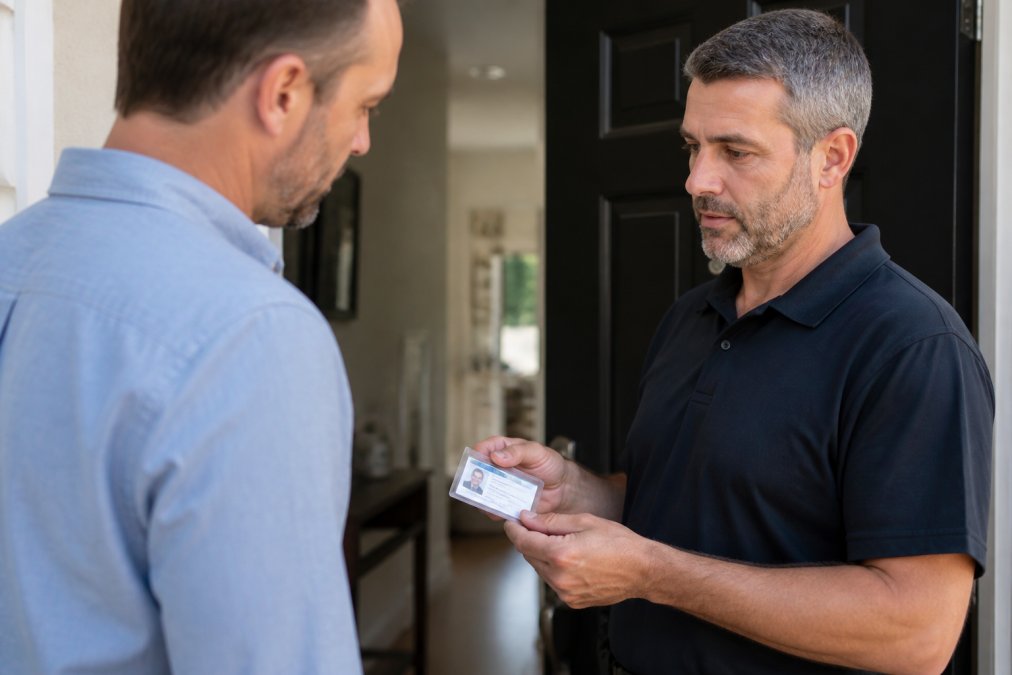
If a technician at your door can't produce a license number, you are not obligated to let them in. Ask them to wait while you verify. A certified professional will comply without complaint.
Step 1: Check Your State's Licensing Database
Start with your state's official licensing database, the only source that definitively confirms a locksmith's license status. Most states maintain a free public portal searchable by name, business name, or license number.
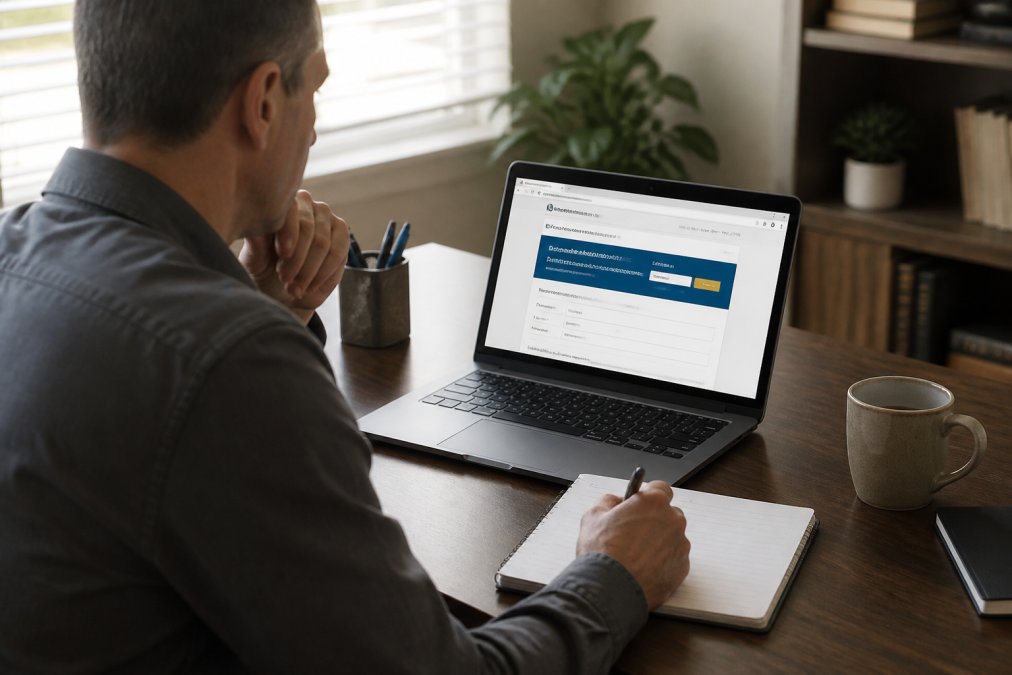
Here's the process:
- Search your state's regulatory agency website for the licensing lookup tool
- Enter the license number or business name
- Confirm the license status reads active, not expired or suspended
- Check that the name on the license matches the person or company you're hiring
- Note the expiration date and any disciplinary history listed
Why There Is No Single National Lookup
There is no federal locksmith license and no national database covering every provider. Licensing is a state function, and states have taken wildly different approaches, so the lookup tool you use in one state may not exist in the next one over.
You'll run into three situations:
- Statewide licensing with a public portal. The state issues the license, sets training and background-check requirements, and hosts a searchable database. One search confirms status, expiration, and discipline history.
- No statewide licensing, but local rules. The state has no license, but individual counties or cities require a business license, a permit, or registration. You verify at the county or municipal level instead.
- No licensing requirement at all. The state and locality impose no locksmith-specific credential. Verification shifts entirely to business registration, bonding, insurance, and voluntary professional certification.
Finding the Right Agency
State licensing for this trade is rarely handled by a dedicated locksmith board. It's usually folded into a broader agency; knowing the common names saves time:
- Department of Consumer Affairs or Division of Consumer Protection
- Department of Business and Professional Regulation
- Office of Professional Regulation or Division of Occupational Licensing
- Secretary of State (for business registration, not the trade license itself)
What the Search Results Actually Tell You
When you find a record, read it carefully rather than just confirming the name appears:
- Status. "Active" is what you want. "Expired," "suspended," "revoked," or "lapsed" all mean the person is not currently authorized.
- Name match. The license should match the individual technician or the exact business entity you're hiring. A license held by a different company name is a mismatch worth questioning.
- Expiration date. A license close to expiring is still valid, but confirm it hasn't lapsed by the time work is scheduled.
- Disciplinary history. Many portals list complaints, fines, or actions. A clean record is a good sign; a pattern of actions is a reason to walk away.
When Your State Doesn't License Locksmiths
If your state has no licensing requirement, shift verification to other layers: check county or city business registration, confirm bonding and insurance directly with the provider, and ask about professional certification through industry associations. The absence of a state license doesn't mean the absence of accountability, but it does mean the business registration and insurance checks in the next section carry more weight, because they're the only formal records that exist.
Step 2: Verify Business Registration and Bonding
A license alone doesn't tell the whole story. Business registration and bonding are separate checks, and both matter when something goes wrong.
What Does Bonded and Insured Mean for Locksmiths?
Bonded and insured means a locksmith carries a surety bond protecting customers against damages or non-performance, plus liability insurance covering property damage and injuries during the job. These are two separate protections, and a provider can hold one without the other.
How to Spot a Locksmith Scam Before You Pay
Scam patterns in this trade are remarkably consistent, which makes them easy to spot once you know the signs. But spotting a scam is only half the job, you also need a plan for when you don't have time to research, and a way to tell a real credential from a convincing fake.
The Red Flags, Ranked by How Much They Matter
Not every warning sign carries equal weight. These are ordered from most to least decisive:
- Refusal to provide a license number. This is the single clearest red flag. A legitimate provider gives it without hesitation.
- No verifiable physical address. A legitimate business has a location. A PO box alone, or no address at all, is a problem.
- Cash-only payment with no itemized invoice. Legitimate businesses take cards and provide written receipts. Cash-only pressure is designed to leave no paper trail.
- A phone quote far below market rate. The low quote is bait. The real price appears after the lock is drilled or the door is damaged.
- No written estimate before work starts. You should know the price before anyone touches your lock.
- Unmarked vehicle and no uniform. Not definitive on its own, but combined with other flags, it matters.
- A generic 800 number instead of a local one. National lead-generation services route calls to whichever subcontractor is nearby, which is how many scam operations scale.
The Emergency Quick-Check Protocol
Most guides assume you have time to browse a database. In a real lockout, 2 AM, a parking garage, a child locked inside, you don't. Here's a two-minute phone protocol:
- Before you call anyone, ask for the total price and the license number on the phone. Get both before you give your address. A provider who won't quote a number or give a license number over the phone is not worth dispatching.
- Search the license number on your state portal from your phone. Most portals are mobile-friendly. If your state has no portal, skip to step 3.
- Search the business name plus the word "scam" or "complaint." This surfaces review patterns fast, even when there's no official record.
- Ask the technician for the license and a photo ID at the door before they start. Match the name to the license and to the business you called.
- Confirm the price in writing, even a text message counts, before any work begins. A texted quote is enforceable in a dispute; a verbal one usually isn't.
How to Tell a Real License Card From a Fake
A visual check is the fastest verification you can do at the door. You're looking for consistency, not artistry, fakes fail on the details.
What a legitimate card typically shows:
- The issuing state or local agency's name and often its seal or logo
- The license holder's full legal name
- A license number that matches what the provider gave you
- An expiration date
- A photo of the holder, on state-issued cards
- A license category or classification, where the state uses one
What tends to give a fake away:
- Mismatched names. The card says one name, the business card says another, and the technician can't explain the relationship.
- No expiration date, or an obviously altered one. Expiration dates are the hardest thing to fake cleanly.
- A number that doesn't return a result in the state portal. This is the decisive test. A card is only as good as the record behind it.
- Lamination that looks homemade, or a printed-on-demand card stock. State-issued credentials have consistent production quality.
- A "national" or "federal" license. As covered above, no such credential exists for this trade.
If You Suspect a Scam
Report it to your state's regulatory agency or your state Attorney General's consumer protection division. Reporting creates a paper trail that protects the next person. If you paid by card, you can also dispute the charge with your card issuer, one reason cash-only demands are such a strong warning sign.
Questions to Ask a Locksmith Before Hiring
These questions surface most problems before they cost you money:
- What is your license number, and which state or local agency issued it?
- Are you bonded and insured? Can you send the certificate?
- What's the total price, including any emergency or after-hours fee?
- Will you provide a written estimate before starting?
- How long have you operated under this business name in this area?
- Do you offer a warranty on parts and labor?
| Check | Where to Verify | What Confirms It |
|---|---|---|
| State license | State regulatory board portal | Active status, matching name |
| Business registration | Secretary of State or county records | Registered entity, valid address |
| Bond | Issuing surety company | Valid bond number, current coverage |
| Insurance | Provider's certificate | Liability coverage, expiration date |
| Certification | Industry association directory | Verified professional designation |
Conclusion
The gap between a licensed, bonded professional and an unlicensed operator comes down to ten minutes of verification. Check the state database, confirm the business registration, ask for the bond and insurance certificate, and never let anyone touch your locks before you've seen a license number.
Frequently Asked Questions
Do locksmiths need to be licensed in Florida?
Florida does not have a statewide locksmith licensing requirement, but Miami-Dade County and some other local jurisdictions do require locksmiths to hold a local license. Always check with your county or city consumer protection office. Even where licensing is not mandatory, a legitimate locksmith should carry a business tax receipt, proof of bonding, and liability insurance. Ask for these documents before allowing any work to begin.
How can I verify a locksmith's license online?
Start by searching your state's professional licensing board website or your county's consumer affairs department. Enter the locksmith's name or license number into the public access portal. If no state database exists, contact your local business licensing office directly.
What documents should a professional locksmith provide upon request?
A registered locksmith should be able to show a state-issued or locally issued license, a government-issued photo ID, proof of general liability insurance, and a surety bond certificate. Some may also carry professional certification from industry groups. Request these documents before work starts. A legitimate contractor will not hesitate to provide them. If a locksmith refuses or makes excuses, treat that as a red flag and consider hiring someone else.
How do I spot a fake locksmith scam?
Common warning signs include unmarked vehicles, no physical business address, quotes that seem unusually low over the phone but increase dramatically on arrival, cash-only payment demands, and technicians who cannot produce any identification or license. Scammers often use generic names and multiple phone numbers. Before hiring, verify the business registration, ask for the technician's name in advance, and confirm the company's address on a map. If something feels off, do not proceed.