 blog
blog
7 Signs You Need Professional Lock Rekeying
Table of Contents
- Sign 1: You Just Moved Into a New Home
- Sign 2: Lost or Stolen Keys Are Unaccounted For
- Sign 3: Tenant or Roommate Turnover Changed Who Has Access
- Sign 4: Your Locks Show Visible Wear or Operate Stiffly
- Sign 5: The Lock Hardware Is Outdated or Obsolete
- Sign 6: A Break-Up or Domestic Change Altered Your Household
- Sign 7: You Want Better Home Security Without Replacing Every Lock
- Rekeying vs Replacing Locks: Which One Fits Your Situation
- Frequently Asked Questions
Last Updated: September 28, 2026
Sign 1: You Just Moved Into a New Home
Lock rekeying is the process of changing the internal pins of a lock cylinder so old keys no longer work, while keeping the same lock hardware in place, which is why lock rekeying is often the first step after a move. According to Consumer advice from the Federal Trade Commission on home security, new homeowners should treat every key that came with the property as a potential security risk.
Here's the uncomfortable truth most buyers never think about: you have no idea how many copies of your new home's keys exist. The seller, their real estate agent, a contractor, a neighbor, a house cleaner. Any of them could still hold a working key.
Our technicians see this constantly. A fresh set of keys feels like a clean start. It isn't.
A common mistake is assuming a home inspection covers locks. It doesn't. Inspectors check structure, wiring, and plumbing, not who holds copies of your front door key.
So what should you do first?
- Count every exterior door with a lock
- Note which doors share a single key
- Decide which entry points matter most
- Schedule rekeying before you move furniture in
The whole process usually takes under an hour per lock for a trained technician. That's a small window to close a real gap.
Sign 2: Lost or Stolen Keys Are Unaccounted For
Losing a key is a security event, not just an inconvenience. If that key had your address attached, or if it vanished near your home, the risk multiplies fast.
Think about the last time you lost a key. Did you ever find it? If not, someone else might have.
This is where key control matters. Key control means knowing exactly who holds a key and how many copies exist. Most households have zero control over this.
When a key goes missing:
- Rekey the affected lock immediately
- Check whether that key opened other doors
- Replace any key that carried identifying info
A worn key is also a clue. If your key looks different from a fresh copy, it's been used a lot, which means copies likely exist elsewhere.
Sign 3: Tenant or Roommate Turnover Changed Who Has Access
Every time a tenant or roommate moves out, the keys they held become a liability. Even honest people lose track of keys. A former roommate's key could end up in a drawer, a car, or a stranger's hand.
Property managers face this constantly. Between guests or tenants, locks should be reset so the previous occupant's key stops working.
A common approach for rentals is rekeying between occupants rather than swapping the whole lock. It costs less and takes less time. The lock hardware stays put; only the pins change.
Here's what most guides miss: turnover isn't just about the person leaving. It's about everyone they might have given a key to. A partner, a friend, a pet sitter.
Sign 4: Your Locks Show Visible Wear or Operate Stiffly
A stiff lock is a warning, not a quirk. If your key sticks, grinds, or needs a wiggle to turn, the internal mechanism is telling you something.
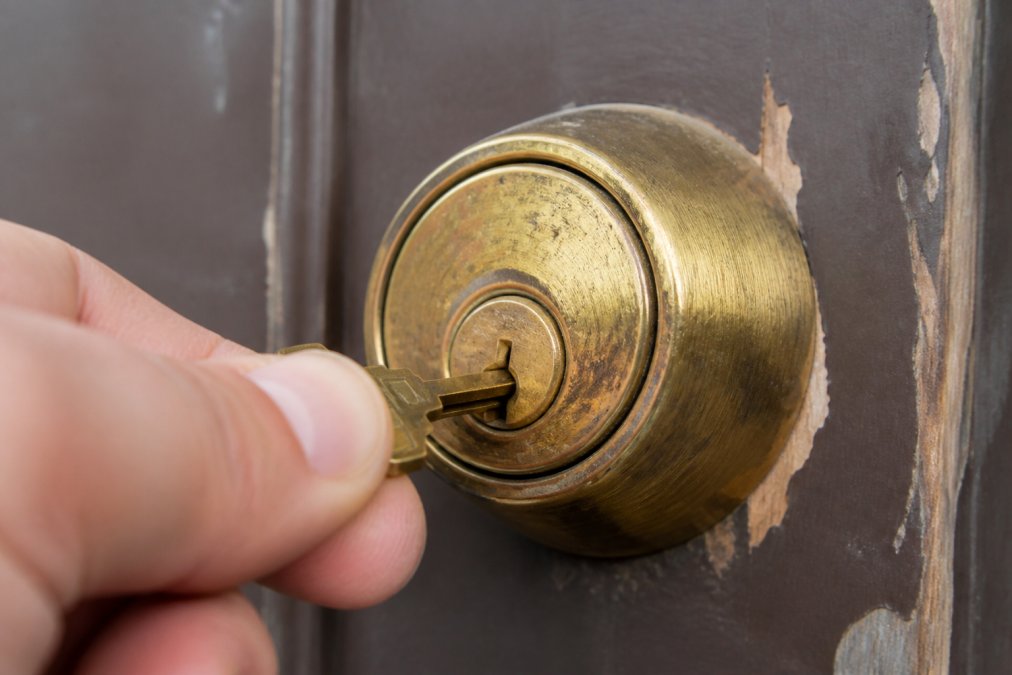
Watch for these signs:
- The key catches or jams halfway
- You have to jiggle it to turn
- The key feels loose in the keyway
- The cylinder face looks scratched or tarnished
- You hear grinding or clicking inside
Sign 5: The Lock Hardware Is Outdated or Obsolete
Old locks aren't just ugly. Many lack the security pins that make modern locks harder to pick or bump. But before you assume rekeying will fix the problem, you need to answer a more basic question: is this lock even rekeyable?
How to tell if your lock is rekeyable
Most residential deadbolts and knobs fall into two families, and the difference matters:
- Kwikset-style cylinders use a small retaining clip and a removable faceplate. A technician can pull the cylinder and swap pins in minutes. These are the easiest residential locks to rekey.
- Schlage-style cylinders use a different pin stack and a set screw or cap. They're also rekeyable, but the pin kit is not interchangeable with Kwikset, a technician needs the matching pins on the truck.
- Non-rekeyable locks include many older mortise locks, some imported builder-grade knobs, and any lock where the cylinder is staked or sealed shut. On these, rekeying isn't an option, replacement is the only path.
Signs your hardware is past its prime
- The lock is more than 15 to 20 years old
- It has no brand markings or a defunct brand
- The keyway is wide and simple
- Parts are hard to find for repairs
- The cylinder is staked, sealed, or riveted in place
What rekeying can and cannot fix
Sometimes rekeying is enough. Sometimes the lock itself needs to go. If the cylinder is obsolete or non-rekeyable, no amount of pin work will add the security features it never had.
Sign 6: A Break-Up or Domestic Change Altered Your Household
When someone leaves a household, the keys they held don't leave with them automatically. This is one of the most overlooked security gaps.
For anyone in this situation, the priority order is simple:
- Rekey exterior doors first
- Rekey any door to a private space
- Update any shared codes or smart lock access
- Tell no one the new key exists unless they need it
Sign 7: You Want Better Home Security Without Replacing Every Lock
Rekeying gives you a security upgrade at a fraction of the cost of new locks. You keep the hardware you already own and change only what matters: who can open it.
The three paths, side by side
Rekeying changes the pins so old keys stop working. You keep the same keyway, the same hardware, and the same mechanical reliability. No batteries, no app, no Wi-Fi dependency. Best when your hardware is solid and your only problem is key control.
What each path costs you over time
Rekeying is a one-time service call. There's no battery to replace, no firmware to update, no app that stops working when the manufacturer sunsets it.
When rekeying is the wrong answer
Rekeying is not the right call if:
- You want to issue and revoke codes without a physical key
- You need an access log for a rental or home business
- Your existing hardware is non-rekeyable or below Grade 2
- You want keyless entry for family members who lose keys often
In those cases, the money spent rekeying is better put toward a smart lock or a full replacement.
How long does it take to rekey a lock?
For a single standard lock, a skilled technician typically finishes in 15 to 30 minutes. A whole house usually takes a couple of hours. A smart lock install runs similar time, but you'll spend additional time on app setup, code programming, and testing.
Rekeying vs Replacing Locks: Which One Fits Your Situation
Rekeying wins when your locks are in good shape and you just need old keys to stop working. Replacement wins when the hardware is worn, obsolete, or you want features like smart access.
| Situation | Best Choice | Why |
|---|---|---|
| Moved into a new home | Rekey | Old keys stop working, keep good hardware |
| Lost or stolen key | Rekey | Fast, low-cost way to lock out the missing key |
| Tenant turnover | Rekey | Reset access between occupants |
| Worn or stiff lock | Rekey or replace | Rekey if the body is sound, replace if damaged |
| Outdated hardware | Replace | Adds modern security pins and features |
| Want smart access | Replace | Rekeying can't add digital features |
| Break-up or household change | Rekey | Removes access without a full swap |
Frequently Asked Questions
What is the average cost to rekey a lock?
The cost to rekey locks depends on how many cylinders need service, the lock type, and whether you need mobile service. A single standard deadbolt usually costs less than replacing it with new hardware, which is why rekeying is the budget-friendly option for most homeowners. For an accurate quote on your property, contact a licensed locksmith and share the number of locks and their condition.
How long does it take to rekey a lock?
A single cylinder typically takes 10 to 20 minutes for a trained technician. A full home with five to six entry points usually finishes in under two hours. Factors that extend the time include stuck cylinders, corroded pins, or outdated lock hardware that needs removal first. If your locks show heavy wear, plan for extra time or a possible replacement recommendation.
Is rekeying cheaper than replacing locks?
Rekeying almost always costs less than replacement because you keep the existing lock hardware and only change the internal pin tumbler configuration. Replacement makes sense when the lock is obsolete, damaged, or you want to upgrade to high-security cylinders with bump-resistant pins. A licensed locksmith can inspect your deadbolts and tell you which route protects your home without overspending.
How many times can a lock be rekeyed?
Most quality residential locks can be rekeyed several times over their lifespan, but the cylinder and pins wear with each service. If the lock sticks, the key feels loose, or the cylinder shows corrosion, replacement may be the better call. A locksmith can check lock integrity during the visit and confirm whether another rekey is safe or if new hardware is needed.