 ultimate-guide
Locksmith Services: Costs, Rekeying & Emergency Help
Table of Contents
- What a Locksmith Actually Does (Beyond Lockouts)
- Rekeying vs Replacing Locks: Which One Do You Need?
- Locksmith Service Costs: What Drives the Price
- Emergency Locksmith Services: What to Expect at 2 AM
- Residential, Commercial, and Automotive: Matching the Service to the Job
- How to Verify a Licensed, Bonded, and Insured Locksmith
- Smart Lock Integration and High-Security Upgrades
- DIY vs Professional: When to Call Someone
- Frequently Asked Questions
Last Updated: September 16, 2026
What a Locksmith Actually Does (Beyond Lockouts)
The work breaks into three layers:
- Entry and exit: lockouts, key extraction, broken keys, jammed mechanisms
- Access management: rekeying, master key systems, electronic entry, access control
- Hardware and security: high-security locks, deadbolts, safe repair, smart lock integration
The Associated Locksmiths of America describes the trade as a professional discipline with its own certification standards, which is why licensing and credentials matter when you hire.
Rekeying vs Replacing Locks: Which One Do You Need?
Rekeying changes the internal pins of an existing lock so old keys stop working; replacing means installing a new lock body. Rekeying costs less and takes minutes per cylinder; replacement makes sense when hardware is worn, damaged, or below your security standard.
When Rekeying Is the Right Call
Rekeying is right when the hardware is in good condition but the keys are not under your control, new residents, a lost key, a former roommate, or tenant turnover. The lock stays, the cylinder is re-pinned, and you get fresh keys without new hardware.
When Replacement Makes More Sense
Replacement makes sense when the lock is old, damaged, or cheap. A builder-grade knob with a worn cylinder will not improve with rekeying, and a forced-open door may have a compromised strike plate and bolt even if the lock still turns.
Locksmith Service Costs: What Drives the Price
Locksmith pricing is a common source of consumer questions. A transparent provider gives a real range before dispatch.
| Service | Typical Fair Range | What Moves It Up or Down |
|---|---|---|
| Residential lockout (standard business hours) | $50-$100 | Lock type, whether the door is deadbolted, access difficulty |
| Residential lockout (nights, weekends, holidays) | $100-$200 | After-hours multiplier, travel distance |
| Rekey (per cylinder) | $15-$40 | Cylinder type, number of keys cut, restricted keyways |
| Deadbolt replacement (hardware + labor) | $100-$250 | Grade of hardware, door prep required |
| Car lockout | $50-$100 | Vehicle make, whether air wedges or long-reach tools are needed |
| Transponder key replacement + programming | $150-$400 | Key type, whether the dealer-only programming path is required |
| Ignition repair or replacement | $150-$500 | Column vs. dash ignition, parts availability |
| Safe opening | $150-$500+ | Safe model, lock mechanism, whether drilling is required |
When seeking a quote, consider these points:
- The phone quote should be a range, not a single number. A dispatcher who says "$65 flat, guaranteed" before knowing your lock type is either guessing or baiting.
- Parts and labor should be itemized separately. Hardware markup is normal; hiding it inside a single "service fee" is not.
- After-hours surcharges should be stated up front. A common pattern is a 1.5x to 2x multiplier on nights, weekends, and holidays.
- A no-open, no-fee policy on safes is standard. If a provider charges a trip fee even when they cannot open the safe, ask why.
How to Get an Accurate Quote Before Anyone Shows Up
Give the dispatcher four things: the service you need, the lock or key type, your address, and whether the door is locked or open. A photo of the lock face or key blade helps more than any description.
- What is the total price, including parts, labor, and any trip or after-hours fee?
- Is that price guaranteed once the technician sees the lock, or can it change?
- What is your license number, and who issues it?
- How long until a technician arrives, and is there a dispatch fee if I cancel?
Red Flags That Signal a Predatory Quote
- The dispatcher will not give a range over the phone.
- The company name on the truck does not match the name you called.
- The technician arrives in an unmarked vehicle with no uniform or ID.
- The price quoted on site differs significantly from the phone quote.
- You are asked to pay in cash only, with no receipt offered.
- The technician insists on drilling the lock before trying non-destructive entry.
Any one of these is a reason to stop and call a different provider. You are never obligated to let an unverified technician touch your property.
Emergency Locksmith Services: What to Expect at 2 AM
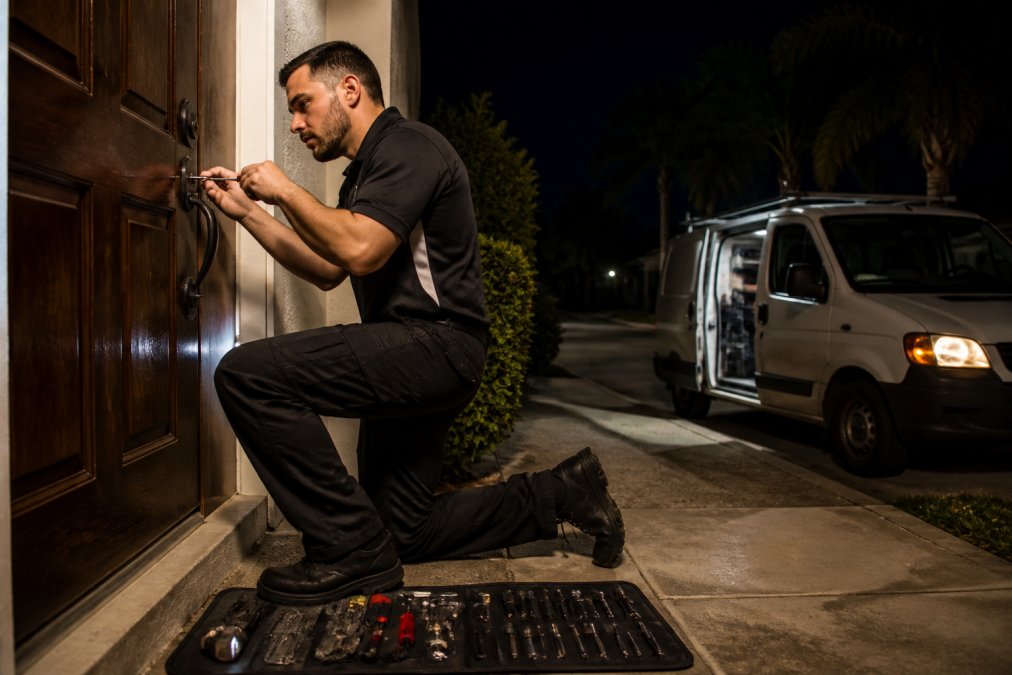
Emergency locksmith services follow a predictable sequence: you call, the dispatcher confirms your location and lock type, a technician is dispatched, and you verify credentials before they begin. A professional operation confirms identity and pricing up front, even at 2 AM.
Residential, Commercial, and Automotive: Matching the Service to the Job
Matching the specialist to the job saves money and avoids callbacks. Be wary of a provider who claims to do everything equally well.
How to Verify a Licensed, Bonded, and Insured Locksmith
"Licensed, bonded, and insured" is the phrase every locksmith website uses, and almost none explain what it means. Here is how to confirm each one before you hand over a key or a credit card.
How to Actually Verify Each One
- License: Ask for the license number in writing (text or email), then look up the issuing authority, usually a state department of consumer affairs, a state licensing board, or a county or city business licensing office, and confirm it is active and matches the company name. Do not accept a photo of a card; cards can be copied.
- Bond: Ask for the bonding company's name and bond number, then call the bonding company directly to confirm it is current. The amount can vary, but its existence signals the company has been vetted.
- Insurance: Ask for a Certificate of Insurance (COI). It should list the company name, policy number, effective dates, and coverage limits. If the company cannot produce a COI on request, treat that as a no.
What to Check at the Door
Before the technician touches your lock:
- Ask to see a photo ID and match the name to the dispatch record you were given on the phone
- Confirm the company name on the technician's uniform or vehicle matches the company you called
- Ask for the license number again and compare it to what you were told on the phone
- Confirm the total price in writing before any work begins
- Ask whether the technician is an employee or a subcontractor, this matters for insurance and accountability
A legitimate technician will have all of this ready without hesitation. Reluctance to show credentials is the single most reliable red flag in the trade.
What to Do If Something Goes Wrong
- Stop payment if you can. If you paid by credit card, dispute the charge with your card issuer. Keep all texts, emails, and the receipt (or lack of one).
- File a complaint with your state's consumer protection office or the state licensing board that issued the license. Licensing boards can suspend or revoke credentials.
- File a complaint with the Federal Trade Commission at ReportFraud.ftc.gov. The FTC tracks patterns of locksmith fraud and has brought enforcement actions against companies using deceptive pricing.
- Report to your state attorney general's office if the amount is significant or the pattern looks organized.
SOUTHMIAMILOCKSMTIH.COM technicians are licensed, bonded, and insured, and carry documentation on every call. That is the baseline, not a bonus, and you should expect it from anyone you hire.
Smart Lock Integration and High-Security Upgrades
Smart lock integration connects a deadbolt or entry lock to an app, keypad, or building system, giving you remote access control and audit trails. High-security upgrades go further, using restricted keyways and pick-resistant cylinders that make unauthorized duplication and bypass far harder.
DIY vs Professional: When to Call Someone
DIY makes sense for simple tasks like changing a battery in a smart lock or tightening a loose knob. Call a professional for anything involving cylinder work, key duplication on restricted keyways, ignition repair, or safe opening.
The line is straightforward:
- DIY: batteries, app setup, cosmetic hardware, tightening screws
- Professional: rekeying, lock installation, master key systems, automotive keys, safe opening, anything after a break-in
Frequently Asked Questions
How much does the average locksmith charge for a service call?
Locksmith service costs depend on the job type, time of day, and lock hardware involved. Emergency calls after hours may carry a higher rate than standard business-hours visits. Rekeying a single lock can be less costly than replacing the lock and cylinder. Because pricing varies by provider and location, ask for a written quote before work begins and confirm whether trip charges, parts, and labor are included. SOUTHMIAMILOCKSMTIH.COM provides quotes based on the specific job.
Is it cheaper to rekey existing locks or replace them entirely?
Rekeying is usually cheaper when the lock hardware is in good condition and you only need new keys or want old keys disabled. Replacement makes more sense when the lock is damaged, outdated, or you want upgraded security features like high-security cylinders or smart lock integration. A licensed locksmith can inspect your existing hardware and tell you which option fits your situation. Rekeying vs replacing locks is a decision based on hardware condition, not just price.
How can I tell if a locksmith is legitimate and insured?
Ask for the company's license number, proof of bonding, and certificate of insurance before anyone arrives. A legitimate locksmith will provide these without hesitation and will show identification when they reach your door. Check that the business has a verifiable physical address and a phone number that connects to a real person. Avoid anyone who quotes a very low price on the phone and then raises it on site, or who arrives in an unmarked vehicle with no credentials.
Can a locksmith handle a safe with a lost combination or a broken lock?
Yes. Safe opening, combination changes, and lock repair are standard locksmith services. A technician can often open a safe without drilling by using manipulation or bypass techniques, which preserves the safe for continued use. If drilling is necessary, the lock can usually be repaired or replaced afterward. Get a clear explanation of the method before work starts so you understand what the job involves and whether the safe can be restored.