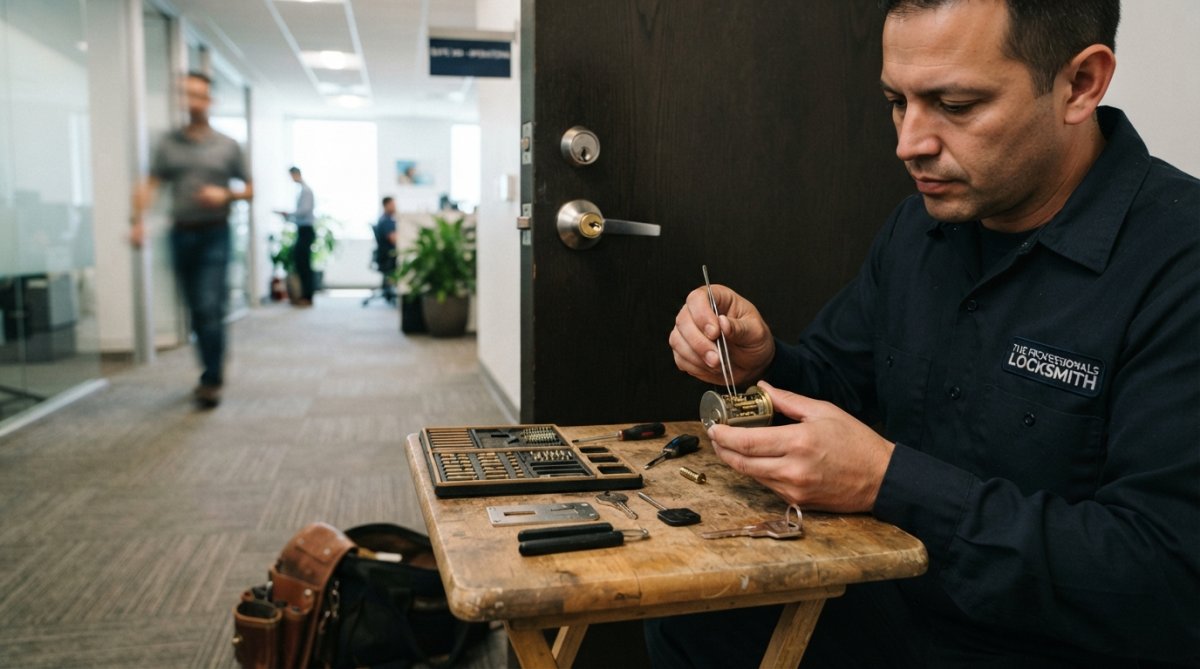
 ultimate-guide
Benefits of Rekeying Commercial Locks: 2026 Guide
Table of Contents
- What Rekeying Commercial Locks Actually Does
- Rekeying vs Replacing Commercial Locks: Which Makes Sense?
- The Core Benefits of Rekeying Commercial Locks
- Commercial Lock Rekeying Cost: What Drives the Price
- How Often Should You Rekey Commercial Locks?
- Master Key Systems, Smart Locks, and Key Management Software
- Compliance, Insurance, and Sustainability Considerations
- Conclusion
- Frequently Asked Questions
Last Updated: September 19, 2026
What Rekeying Commercial Locks Actually Does
Rekeying commercial locks changes a lock's internal pin configuration so old keys stop working and new ones take over, without replacing the hardware. At SOUTHMIAMILOCKSMTIH.COM, our technicians do this daily across Miami-Dade County, and it remains the fastest way to restore key control after turnover, loss, or theft.
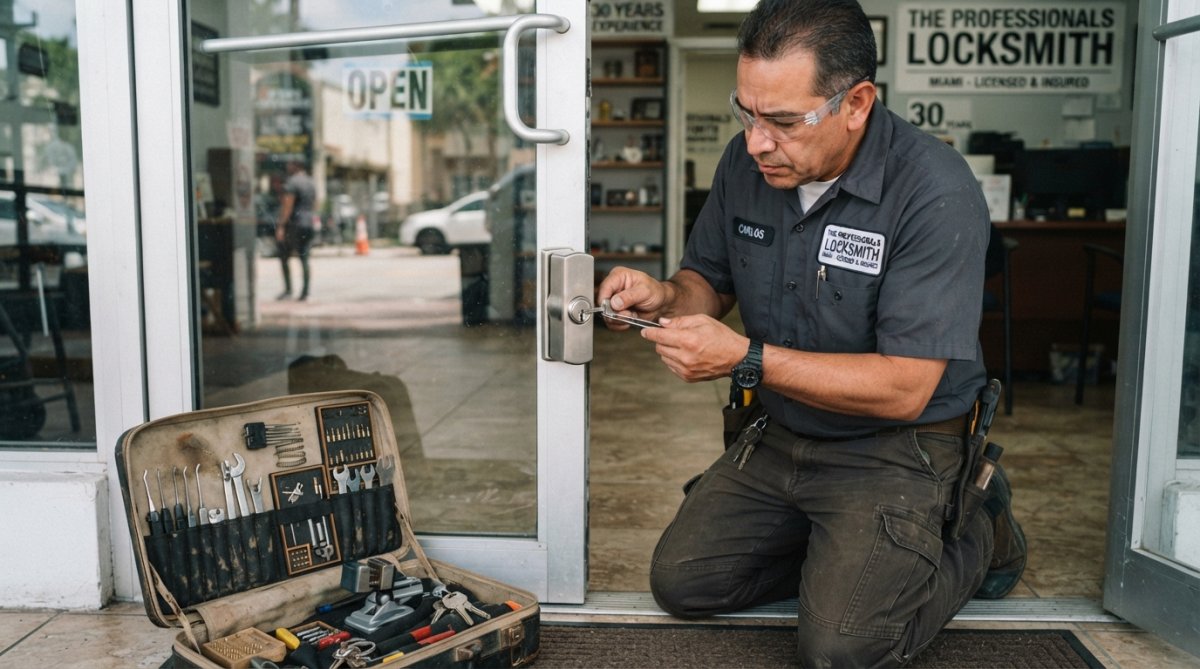
How Rekeying Works: Pins, Tumblers, and Key Configuration
Inside every pin-tumbler cylinder sits a row of pins and tumblers sized to match your current key's cuts. A locksmith removes the cylinder, swaps those pins for a new set, and cuts fresh keys to match. The old key no longer aligns the pins, so it cannot turn the plug.
Rekeying vs Replacing Commercial Locks: Which Makes Sense?
Rekeying wins when the hardware is sound and the problem is key control. Replacement wins when the lock itself is failing, outdated, or inadequate for the risk profile of the space.
| Situation | Rekey | Replace |
|---|---|---|
| Employee turnover | Yes | No |
| Lost or stolen keys | Yes | No |
| Worn or failing cylinder | No | Yes |
| Upgrading to high-security hardware | No | Yes |
| Adding doors to a master key system | Yes | Sometimes |
The Core Benefits of Rekeying Commercial Locks
The benefits of rekeying commercial locks come down to three things: you regain exclusive key control, avoid the cost and downtime of hardware replacement, and keep your existing master key architecture intact.
Cost Savings and Operational Efficiency
Rekeying typically costs less than full lock replacement because you pay for labor and pins, not new hardware. The bigger saving is time: a technician can rekey a standard commercial cylinder in minutes, so a suite turnover does not stall a lease signing.
Restoring Key Control After Lost or Stolen Keys
A lost key is a security breach waiting to happen: anyone holding it can walk through a door your staff believe is secure. Rekeying invalidates every copy instantly, which matters most in buildings with high foot traffic or contractor access.
Commercial Lock Rekeying Cost: What Drives the Price
Pricing for commercial lock rekeying is not a flat rate, and any provider who quotes one over the phone without seeing the doors is guessing. The number is built from four cost layers; understanding them lets you compare quotes apples to apples.
The Four Cost Layers
1. Per-cylinder labor. A standard pin-tumbler cylinder (common on commercial storeroom, classroom, and entry functions) is the base unit of pricing. Labor is billed per cylinder, so a 12-door suite costs roughly twelve times the single-door labor line, not a flat "building fee." Restricted-keyway or high-security cylinders (Medeco, Mul-T-Lock, ASSA, Schlage Primus) take longer because pins and blanks are proprietary.
What Actually Moves the Number
- Cylinder type and security grade (standard vs. restricted vs. high-security)
- Number of doors, and whether each door has one cylinder or two (entry plus deadbolt, or interior and exterior)
- Number of keys required, and whether blanks are standard or restricted
- Master key system complexity, number of hierarchy levels, not just doors
- Emergency, after-hours, or holiday timing
- Whether access control hardware must be coordinated or temporarily bypassed
- Condition of existing cylinders (worn pins, corroded housings, or mismatched brands add labor)
Rekey vs. Replace: Where the Money Actually Goes
Rekeying is almost always cheaper per door because you pay for labor, pins, and keys, not new hardware. A commercial-grade cylindrical lockset can run several times the cost of a rekey, before installation labor. The gap widens on specialty hardware: exit devices, electrified strikes, or access control readers, where replacement means re-terminating wiring and re-commissioning the door.
How to Read a Quote
A usable commercial rekey quote should break out:
- Per-cylinder labor rate
- Key cutting and blank charges (standard vs. restricted)
- Master key system surcharge, if applicable
- Trip or after-hours charges
- Any hardware replacement the technician recommends, priced separately
For an accurate figure, request a walkthrough and a written, itemized quote. SOUTHMIAMILOCKSMTIH.COM provides on-site assessments so property managers get pricing tied to their actual hardware, keyway, and hierarchy.
How Often Should You Rekey Commercial Locks?
Rekey on every key-control event, not a fixed calendar. Triggers are turnover, lost or stolen keys, tenant disputes, and the end of any contractor's access period. A preventative maintenance schedule catches worn cylinders before they fail, but the rekey decision follows events.
Master Key Systems, Smart Locks, and Key Management Software
Rekeying is also the moment to fix a broken hierarchy. A master key system lets one key open common areas while individual keys open only assigned doors. When you rekey, a technician can rebuild that structure so access levels match current staff roles.
Compliance, Insurance, and Sustainability Considerations
Most rekey guides stop at "rekeying is cheaper and faster." The commercial reality is that rekeying sits at the intersection of three things property managers get audited on: code compliance, insurance underwriting, and environmental reporting.
Code Compliance: What Inspectors Actually Look For
Rekeying itself is not a code-regulated activity, but the hardware it touches is. Commercial doors are governed by life-safety and accessibility requirements that a rekey must not disturb:
- Fire door assemblies. Doors in a rated assembly must self-close and positively latch. If a rekey leaves a cylinder that binds, or a technician removes a door closer to access the cylinder and does not re-adjust it, the assembly is out of compliance. NFPA 80 governs fire door assemblies and requires them to be maintained in working order.
- Egress requirements. Exit doors must be openable from the inside without a key, tool, or special knowledge. Rekeying a classroom or storeroom function is fine; rekeying a door into a double-cylinder deadbolt that traps occupants is not, and many jurisdictions prohibit double-cylinder deadbolts on egress doors outright.
- Accessibility. Door hardware must meet operable-parts and opening-force requirements under the ADA Standards for Accessible Design. A rekey that changes cylinder torque or leaves a thumbturn that is hard to grip can push a door out of compliance.
- Local fire marshal and building department rules. Many jurisdictions require annual fire door inspections and maintain records. Your rekey log should be able to show that hardware was returned to its rated condition after service.
Insurance: Why Underwriters Ask About Key Control
Commercial property and crime policies increasingly ask about key control as part of underwriting, and the question usually shows up in one of three places:
- Application questionnaires that ask how many keys exist, who holds them, and whether keys are inventoried.
- Post-loss investigations after a theft, burglary, or internal loss, where the adjuster wants to know who had access and how it was managed.
- Policy conditions in some crime or fidelity coverage that require reasonable key control as a condition of coverage for employee theft.
Sustainability: The Lifecycle Case for Rekeying
Rekeying reuses the existing lock body, cylinder housing, and door hardware. Replacement discards all of it. That difference matters at scale:
- A commercial lockset is a multi-material assembly, zinc or brass cylinder, steel chassis, plated trim, and often plastic internal components. Mixed-material hardware is difficult to recycle and typically ends up in a landfill or a metals bin at scrap value.
- Manufacturing a replacement lockset carries embodied energy and raw-material extraction that rekeying avoids entirely. Rekeying consumes only pins and key blanks, a fraction of the material mass.
- For property managers tracking waste diversion or environmental reporting, rekeying keeps functional hardware in service and pushes replacement out by years, the single largest environmental lever available on a door.
The Practical Takeaway
Treat rekeying as a compliance and documentation event, not just a hardware service. Confirm fire door and egress hardware is restored to rated condition, log the rekey so it can answer an underwriter's questions, and count the reused hardware as a sustainability win.
Conclusion
Key control is not a one-time purchase but an ongoing discipline, and every turnover, lost key, or contractor exit is a chance for it to slip. When it does, rekeying is the fastest way back to a secure building.
Frequently Asked Questions
Does rekeying mean replacing the entire lock?
No. Rekeying keeps your existing lock hardware and changes only the internal pins so old keys stop working. The cylinder, door hardware, and finish stay in place, which is why rekeying commercial locks usually costs far less than a full replacement and takes minutes per door instead of hours. You only replace hardware when the lock body is damaged, the cylinder is worn out, or you are upgrading to a different grade or format.
Is rekeying better than changing locks for a business?
For most businesses, rekeying is the faster and more cost-effective option when the existing hardware is in good condition and you simply need old keys to stop working. Replacing locks makes sense when cylinders are failing, you want a higher security grade, or you are switching to a different keyway or access control system. A security audit of your doors will show which route fits each entry point.
When should a business owner consider rekeying their locks?
Rekey after any employee turnover where keys were held, when a key is lost or stolen, after a tenant moves out, or when you cannot account for every copy in circulation. Many operators also rekey on a set schedule, such as annually or whenever a master key system changes. If you are unsure how many keys exist, treat the property as unsecured and rekey before the next business day.
Can all commercial locks be rekeyed?
Most pin-tumbler and rekeyable cylinders used on commercial doors can be rekeyed, including many older master key systems from the 1990s. Some sealed, disposable, or heavily worn cylinders cannot, and a few high-security formats need manufacturer-specific pins or tools. A locksmith certified in brands like Medeco and Mul-T-Lock can confirm on site whether your door hardware is rekeyable or needs replacement.