 ultimate-guide
Cost to Rekey House Locks 2026: Real Cost Review
Table of Contents
- What the 2026 Cost to Rekey House Locks Actually Covers
- Rekeying vs Replacing Door Locks: Which Makes Sense for Your Home
- The Locksmith Service Call Fee in 2026 and What It Includes
- How Long Does It Take to Rekey a House?
- What Pushes the Cost Up: Labor Rates, Lock Grade, and Hardware
- Smart Locks, Master Key Systems, and Old Hardware: What Changes the Quote
- Conclusion
- Frequently Asked Questions
Last Updated: September 25, 2026
What the 2026 Cost to Rekey House Locks Actually Covers
The cost to rekey house locks 2026 review comes down to one thing most homeowners never see: what actually happens inside the cylinder. At SOUTHMIAMILOCKSMTIH.COM, we've handled residential lock work for over 30 years.
Lock Cylinders, Key Pins, and What Gets Replaced
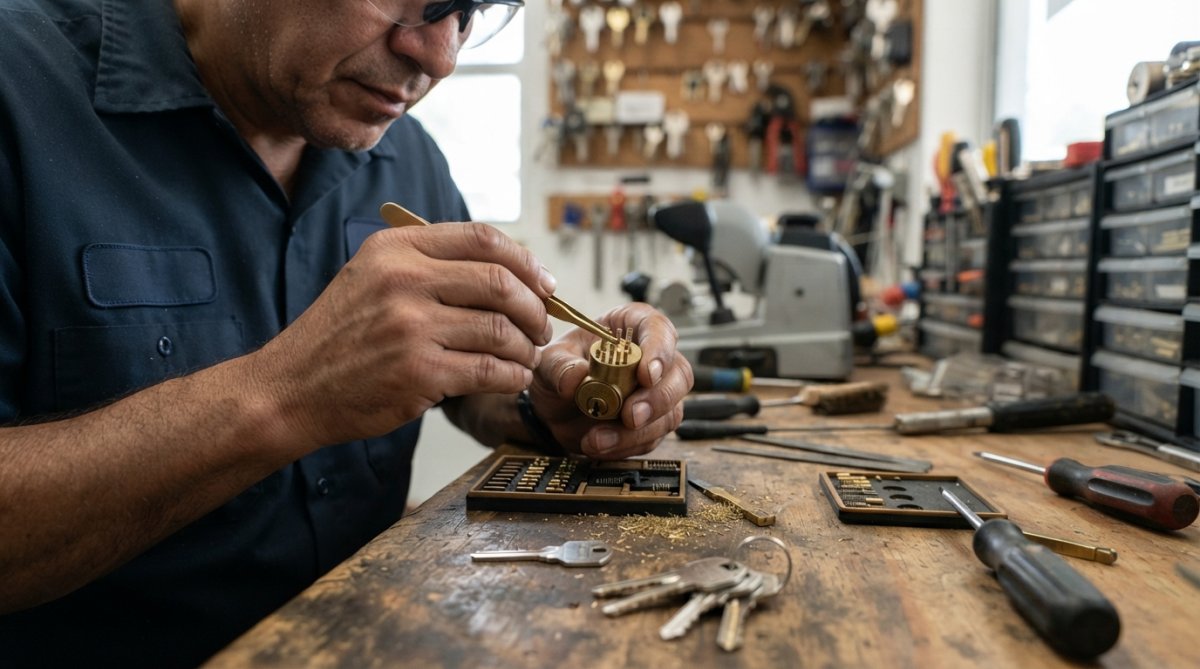
A lock cylinder is the rotating plug inside a deadbolt or knob that accepts your key. Inside it sit key pins and driver pins, spring-loaded in a pin tumbler stack. Rekeying swaps those pins to fit a new key.
What gets replaced during a rekey:
- Key pins (matched to the new key's cuts)
- Sometimes springs, if worn
- The key itself
Rekeying vs Replacing Door Locks: Which Makes Sense for Your Home
A rekey makes sense when the hardware is sound but the key access is not. Replacement makes sense when the hardware itself is the problem. Most homes fall into the first category.
Choose a rekey when:
- You moved in and don't know who holds old keys
- A roommate, contractor, or tenant moved out
- You want one key for multiple entry doors
- The existing lock grade is adequate
Choose replacement when:
- The cylinder is seized, damaged, or worn
- You're upgrading to a higher lock grade or smart hardware
- The lock is builder-grade and you want a security upgrade
When a Security Upgrade Beats a Simple Rekey
If your entry door still runs a cheap builder lock, rekeying it just re-secures weak hardware. Upgrading to a high-security cylinder at the same time saves you a second service call. Our technicians are certified in Medeco and Multlock high-security locks, which is the route we recommend when a rekey alone won't move the needle.
The Locksmith Service Call Fee in 2026 and What It Includes
A service call fee is the base charge for a technician to travel to your home and begin work. It is separate from labor and parts. The service call fee is a line item homeowners often question.
How Long Does It Take to Rekey a House?
Rekeying a single lock usually takes 15 to 30 minutes once the technician is on site. A full house with several home entry points typically runs one to two hours. The work itself is fast; the variable is how many cylinders need pinning and whether any hardware fights back.
A standard rekey involves:
- Remove the cylinder from the lock housing
- Extract the existing pins
- Match new key pins to the new key
- Reassemble and test the lock mechanism
- Confirm the old key no longer turns
What Pushes the Cost Up: Labor Rates, Lock Grade, and Hardware
| Cost Driver | How It Is Billed | What Moves It Up |
|---|---|---|
| Service call fee | Flat trip charge | Distance, after-hours or weekend scheduling |
| Labor rate | Per lock or per hour | Number of cylinders, lock grade, accessibility |
| Pins and small parts | Usually bundled into labor | Unusual keyways, worn springs, restricted keyways |
| Hardware condition | Quoted separately if replacement is needed | Seized cylinders, stripped screws, corroded housings |
| Number of entry points | Multiplies labor | Each additional door, knob, or deadbolt |
How Labor Is Actually Billed
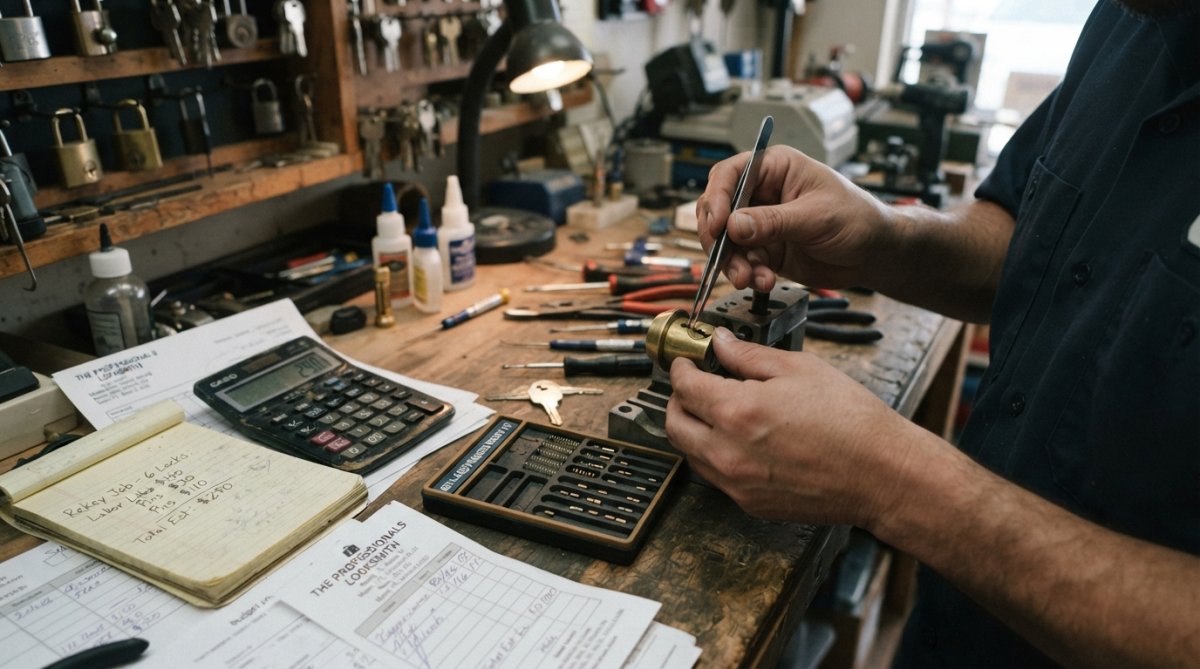
Two billing models are common for residential work: per-lock pricing, where a flat number is quoted for each cylinder, and hourly pricing, where the clock starts on arrival. Per-lock pricing can be easier to budget for.
Why Lock Grade Changes the Time on Task
Lock grade refers to the ANSI/BHMA rating stamped on the hardware, typically Grade 3 (builder-grade), Grade 2 (mid-range), and Grade 1 (commercial-grade). Higher grades use tighter tolerances and more precise pinning, which means the technician spends more time matching pins to the new key. A Grade 3 knob might rekey in a few minutes; a Grade 1 deadbolt with a restricted keyway can take noticeably longer, and some restricted keyways require the technician to order pins from the manufacturer rather than pull them from a standard kit.
When Hardware Condition Forces a Replacement
Rekeying assumes the cylinder still functions. If the plug is seized, the springs are flat, or the housing is cracked, new pins will not fix the problem, the lock has to be replaced. This is the single most common reason a quoted rekey turns into a larger invoice. A technician who inspects the cylinder before quoting protects you from that surprise; a technician who quotes blind does not.
The Break-Even Point Nobody Mentions
On a builder-grade knob, the labor to rekey can sometimes approach the cost of replacing the lock. On a solid mid-grade or high-security deadbolt, rekeying is often a better value.
Regional Price Variance
Labor rates for locksmith work can vary by market. Before accepting a quote, it is advisable to compare service call fees and per-lock rates from local providers.
Smart Locks, Master Key Systems, and Old Hardware: What Changes the Quote
This is the section most cost guides skip, and it is where the real money and the real frustration live. Smart locks, master key systems, and legacy hardware each change what a rekey can and cannot do.
Smart Locks and Keypad Deadbolts
Not every smart lock can be rekeyed. The hardware falls into three rough categories:
- Mechanical override cylinder present. Many keypad deadbolts and smart deadbolts include a traditional pin tumbler cylinder as a backup keyway. These can usually be rekeyed the same way as a standard deadbolt, though the cylinder is often smaller and uses a proprietary keyway, so pins may need to be ordered.
- No mechanical cylinder. Fully electronic locks that rely only on a keypad, app, or fob have nothing to rekey. Access is changed by deleting and re-adding user codes in the app or on the keypad, not by swapping pins.
- Hybrid units with a removable cylinder. Some models let the cylinder be pulled and swapped for a new one rather than re-pinned. This is faster but usually costs more in parts.
Master Key Systems for Residential Properties
A master key system lets one key open every door in the home while individual keys open only specific doors. This is common in rentals, multi-unit properties, and homes with outbuildings, guest suites, or staff access.
Cost considerations for a master key system:
- Setup can be more involved than a standard rekey because every cylinder must be pinned to the hierarchy.
- Key control becomes critical, if a master key is lost, the entire system may need to be re-pinned.
Old and Legacy Hardware
Older locks, particularly pre-1990s mortise locks, rim cylinders, and vintage knob sets, can usually be rekeyed, but they need a technician who understands the original pinning. Parts for legacy cylinders are often no longer manufactured, so the technician may need to fabricate pins or source them from a specialty supplier. This adds time and sometimes a parts surcharge.
Security Level and Hardware Grade
Rekeying does not change the security grade of your existing hardware. A Grade 3 builder knob stays a Grade 3 builder knob after a rekey, it just has new pins. If your goal is a genuine security upgrade, pair the rekey with a hardware upgrade on the primary entry door, or replace the builder-grade hardware outright.
Conclusion
The cost of a rekey involves labor, the service call, and the number of cylinders. Getting these numbers upfront can clarify the quote.
Frequently Asked Questions
What is the average cost to have a lock rekeyed?
The total cost depends on how many cylinders you have and whether the locksmith charges a separate service call fee. The cost to rekey house locks can rise with each additional deadbolt or entry door, and high-security cylinders may take longer to service than standard pin tumbler models. Because rates vary by market and hardware, request an itemized quote before work begins.
Is it cheaper to replace locks or rekey them?
Rekeying can be a more cost-effective option than full lock replacement when the existing lock housing, deadbolt, and hardware are in good condition, as you primarily pay for new key pins and labor. Replacing makes more sense when the lock is worn, the lock grade is too low for your entry door, or you want a security upgrade to a high-security cylinder. If the hardware is still solid, rekeying can be a practical path to key control.
How much does a professional locksmith charge for a service call?
A locksmith service call fee covers the trip to your home and the first portion of on-site labor. Some providers may adjust the fee when you book multiple cylinders or combine the visit with a security assessment. Always confirm the fee and labor rate in writing before the technician arrives.
Can I rekey my own locks to save money?
DIY rekeying is possible with a rekeying kit and replacement key pins matched to your cylinder brand, but pin tumbler locks are easy to damage if you force the plug or lose a spring. You also need the correct pin sizes for your lock grade. If the lock is a high-security Medeco or Mul-T-Lock cylinder, or part of a master key system, a locksmith professional is the safer choice because mistakes can compromise key control for the whole building.
How long does it take to rekey a house?
A single standard deadbolt usually takes about 15 to 30 minutes to rekey on site. A typical home with three to five entry points takes roughly one to two hours, including removal, repinning, testing, and key cutting. Older or high-security cylinders, or locks that have not been serviced in years, can add time. Ask the locksmith for a time estimate when you book so you can plan access to each entry door.