 ultimate-guide
Repairing Old Master Key Systems: A Technical Guide
Table of Contents
- Understanding Master Key System Architecture
- Common Problems in Aging Master Key Systems
- Master Key System Maintenance: Prevention and Upkeep
- Rekeying Master Key Cylinders vs. Full Replacement
- Master Key System Security Risks and Audit Checklist
- Step-by-Step Repair Process for Legacy Systems
- When to Replace vs. Repair an Aging System
- Conclusion
Last Updated: August 30, 2026
Understanding Master Key System Architecture
A master key system is a hierarchical lock configuration where multiple different keys open the same lock, and a single master key opens all locks in the system. This works through the pin tumbler cylinder: individual pins of varying heights stack inside the lock body, and a key's bitting (cut pattern) aligns these pins at precise heights to allow the plug to rotate and operate the mechanism.
The system layers this design by introducing change keys that open only designated locks and a master key that opens all of them. This is achieved through carefully calculated pin stacks, where each pin column contains multiple pins cut to different specifications. The keyway (the shaped opening in the lock face) must accommodate all these different keys while maintaining security.
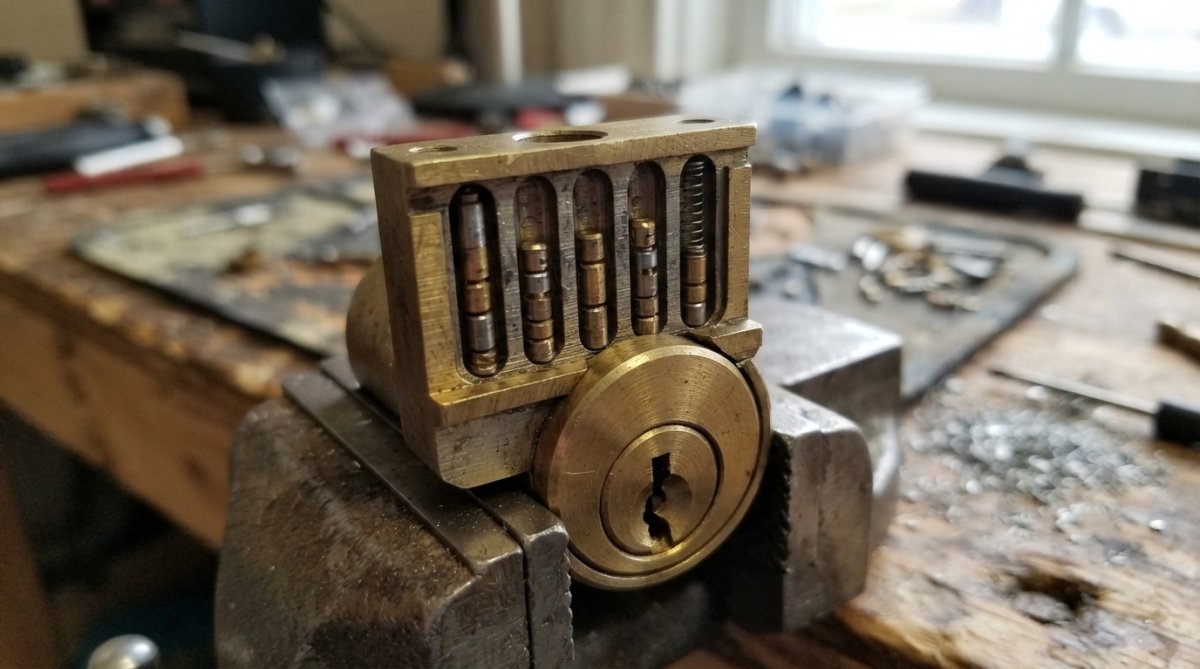
Most commercial buildings installed their master key systems decades ago, and those systems still operate today. The problem isn't that they've stopped working, it's that they've been working the same way for 20, 30, or even 40 years without significant updates. The original locksmith may no longer be in business. Documentation about the system's configuration has often been lost. Staff have changed multiple times. What remains is a system that's accumulated wear, potential security vulnerabilities, and compatibility issues with modern hardware.
Understanding how your existing system works is the first step toward deciding whether repairing old master key systems makes sense for your property.
Common Problems in Aging Master Key Systems
Worn pins are the most frequent issue in systems in use for years. Each key insertion and turn creates microscopic friction against the pins. Over thousands of insertions, pins develop flat spots, become shorter, or develop burrs that catch during operation. Keys that should work suddenly stick, require excessive force, or fail to operate altogether.
Cylinder binding occurs when the plug becomes slightly misaligned within the housing due to wear in the shear line, the critical boundary between the plug and the bible (the stationary part). Even a few thousandths of an inch of misalignment creates binding that makes keys difficult to insert or turn.
Key control problems emerge when master key systems haven't been properly maintained. In a well-documented system, every key blank is tracked and the bitting array is secure. In aging systems, documentation frequently doesn't exist. Keys get duplicated by unauthorized parties, and the system's security foundation crumbles because you can no longer control who has access.
Rust and corrosion develop inside cylinders exposed to moisture, salt air, or poor environmental conditions. This is particularly common in coastal properties. Corrosion creates rough surfaces that catch pins and increase friction, potentially trapping pins in place.
Restricted keyway compatibility issues arise when integrating modern high-security cylinders into old master key systems. The restricted keyway of modern locks may not be mechanically compatible with the original system's architecture. Retrofitting requires either accepting reduced security or replacing significant portions of the system.
Master Key System Maintenance: Prevention and Upkeep
Regular maintenance prevents many problems that force expensive repairs later. Apply a light, dry lubricant like graphite powder into the keyway monthly. This reduces friction, slows wear on pins, and keeps keys operating smoothly. Never use oil-based lubricants, which attract dirt and gum up the mechanism.
Inspect annually, more frequently in high-traffic areas or harsh environments. Check whether keys operate smoothly or require excessive force. Listen for grinding sounds during insertion or rotation. Test all change keys and the master key. Document which locks show signs of wear to spot trends.
Key control documentation is maintenance work many property managers overlook until a security breach forces the issue. Maintain a current list of all keys in circulation, who holds them, and which locks they open. When staff leave, collect their keys immediately. When you rekey or change locks, update your documentation.
Environmental protection extends cylinder life significantly. In coastal areas, apply a light coat of protective finish to exposed lock hardware. Ensure door frames and weatherstripping direct water away from locks. In humid climates, consider installing moisture-control systems inside lock casings.
Preventive rekeying every 5 to 7 years for high-security applications maintains system integrity. This is particularly important in properties with frequent staff turnover, where key control naturally degrades over time.
Rekeying Master Key Cylinders vs. Full Replacement
Rekeying means changing the pin configuration inside an existing cylinder so that old keys no longer work and new keys operate the lock. The cylinder body, lock case, and mounting hardware remain in place. Only the internal pins and springs are removed, replaced with new pins of different heights, and reassembled. For a single lock, rekeying typically takes 15 to 30 minutes (aloa.org).
The advantage of rekeying is cost and minimal disruption. You don't need to remove locks, patch holes, or reinstall hardware. For a building with dozens of locks, rekeying can be completed in a single day or weekend. The disadvantage is that you're limited by the original cylinder's condition. If the cylinder is already worn, corroded, or damaged, rekeying won't fix those underlying problems.
Full replacement means removing the entire lock assembly and installing a new one. This is necessary when the cylinder is too damaged to rekey, when you want to upgrade to a modern high-security lock, or when you're transitioning to a completely new master key system architecture. Replacement takes longer per lock (30-60 minutes depending on how well the old hardware comes out) and involves patching and finishing work.
For aging master key systems, the choice often comes down to the condition of existing cylinders and your security requirements. If cylinders are mechanically sound but you need to revoke old keys, rekeying is efficient. If you're experiencing binding, excessive wear, or rust, replacement becomes the better option.
Many property managers choose a hybrid approach: rekey cylinders still in good condition and replace only the damaged or problematic ones. This spreads the cost and allows gradual upgrading while maintaining functionality throughout the building.
Master Key System Security Risks and Audit Checklist
Poorly maintained master key systems create security vulnerabilities extending far beyond the locks themselves. When key control breaks down, you lose the ability to know who actually has access to your property. A former employee might still possess a key. A copy made years ago by an unauthorized party might be in circulation.
The restricted keyway was invented specifically to prevent unauthorized duplication (peer-reviewed research). A high-security lock's keyway is patented and difficult to copy without specialized equipment. But many older master key systems use standard keyways that any key-cutting machine can duplicate.
Credential creep is the slow accumulation of access over time. An employee gets a change key for their office and keeps it after leaving. Five years later, someone else needs access and gets a duplicate of the original key because it's easier than rekeying. This pattern repeats across dozens of locks until your system's security is compromised.
Use this audit checklist to assess your current master key system's security posture:
- Do you have current documentation of your master key system's bitting array and key hierarchy?
- Can you account for every key currently in circulation?
- Do you know who holds each key and why they need it?
- Have you identified all locks that use a standard (non-restricted) keyway?
- Have you tested all change keys and the master key to confirm they operate properly?
- Are there locks that require excessive force to operate or that stick during use?
- Have you observed any visible corrosion, rust, or damage to cylinder housings?
- Do you have a documented process for collecting keys when staff leave?
- Have you identified any locks that were rekeyed by previous locksmiths without documentation?
- Do you know when the system was last completely serviced or audited?
A system that fails multiple items on this checklist is a candidate for either comprehensive rekeying or partial replacement, depending on the severity of the issues.
Step-by-Step Repair Process for Legacy Systems
The repair process begins with diagnosis. A qualified locksmith examines each cylinder, tests key operation, and identifies whether the problem is wear, corrosion, binding, or something else. This requires hands-on inspection: inserting keys, feeling resistance, observing how smoothly the plug rotates, and checking for visible damage inside the keyway.

Once diagnosis is complete, the technician removes the cylinder from the lock body by removing the retaining screw or clip. For locks installed for decades, this step can be challenging, screws may be corroded, stripped, or stuck.
The cylinder is then disassembled. The plug is carefully removed from the bible, and the pin stacks are extracted. In a master key system, each pin stack must be carefully documented or photographed before removal, because the specific pin configuration makes that cylinder part of your master key system.
The pins are inspected for wear, corrosion, or damage. Worn pins are replaced with new ones of the same specifications. If corrosion is present, the cylinder and bible may be cleaned or lightly polished. Springs are checked and replaced if they've lost tension.
The cylinder is reassembled with the correct pin configuration. This is where the bitting array documentation becomes critical. If you don't have documentation, the locksmith must measure or calculate the correct pin heights based on the original keys or by communicating with other locks in the system.
The cylinder is reinstalled in the lock body, and operation is tested with all relevant keys. Both the change key and master key must operate smoothly without excessive force or binding. If operation isn't smooth, the process returns to disassembly and adjustment.
This process takes 45 minutes to 2 hours per lock depending on the condition of the cylinder and availability of documentation (aloa.org).
When to Replace vs. Repair an Aging System
Replace your master key system when cylinders are severely corroded, when the original keyway is no longer adequate for your security needs, when you need a more sophisticated access hierarchy, or when repair costs approach replacement costs.
Corrosion that has pitted the cylinder surface, rust that has seized pins in place, or damage that has cracked the lock body are all signs that repair won't restore reliable operation. A repaired cylinder that still binds or resists key operation after professional service is often better replaced than repeatedly serviced.
Security requirements change over time. If your building now requires restricted keyways, high-security cylinders, or integration with electronic access control systems, your old master key system may be incompatible.
Documentation loss is another factor. If the original bitting array documentation is gone and no one knows the correct pin specifications for your system, repair becomes guesswork. A new system with clear documentation is more reliable long-term.
Cost-benefit analysis should include not just the immediate repair cost, but the expected lifespan of the repaired system and the likelihood of future failures. A 40-year-old system that has never been comprehensively serviced may have multiple failure points. Replacing the entire system spreads the cost across multiple years but provides a longer service life and better security.
For property managers, the decision often hinges on the building's long-term plans. If you're planning a major renovation in the next 5 years, repair the existing system. If you're committing to the current configuration for 10+ years, replacement is usually the better investment.
At SOUTHMIAMILOCKSMTIH.COM, our recommendation depends on the specific condition of your cylinders, your security requirements, and your budget. A professional security audit can help clarify which approach makes sense for your property.
Conclusion
Repairing old master key systems requires understanding the architecture of your existing locks, identifying the specific problems affecting operation, and choosing between repair and replacement based on condition and long-term needs. Aging systems accumulate wear, lose documentation, and develop security vulnerabilities that can't be fixed by a single repair.
The decision to repair or replace isn't always straightforward, but a professional assessment of your system's condition, security posture, and remaining useful life will clarify the best path forward.
SOUTHMIAMILOCKSMTIH.COM offers comprehensive master key system evaluation and repair services. Our licensed, certified technicians can audit your current system, identify problems, and recommend whether repair or replacement makes sense for your building. We work with commercial properties, residential buildings, and property managers to maintain secure access systems that work reliably. Contact us for a professional evaluation of your master key system, we'll help you understand your options and implement the solution that fits your property's needs and budget.
=== FAQ ANSWERS (audit these too, same rules) ===
[1] Q: Can old master key systems from the 1990s actually be repaired, or do they need to be replaced? A: Many legacy master key systems can be repaired through rekeying, pin replacement, and cylinder restoration, provided the lock body and plug are structurally sound. However, if the keyway is damaged, the pin stacks are worn beyond tolerance, or the system lacks modern security features, replacement may be more cost-effective. A professional inspection of the cylinder, bitting array, and overall hardware configuration will determine whether repair is viable or if system migration is necessary.
[2] Q: What does master key system maintenance involve? A: Regular master key system maintenance includes lubricating cylinders with appropriate products, inspecting pins and springs for wear, testing all keys (operating key, change key, and grand master key) for smooth operation, and auditing key control records to prevent unauthorized duplication. Preventive maintenance catches issues like binding pins or worn keyways before they cause lockouts or security breaches, extending system life and reducing emergency repair costs.
[3] Q: What are the main security risks with an older master key system? A: Aging systems face risks including worn pin tumbler mechanisms that allow picking or bumping, unrestricted keyways that permit unauthorized key duplication, worn master pins that compromise the hierarchy, and poor key control documentation. A security audit should verify whether the system meets current commercial security standards, whether high-security cylinders can be retrofitted, and whether access control has been compromised through lost or copied keys.
[4] Q: Is it cheaper to rekey master key cylinders or replace the entire system? A: Rekeying is typically less expensive upfront, involving new pins, springs, and a fresh bitting array without replacing the lock body. Full replacement costs more but provides modern security features, updated hardware configuration, and compatibility with current access control systems. The decision depends on the system's age, structural condition, security requirements, and whether compatibility with newer high-security cylinders is needed for your facility.
Frequently Asked Questions
Q: Can old master key systems from the 1990s actually be repaired, or do they need to be replaced?
A: Many legacy master key systems can be repaired through rekeying, pin replacement, and cylinder restoration, provided the lock body and plug are structurally sound. However, if the keyway is damaged, the pin stacks are worn beyond tolerance, or the system lacks modern security features, replacement may be more cost-effective. A professional inspection of the cylinder, bitting array, and overall hardware configuration will determine whether repair is viable or if system migration is necessary.
Q: What does master key system maintenance involve?
A: Regular master key system maintenance includes lubricating cylinders with appropriate products, inspecting pins and springs for wear, testing all keys (operating key, change key, and grand master key) for smooth operation, and auditing key control records to prevent unauthorized duplication. Preventive maintenance catches issues like binding pins or worn keyways before they cause lockouts or security breaches, extending system life and reducing emergency repair costs.
Q: What are the main security risks with an older master key system?
A: Aging systems face risks including worn pin tumbler mechanisms that allow picking or bumping, unrestricted keyways that permit unauthorized key duplication, worn master pins that compromise the hierarchy, and poor key control documentation. A security audit should verify whether the system meets current commercial security standards, whether high-security cylinders can be retrofitted, and whether access control has been compromised through lost or copied keys.
Q: Is it cheaper to rekey master key cylinders or replace the entire system?
A: Rekeying is typically less expensive upfront, involving new pins, springs, and a fresh bitting array without replacing the lock body. Full replacement costs more but provides modern security features, updated hardware configuration, and compatibility with current access control systems. The decision depends on the system's age, structural condition, security requirements, and whether compatibility with newer high-security cylinders is needed for your facility.
This article was written using GrandRanker