 ultimate-guide
Emergency Locksmith Pricing: A 2026 Transparency Guide
Table of Contents
- What Determines Emergency Locksmith Pricing
- Locksmith Service Fee Breakdown: What You're Actually Paying For
- Residential Versus Commercial Locksmith Rates
- How to Spot Locksmith Scams and Verify Legitimacy
- Emergency Locksmith Quote Checklist: What to Ask Before They Arrive
- Residential Lockouts, Car Keys, and Safe Repairs: Cost Expectations
- Frequently Asked Questions
Last Updated: September 20, 2026
What Determines Emergency Locksmith Pricing
Emergency locksmith pricing remains opaque, but understanding the components, service call fees, labor, and hardware, separates legitimate professionals from predatory operators.
The core components of emergency locksmith pricing fall into three buckets: service call fees, labor rates, and hardware costs. Each one varies based on the time of day, the complexity of your lock, and whether you're residential or commercial. According to the Federal Trade Commission's guidance on service transparency, businesses that clearly disclose pricing upfront build consumer trust and reduce disputes.
Service call fees and dispatch costs
A service call fee (dispatch fee) covers the locksmith's arrival. Business hours fees are modest; after-hours, evenings, weekends, and holidays incur significant surcharges because technicians work off-duty time.
Travel fees apply if you're beyond the service radius. Some locksmiths include this in the service call fee; others itemize it separately. Legitimate providers disclose travel costs upfront.
After-hours and weekend surcharges
After-hours surcharges are substantial: evening calls (6 PM-midnight) typically add 50% to the base rate; midnight-6 AM calls often double it. Weekend and holiday premiums apply on top.
After-hours surcharges reflect real costs: premium wages, 24/7 dispatch, and vehicle readiness.
Labor versus hardware costs
Bills split into labor (technician time) and materials (locks, keys, components).
Locksmith Service Fee Breakdown: What You're Actually Paying For
Itemized invoices reveal where your money goes and distinguish legitimate operators from predatory ones.
On-site estimate and assessment fees
Assessment fees are sometimes applied, though many locksmiths waive them if you hire them. Others apply the fee to the final bill.
Rekeying, deadbolt installation, and hardware markup
Rekeying (changing pins so old keys stop working) takes 20-40 minutes. Hardware costs are modest, but technician expertise drives the price.
Travel fees and service radius charges
Travel fees compensate for vehicle wear, fuel, and driving time. Some charge per mile; others charge a flat fee beyond a service radius. Some include travel in the base service call fee.
Residential Versus Commercial Locksmith Rates
Commercial security costs more than residential, and understanding why prevents sticker shock when you need it most.
Why commercial security costs more
Commercial properties require higher-security hardware and complex access control, dozens of locks, electronic systems, and master key hierarchies, versus a single residential lock.
Master key systems and access control pricing
Master key systems for office buildings vary in cost depending on the number of locks and complexity.
How to Spot Locksmith Scams and Verify Legitimacy
The locksmith industry has a reputation problem. Unlicensed operators and predatory pricing practices are common enough that caution is warranted. Knowing how to verify a locksmith's credentials protects both your wallet and your home security.
Red flags: unlicensed operators and predatory pricing
Unlicensed locksmiths operate without accountability. They don't carry bonding or insurance, which means if they damage your property or steal from you, you have no recourse. They often quote low prices to win the job, then inflate charges once they're at your door and you're desperate.
Common predatory tactics include:
- Quoting a low price over the phone, then claiming the lock is "more complex than expected" and doubling the price on-site
- Charging for services you didn't authorize (e.g., "We recommend upgrading to a high-security lock for only $400 more")
- Refusing to provide an itemized invoice, making it impossible to verify what you paid for
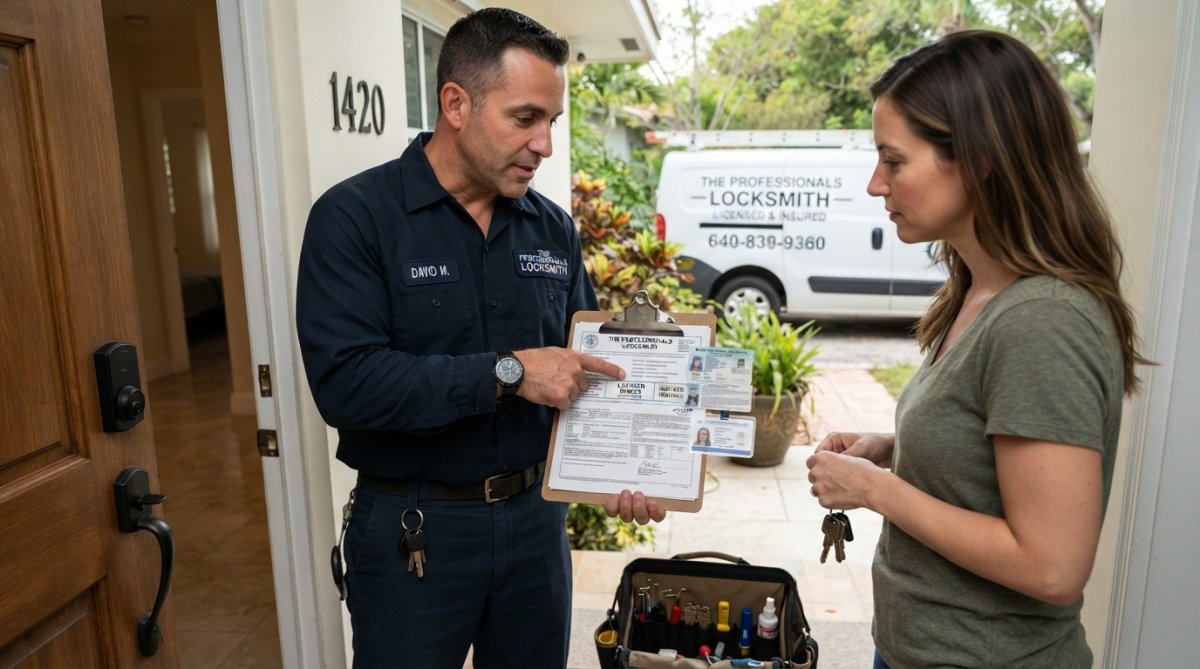
- Using unmarked vehicles and refusing to show credentials
- Demanding cash only, with no receipt
Checking credentials: bonded, insured, and certified
Legitimate locksmiths are bonded and insured. Bonding protects you if the locksmith steals from you or damages your property. Insurance covers accidents and liability. Ask to see proof of both before they start work. A professional will have this documentation ready.
Emergency Locksmith Quote Checklist: What to Ask Before They Arrive
Before a locksmith arrives, gather information that lets you evaluate their quote fairly and avoid surprises.
Upfront pricing and billing transparency
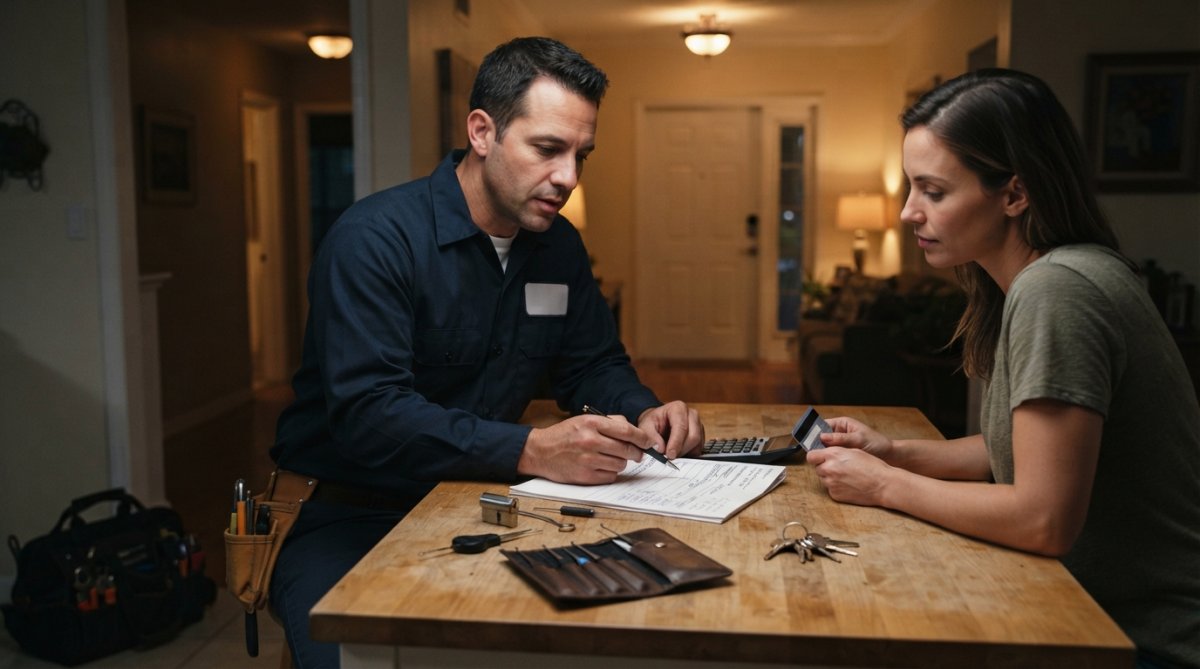
Always ask for an estimate before work begins. A professional will provide a range ("This will be between $150 and $250 depending on what we find") or a firm quote if the problem is straightforward. If they refuse to estimate, find another locksmith.
Service guarantees and warranty coverage
A reputable locksmith guarantees their work. If they install a deadbolt and it fails within 30 days due to defective installation, they'll fix it at no charge. Ask what warranty they offer on both labor and hardware.
Residential Lockouts, Car Keys, and Safe Repairs: Cost Expectations
Different types of locksmith work have different cost profiles. Knowing what to expect prevents sticker shock and helps you budget for security upgrades.
Residential lockout and rekeying scenarios
A residential lockout, being locked out of your home, is the most common emergency call. If your lock is a standard pin-tumbler deadbolt and the door is accessible, opening it takes 15-30 minutes. Costs for evening service are typically higher for after-midnight calls.
Automotive key extraction and replacement
A broken car key is a different challenge. If the key breaks off inside the ignition or door lock, the locksmith must extract the fragment without damaging the lock. This requires specialized tools and takes 20-45 minutes. Costs vary.
Safe repair and combination recovery
A safe with a lost combination is a puzzle. The locksmith can drill the lock, open the safe, and replace the lock mechanism. Cost depends on the safe's construction. A basic home safe and high-security safes or those with time-lock mechanisms will have varying costs to open and relock.
| Cost Component | Typical Range | What It Covers |
|---|---|---|
| Service call fee (business hours) | $50-100 | Dispatch and arrival |
| Service call fee (after-hours) | $75-150 | Emergency dispatch surcharge |
| Labor (per hour or per job) | $100-200/hour | Technician time to open/repair |
| Rekeying labor | $75-150 | Pin replacement and reinstallation |
| Deadbolt installation | $150-300 | Hardware plus installation labor |
| Travel fee | $0-2 per mile | Mileage beyond service radius |
| High-security lock hardware | $200-500+ | Medeco, Multlock, or equivalent |
| Car key replacement | $200-500 | Extraction, programming, key blank |
| Safe opening (basic) | $200-400 | Drilling and lock replacement |
Frequently Asked Questions
How much should an emergency locksmith cost?
Emergency locksmith pricing depends on the type of service, time of day, and lock complexity. Service call fees, after-hours surcharges, labor, and hardware all factor into the total. Costs vary significantly based on whether you need a simple residential lockout or specialized commercial work. Always request an upfront estimate before authorizing work to avoid surprises on your invoice.
What factors influence emergency locksmith labor rates?
Labor rates depend on the lock type, access difficulty, technician certification level, and service timing. High-security locks like Medeco or Multlock systems cost more than standard deadbolts. Emergency dispatch fees and after-hours surcharges apply to calls outside business hours. Professional certification and experience also affect pricing, licensed, bonded technicians typically charge more than unlicensed operators, reflecting their credentials and liability protection.
How can I identify a reputable and licensed locksmith?
Verify that the locksmith is licensed, bonded, and insured before hiring. Ask for proof of credentials and check their professional certifications. Legitimate locksmiths display their business name, license number, and contact information clearly. Avoid operators who arrive in unmarked vehicles or refuse to provide written estimates. Check online reviews and ask about their experience with your specific lock type or security need.
What should I ask a locksmith before they arrive for an emergency call?
Ask for a breakdown of service fees, labor costs, and hardware charges upfront. Confirm whether there are after-hours surcharges and what the total estimate is. Request information about their warranty on work performed and whether they offer service guarantees. Ask how long the job typically takes and whether they accept multiple payment methods. Verify their license number and ask about their experience with your specific lock or security system.
Are there hidden fees in emergency locksmith services?
Hidden fees are common in the locksmith industry, which is why price transparency matters. Watch for undisclosed travel fees, dispatch charges, on-site assessment costs, and hardware markups not mentioned in the initial quote. After-hours surcharges, weekend premiums, and holiday rates should be stated upfront. Always request a detailed, itemized invoice before work begins and confirm all charges in writing to protect yourself from billing surprises.
Why do emergency service calls cost more than standard appointments?
Emergency dispatch fees cover the cost of immediate response, often outside regular business hours. After-hours surcharges reflect higher labor costs for nights, weekends, and holidays when technicians work premium shifts. Emergency calls also limit the technician's ability to schedule other jobs, increasing their per-call overhead. Licensed, bonded professionals charge more for emergency work because they maintain 24/7 availability and carry higher insurance costs to protect customers during urgent situations.
How do I know if a locksmith is using a scam or predatory pricing?
Red flags include extremely low initial quotes that spike dramatically when the technician arrives, refusal to provide written estimates, pressure to authorize expensive upgrades, or operators working from unmarked vehicles without visible credentials. Legitimate locksmiths give honest assessments of what your lock needs and explain why certain services cost what they do. Avoid anyone who quotes prices significantly lower than competitors or demands cash-only payment without a receipt.