 ultimate-guide
High Security Medeco Lock Benefits: 2026 Guide
Table of Contents
- What Makes a Medeco Lock Different From Standard Locks
- Medeco Key Control Systems: Stopping Unauthorized Duplication
- Pick-Resistant Door Locks and Resistance to Physical Attack
- High-Security Lock Installation Cost: What Drives the Price
- Medeco Locks for Residential vs. Commercial Properties
- Smart Home and Access Control Integration
- Maintenance and Lubrication for Long-Term Performance
- Are Medeco Locks Worth the Investment?
- Frequently Asked Questions
Last Updated: September 11, 2026
What Makes a Medeco Lock Different From Standard Locks
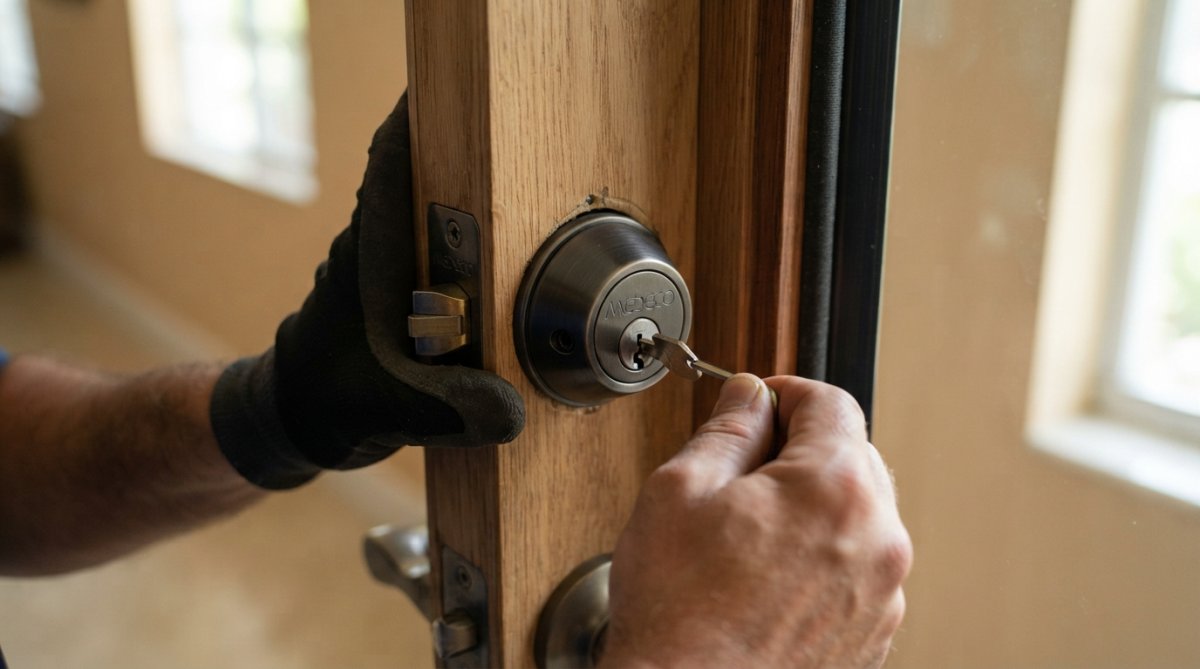
A Medeco lock is a mechanical high-security cylinder that uses a rotating pin tumbler design to resist picking, drilling, and key duplication. Unlike standard hardware-store cylinders, which rely on a single shear line, Medeco locks combine elevation, rotation, and a sidebar mechanism that will not release unless every pin is positioned correctly.
That distinction matters more than most homeowners realize. A standard pin tumbler cylinder can be defeated in seconds by someone with basic tools and a little practice (peer-reviewed research). A high-security cylinder turns that same attack into a losing proposition.
At SOUTHMIAMILOCKSMTIH.COM, our technicians have installed and serviced high-security cylinders for over 30 years. The locks that hold up are the ones engineered around key control, not just thicker metal. Below, we break down the high security medeco lock benefits that actually affect your security, plus the cost factors, maintenance requirements, and integration questions most guides skip.
Medeco Key Control Systems: Stopping Unauthorized Duplication
Key control is the feature that separates a Medeco system from almost everything else on the shelf. A key control system restricts who can legally copy a key, so a lost key does not automatically become a security breach.
How Patent-Protected Keys and Key Authorization Work
Patent-protected key blanks are not sold to general hardware stores or big-box key-cutting machines. To cut a duplicate, a locksmith must hold authorization from the registered owner and use a restricted key blank tied to that specific keyway. The result: unauthorized duplication becomes nearly impossible without your written consent.
- Keys are stamped with a "Do Not Duplicate" identifier and a registration number
- Duplication requires a valid authorization card or signature on file
- Lost keys can be deactivated in the master key system without rekeying every door
- Building managers retain a documented chain of custody for every issued key
Pick-Resistant Door Locks and Resistance to Physical Attack
Pick-resistant door locks are cylinders engineered so that standard lock manipulation techniques fail. Medeco's rotating pin design means that even if a pick sets every pin to the correct height, the cylinder still will not turn unless each pin is also rotated to the correct angle.
Drill Resistance, Bump Keys, and Impressioning Explained
Three attack methods dominate real-world forced entry: drilling, bumping, and impressioning. Each one is addressed by a different layer of the lock's construction.
| Attack Method | How It Works | Medeco Defense |
|---|---|---|
| Drilling | Drill through the cylinder to reach the shear line | Hardened steel anti-drill pins and a hardened face plate |
| Bumping | Bump key jolts pins into alignment | Side-bar mechanism blocks rotation without correct pin angles |
| Impressioning | Markings reveal pin positions from a blank key | Restricted keyway and patent-protected blanks prevent blank access |
| Picking | Manipulate pins to the shear line | Rotating pins require both height and angle alignment |
The sidebar mechanism is the key component. It physically blocks the plug from turning unless every pin is correctly positioned in both dimensions, which is why bump keys and traditional picking tools rarely succeed against these cylinders.
High-Security Lock Installation Cost: What Drives the Price
High-security lock installation cost depends on the number of cylinders, the complexity of the master key system, door hardware condition, and whether the property needs a full key control setup or a single-cylinder upgrade. A single deadbolt replacement is a straightforward job; a multi-door commercial system with a documented key hierarchy is a project.
What the Numbers Actually Look Like
Most residential customers upgrading a single entry door should expect the hardware itself to run several times the price of a builder-grade deadbolt, with the premium concentrated in the restricted keyway and the patented key blanks rather than the metal. Commercial projects scale with cylinder count and master key depth, and the labor line grows faster than the hardware line once you pass roughly a dozen doors because of the planning and documentation work.
Rather than quote a number that will not survive contact with your actual door, here is how to read any estimate you receive:
- Hardware per cylinder: the cylinder, the key blanks, and the registration of the keyway
- Labor per door: drilling, mortising, and aligning a retrofit into an existing door
- Master key design: a flat system is cheap to plan; a multi-level hierarchy with sub-masters is not
- Key control administration: registering the owner, issuing authorization cards, and logging every key
- Service agreement: optional, but the single best predictor of whether the system still works in year ten
The Cost-Benefit Case Most Guides Skip
No competitor page walks through the financial side, so here it is plainly. The comparison is not "high-security cylinder versus standard cylinder." It is "high-security cylinder versus the cost of the event you are trying to prevent."
- Rekey cost after a lost key. With a standard cylinder, a lost key means rekeying every door that key opens. With key control, the lost key is deactivated in the system and the remaining doors stay as they are. On a multi-tenant property, that single difference can pay back the upgrade within one or two incidents.
- Insurance treatment. Many commercial property policies and some residential policies offer premium reductions or deductible waivers when the property uses a listed, restricted-keyway cylinder with documented key control. Ask your agent specifically whether a UL-listed high-security cylinder changes your rate. Do not assume it does; get it in writing.
- Turnover cost. In rental housing, key control converts a move-out from "rekey every lock just in case" into "check the log, deactivate what is missing, rekey only what is necessary."
- Liability exposure. A documented chain of custody for every issued key is defensible in a way that "we think we got them all back" is not.
Judge the upgrade against the cost of one lost-key rekey across your whole property. If the high-security system costs less than two of those events, the math is already settled.
Medeco Locks for Residential vs. Commercial Properties
The same core technology serves both markets, but the priorities differ sharply. Residential buyers usually need one or two entry points protected with key control for the family. Commercial buyers need a documented master key hierarchy, audit trails, and cylinders rated for higher traffic.
Residential: What Actually Matters
For a condo or single-family home, the value is concentrated at the main entry and any door that leads to a space with valuables or a secondary exit. A single high-security deadbolt on the front door plus key control on the spare keys covers most of the risk. The rest of the house does not need the upgrade unless there is a specific reason.
- Main entry: high-security deadbolt with restricted keyway
- Back or side door: second cylinder on the same keyway so one key opens both
- Garage entry: worth upgrading if it is the unobserved door
- Interior doors, closets, storage: standard cylinders are usually sufficient
Commercial: Where the System Beats the Hardware
For a commercial property, the value comes from the key system itself: who holds which key, what it opens, and how quickly a lost key can be neutralized. The cylinder is the delivery mechanism; the master key hierarchy is the product.
- Master key hierarchy: a grand master, sub-masters per floor or department, and change keys per individual
- Audit trail: a written log of every key issued, to whom, and when it was returned or deactivated
- High-traffic rating: cylinders on doors used hundreds of times a day need service intervals, not just installation
- Turnover protocol: a defined process for deactivating a departed employee's key the same day
Property managers in high-turnover rental markets see a specific benefit. When a tenant moves out, key control means you know exactly how many keys were issued and whether any are unaccounted for, which removes the guesswork from a rekey decision.
How to Tell What You Already Have
Before you price an upgrade, check what is on your door. Most people cannot tell a high-security cylinder from a standard one, and the visual cues are simple once you know them.
- The keyway shape. A standard cylinder has a wide, open keyway that accepts a common blank. A restricted keyway is narrower, often with a distinctive profile or a raised ridge that a hardware-store blank will not enter.
- The key head. Restricted keys usually carry a patent number, a "Do Not Duplicate" stamp, and a registration number. A standard key has none of these.
- The face of the cylinder. High-security cylinders often show a hardened face plate or a manufacturer mark that a builder-grade cylinder lacks.
- The key blank at the hardware store. If the store cannot cut a copy without an authorization card, you already have key control.
If you are not sure which cylinder you have, bring the key to a locksmith and ask them to identify the keyway. It takes a minute and it tells you whether you are pricing an upgrade or a replacement.
Smart Home and Access Control Integration
High-security mechanical cylinders and electronic access control are not competing systems. The strongest setups pair a Medeco cylinder as the physical backup with a smart lock or keypad as the primary entry method, so a dead battery or network outage never locks you out.
Most smart locks use a standard cylinder format, and a high-security cylinder can be fitted into many of them. That gives you the convenience of app-based entry and the physical resistance of a mechanical high-security core. For commercial spaces, the same logic applies at the door controller level: the electronic system handles access management, and the mechanical cylinder handles the fallback.
Ask your locksmith to confirm the smart lock accepts a replacement cylinder before you buy it. Some consumer smart locks use proprietary cylinders that cannot be swapped, which locks you out of the high-security upgrade entirely.
Maintenance and Lubrication for Long-Term Performance
A high-security cylinder is a precision mechanism, and it rewards basic care. Most failures we see are not defeats by an attacker; they are sticking, worn keys, and dry internal components.
- Use a dry lubricant such as graphite or a PTFE-based lock lubricant (nachi.org). Never use oil or WD-40, which attracts dust and gums up over time (nachi.org).
- Apply lubricant once or twice a year, more often in coastal or humid climates where salt air accelerates corrosion.
- Replace worn keys before they wear the pins. A visibly rounded key edge is a warning sign.
- Have the cylinder serviced if the key requires jiggling or extra force to turn.
- Keep the keyway clean and free of debris, especially on exterior doors.
A worn key is the most common cause of cylinder damage because it forces the pins into positions they were not designed for. Copy the worn key onto a fresh blank, retire the original, and the cylinder will last far longer.
Are Medeco Locks Worth the Investment?
For properties where a lost key or a defeated cylinder would be expensive, the answer is usually yes. The value of a high-security system is not in the metal itself, it is in the key control, the resistance to physical attack, and the ability to manage access without rekeying an entire building every time a key goes missing.
Where they make less sense: low-risk interior doors, storage closets, or any door where a standard cylinder already meets the actual threat. Spending high-security money on a door nobody is trying to defeat is not a security upgrade, it is a budget line.
If your property has multiple tenants, valuable contents, or a history of key-related incidents, the math favors the upgrade. If you are protecting a single low-risk entry with no key distribution problem, a quality standard cylinder may be sufficient.
If you are weighing an upgrade and want a straight answer on whether your property actually needs it, SOUTHMIAMILOCKSMTIH.COM offers on-site assessments backed by over 30 years of experience and certified technicians in Medeco and Multlock high-security locks. Our licensed, bonded, and insured team handles residential and commercial installations, master key systems, and access control integration, so you get a system designed around your actual doors and traffic patterns rather than a one-size-fits-all package. Get started with SOUTHMIAMILOCKSMTIH.COM and secure your property with a key control system built to last.
Frequently Asked Questions
Are Medeco locks worth the investment for commercial properties?
For businesses with high-traffic doors and multiple keyholders, Medeco locks often justify the cost through key control alone. Patent-protected keys cannot be duplicated without authorization, which stops unauthorized duplication that plagues standard commercial locks. The hardened steel and anti-drill pins also reduce forced entry risk. For a small retail space or office, the reduced rekeying and liability exposure typically outweigh the upfront high-security lock installation cost.
Can a standard locksmith pick a Medeco high-security lock?
Most standard locksmiths cannot pick a Medeco lock with common tools. The side-bar mechanism and rotating pins inside the high-security cylinder require specialized knowledge and equipment. Medeco-certified technicians, like those at SOUTHMIAMILOCKSMTIH.COM, are trained to service these locks.
Do Medeco locks provide protection against drilling and bumping?
Yes. Medeco locks use hardened steel inserts and anti-drill pins that resist common drill bits. Bump keys, which work by transferring impact energy to standard pin tumblers, fail against Medeco's rotating pin and side-bar design. This makes bumping ineffective. The locks also resist impressioning and pick attempts because the keyway and pin alignment are far more complex than standard residential locks.
How does patent protection on Medeco keys enhance security?
Patent protection means only authorized dealers can cut replacement keys, and they must verify ownership first. This prevents anyone from copying your key at a hardware store or online. The patent also covers the keyway geometry, so key blanks are not available to the general public. This key authorization process is the core of Medeco key control systems, giving you a tamper-evident record of every key made for your property.