 how-to
How to Fix a Jammed Door Lock: Step-by-Step Guide
Table of Contents
- Quick Diagnostic: Why Your Door Lock Is Jammed
- Tools You Need Before You Start
- How to Fix a Jammed Door Lock: Step-by-Step
- The Best Lubricant for Door Locks (and What to Avoid)
- Door Latch Stuck in Frame? Fix the Alignment
- When to Replace a Door Lock Instead of Repairing It
- When to Call a Professional Locksmith
- Frequently Asked Questions
Last Updated: September 14, 2026
Quick Diagnostic: Why Your Door Lock Is Jammed
A jammed door lock is a lock that will not turn or release because of friction, debris, misalignment, or a mechanical failure inside the cylinder or latch assembly. Most jams trace back to four predictable causes, and the fastest way to fix one is to stop guessing and run a short diagnostic before you touch a tool.
The 60-Second Diagnostic Flowchart
Work top to bottom. Stop at the first "yes" and jump to the matching fix.
1. Does the key insert fully into the keyway?
- No → The keyway is blocked or the key is bent. Go to Step 1: Check the Key and Keyhole.
- Yes → Continue.
2. Does the key turn at all?
- No, it will not budge → Suspect debris, corrosion, or a failed cylinder. Go to Step 2: Lubricate the Lock Cylinder. If lubrication fails, the cylinder has failed mechanically.
- Turns partway and stops → Debris in the cylinder or a worn key. Try a spare key first, then lubricate.
- Turns freely → Continue.
3. Does the door open when the key turns freely?
- No, the door stays shut → The latch bolt is stuck in the strike plate. Go to Step 3: Retract the Latch Bolt, then Door Latch Stuck in Frame? Fix the Alignment.
- Yes → The lock is working. If it feels stiff, lubricate as preventative maintenance.
4. Is this a smart lock or electronic deadbolt?
- Yes → Skip the mechanical steps and go straight to the smart-lock checklist below. Battery, firmware, and motor failures mimic a mechanical jam but need different fixes.
- No → Continue with the mechanical steps.
Common Causes of a Jammed Lock
- Debris and corrosion in the keyway. Dust, grit, and old graphite buildup pack into the cylinder and block the tumbler pins.
- A worn or bent key. A key that has been copied too many times no longer lifts the pins to the correct height.
- Misalignment between the latch bolt and strike plate. Seasonal swelling or a sagging hinge shifts the door frame, so the latch bolt binds against the plate.
- Internal mechanical failure. A broken spring mechanism or worn internal components inside the cylinder or knob leave the lock stuck regardless of lubrication.
- Smart lock power or motor failure. A dead battery, a stalled motor, or a firmware fault leaves the bolt extended with no mechanical resistance to feel for.
Smart Lock Quick Check
If the lock is electronic, run this before any mechanical repair:
- Replace the batteries first. Most smart locks give a low-battery chirp or app alert for days before failing, but a cold snap can kill weak batteries overnight. Use the type the manufacturer specifies, usually AA lithium for exterior units.
- Try the mechanical key override. Nearly every smart lock keeps a physical keyway under a cover or behind the keypad. If the override opens the door, the issue is electronic, not mechanical.
- Check the app for a jam or calibration error. Many units log a "bolt jammed" or "motor stalled" event that tells you whether the bolt is obstructed or the motor has failed.
- Recalibrate the bolt throw. After a battery change or a door shift, some locks need a recalibration cycle so the motor learns the correct extended and retracted positions.
- Look for firmware updates. A stalled motor after an update is a known pattern; check the manufacturer's app before assuming hardware failure.
If the override key also fails and the batteries are fresh, the motor or gear assembly has likely failed. That is a replacement, not a repair.
Tools You Need Before You Start
Gather these before you touch the lock, because stopping mid-repair with a disassembled knob is how small jobs turn into emergency calls:
- Graphite powder or a silicone-based lubricant (never a wet oil)
- A can of compressed air or a small brush
- A flashlight
- A Phillips and flathead screwdriver
- A file or sandpaper for strike plate adjustments
- A spare key in good condition
Most homeowners already own everything on this list. The one item worth buying is a proper dry lubricant, which we will cover below.
How to Fix a Jammed Door Lock: Step-by-Step
Work through these steps in order. Most jammed locks resolve at step two, and you should stop as soon as the lock turns freely.
Step 1: Check the Key and Keyhole
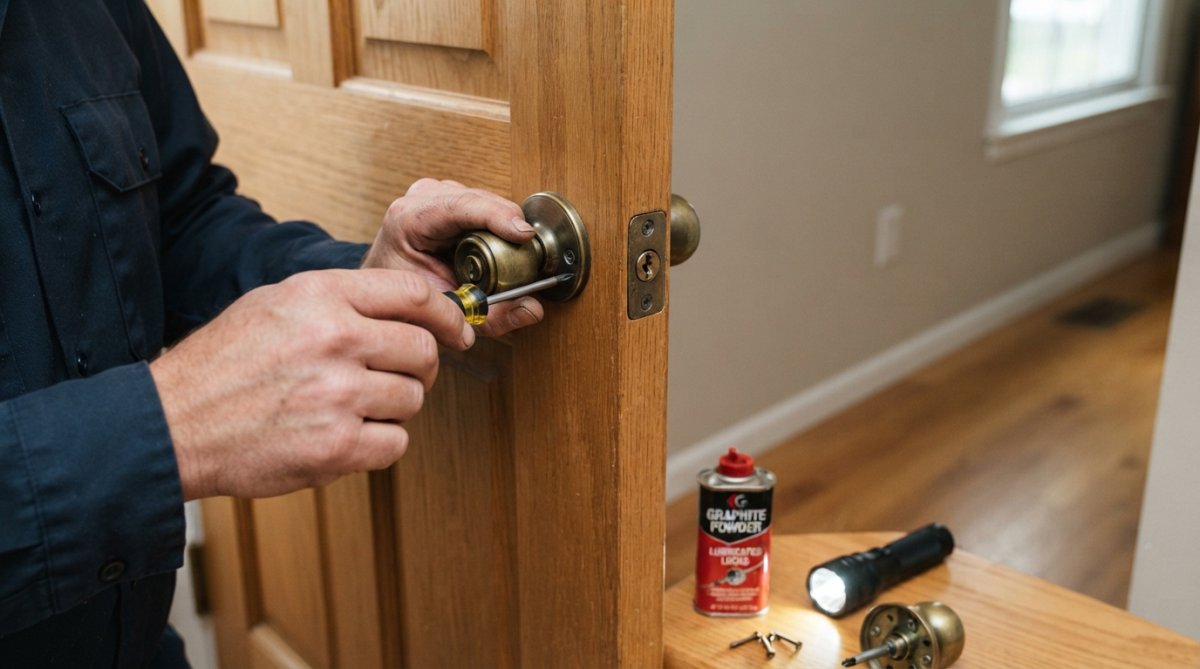
Inspect the key for bends, wear, or burrs, then try a spare key. A worn key is one of the most common reasons a lock feels jammed. Shine a flashlight into the keyway and look for debris or a bent tumbler. If the keyway looks clear and the spare key also fails, move to lubrication.
Step 2: Lubricate the Lock Cylinder
Apply graphite powder or a silicone-based lubricant directly into the keyway, then insert and remove the key several times to work it through the cylinder. Do not use WD-40 or household oil; wet lubricants attract dust and turn into a gum that makes the jam worse within weeks. If the lock loosens, you're done.
Step 3: Retract the Latch Bolt
If the lock turns but the door stays shut, the latch bolt is stuck. Slide a thin plastic card or a putty knife into the gap between the door and frame and push the latch bolt back toward the door. Once it retracts, open the door and inspect the strike plate for misalignment. A latch bolt that will not retract at all points to a broken spring mechanism, which means replacement rather than repair.
The Best Lubricant for Door Locks (and What to Avoid)
Graphite powder is the best lubricant for door locks in most homes because it stays dry and does not collect debris (How to Lubricate a Lock in a Pinch). Silicone-based spray is the better choice for exterior locks exposed to rain or coastal humidity, since it resists moisture and corrosion. Both work; the mistake is reaching for the wrong product.
Avoid these:
- WD-40 and penetrating oils. They feel effective for a week, then attract grit and gum up the tumbler pins.
- Cooking spray or household oil. Same problem, worse residue.
- Too much of any lubricant. Over-application packs powder into the cylinder and creates the jam you were trying to fix.
Door Latch Stuck in Frame? Fix the Alignment
A door latch stuck in frame is almost always an alignment problem, not a lock problem. When the door frame shifts, the latch bolt no longer lines up with the strike plate opening, so it binds against the metal edge. Here's how to correct it:
- Mark the latch bolt's position on the strike plate with a pencil.
- Remove the strike plate with a screwdriver.
- File the opening wider in the direction of the mark, or enlarge the screw holes slightly.
- Reinstall the plate and test the latch.
- If the door still binds, tighten the hinge screws or replace them with longer ones to lift a sagging door.
Tightening hinge screws fixes more "broken locks" than any lubricant (How to Repair a Skewed Door). Check the hinges before you assume the lock itself has failed.
When to Replace a Door Lock Instead of Repairing It
Replace the lock when the cylinder itself has failed, not when it is merely dirty or misaligned. Signs it is time for new hardware:
- The key turns freely but the latch does not move (broken internal components)
- The cylinder spins without engaging the tumblers
- The lock has been forced or pried, leaving a damaged keyway
- The hardware is a low-security builder-grade unit and you want an upgrade
If you're replacing anyway, this is the moment to move to a high-security cylinder. Our technicians are certified in Medeco and Multlock high-security locks.
When to Call a Professional Locksmith
Call a locksmith when the lock is jammed and you cannot open the door, when the cylinder has failed mechanically, or when the hardware has been forced. DIY repair has a hard limit: once you're prying at a cylinder or drilling a latch, the risk of damaging the door and frame outweighs the savings.
A few situations always warrant a call:
- You are locked out with no working key. Picking or bypassing a cylinder without training usually ends in a drilled lock and a damaged door.
- The cylinder spins freely without engaging the tumblers. This is a broken cam or tailpiece, not a lubrication problem.
- The lock has been forced or pried. A damaged keyway or bent bolt housing means the hardware is compromised and should be replaced, not repaired.
- The door itself is damaged around the lock. Cracked stiles, split frames, or a bent strike plate need carpentry, not just lock work.
- You have a high-security cylinder. Restricted keyways and patented pin systems are not serviceable with consumer tools.
- A smart lock has failed and the mechanical override also fails. Once the override key does not work and the batteries are fresh, the motor or gear assembly has failed.
- You rent and the landlord is unreachable. Many leases require a licensed technician for lock changes so the property record stays clean.
What to Have Ready Before the Technician Arrives
A prepared call is a faster call. Have these on hand:
- Proof you have the right to the property. A lease, a mortgage statement, or a photo ID matching the address. Legitimate technicians will ask, and you should be suspicious of anyone who does not.
- The make and model of the lock, if you can read it off the faceplate or the edge of the door.
- A description of the symptom, key won't turn, key turns but door won't open, electronic lock unresponsive, so the dispatcher can send the right technician and parts.
- Whether it is a smart lock, and whether you have the app login and the override key.
How to Verify a Technician Before You Let Them Work
Ask for the license number and check it against your state's licensing board before work begins. Ask whether the company carries general liability insurance and workers' compensation, and whether the technician is bonded. A legitimate operation will answer these without hesitation. Get a written estimate before any drilling or replacement, and confirm whether the price includes parts or labor only.
SOUTHMIAMILOCKSMTIH.COM provides prompt emergency locksmith services with licensed, bonded, and insured technicians, so you can verify credentials before anyone touches your door. For smart locks specifically, always check the manufacturer's manual for a mechanical key override before assuming the unit is dead; most smart locks keep a physical keyway for exactly this situation. If the override fails too, that is a professional job.
Frequently Asked Questions
How do you unjam a door lock?
Start by checking if the key turns at all. If it does not, spray a small amount of silicone-based lubricant into the keyhole and wait a minute. Insert the key and gently turn it back and forth. If the latch bolt is stuck in the strike plate, open the door with the knob and check the alignment. For a jammed deadbolt, remove the lock from the door and inspect the internal components for debris or corrosion. If these steps fail, call a licensed locksmith.
What causes a door lock to jam?
The most common causes are debris buildup inside the cylinder, corrosion from humidity, and misalignment between the latch bolt and the strike plate. In coastal areas, salt air speeds up corrosion on metal parts. A door frame that has shifted with the seasons can also push the latch bolt out of line, making the door latch stuck in frame. Worn springs inside the lock mechanism can also cause binding. Regular maintenance prevents most of these problems.
Can I use WD-40 on a jammed door lock?
WD-40 is not the best lubricant for door locks. It is a solvent, not a long-term lubricant, and it attracts dust that turns into a gummy paste inside the cylinder. That paste causes more friction and can make the lock jam again. Use a dry lubricant like graphite powder or a silicone-based spray instead. These products lubricate without collecting debris and work well in both cold and humid conditions.
When should I call a professional locksmith for a jammed lock?
Call a locksmith if the key breaks off inside the cylinder, if the lock is completely seized after lubrication, or if the deadbolt will not retract even with the door open. You should also call a professional when to replace a door lock becomes the better option, such as when the lock is old, damaged, or no longer secure. A licensed locksmith can repair or replace the lock and ensure your door is properly secured.