 how-to
How to Verify a Bonded Locksmith: Step-by-Step
Table of Contents
- What Licensed, Bonded, and Insured Locksmith Really Means
- Step 1: Check the Locksmith's License Status
- Step 2: Verify Bonding and Insurance Coverage
- Step 3: Request Documentation Before Work Begins
- Locksmith Scam Red Flags to Watch For
- Questions to Ask a Locksmith Before Hiring
- How to Verify Credentials After the Service
- Frequently Asked Questions
Last Updated: September 3, 2026
What Licensed, Bonded, and Insured Locksmith Really Means
When you're looking for a locksmith to help with an emergency lockout or security upgrade, you'll hear three terms thrown around constantly: licensed, bonded, and insured. Most people assume these are interchangeable, they're not. Each one protects you in a different way, and understanding the distinction is the first step toward hiring someone you can actually trust.
Licensed means a locksmith has passed a written examination and meets the occupational code requirements set by your state's licensing board. It's proof they know the trade. Bonded means the locksmith carries a surety bond, which is essentially insurance that protects you if they damage your property or fail to complete work as promised. Insured means they carry professional liability insurance, which covers injury or damage that happens during the service. A locksmith can be licensed but not bonded. They can be insured but not licensed. The most trustworthy ones have all three.
This distinction matters because each credential represents a different layer of consumer protection. A licensed locksmith who isn't bonded might be skilled, but if they accidentally damage your door frame during an emergency lockout, you have no recourse. A bonded locksmith who isn't licensed might be willing to help, but they may not understand industry standards or proper techniques. At SOUTHMIAMILOCKSMTIH.COM, we maintain all three credentials because we know homeowners and business owners deserve complete protection.
The difference between these credentials also explains why pricing varies so dramatically in this industry. A locksmith operating without proper bonding or insurance has lower overhead costs, which is why they can quote you half of what a legitimate professional charges. But that savings evaporates the moment something goes wrong.
Step 1: Check the Locksmith's License Status
The first verification step is always to confirm the locksmith holds a valid license. This is non-negotiable. A license means the person has demonstrated competency through formal testing and meets the state's regulatory requirements. Without it, you're hiring someone who may have no formal training at all.
How to Find Your State Licensing Board
Every state maintains a licensing board or regulatory agency that oversees locksmith credentials. The process for checking a locksmith's license varies slightly by state, but the principle is the same: you contact the board, provide the locksmith's name or license number, and verify their status.
Start by searching "[Your State] locksmith licensing board" or "[Your State] Department of Consumer Affairs." Most states host searchable databases on their official websites where you can look up a locksmith by name or license number. Some boards allow online searches; others require a phone call. The National Association of Locksmiths also maintains resources that can point you toward your state's specific regulatory body.
When you find the board's website, look for a section labeled "License Verification," "Search Licensed Professionals," or "Consumer Lookup." These databases are public record, the state wants you to use them. If a locksmith refuses to give you their license number or tells you "you don't need to check," that's a major red flag.
What to Look for in a License Record
Once you've found the locksmith's license record, verify three things: the license is currently active (not expired or suspended), the name matches exactly, and the license type covers the service you need.
Some states issue different classes of locksmith licenses. A residential locksmith license doesn't automatically qualify someone to work on commercial systems or automotive locks. If you need commercial access control work, confirm the license covers that specialty. The license record should also show when it was issued and when it expires. A license that's about to expire in the next 30 days might indicate the locksmith isn't actively maintaining their credentials, a warning sign.
Pay attention to any notes on the license record. Some states flag licenses with disciplinary actions, complaints, or restrictions. If you see language like "license under review" or "complaint pending," ask the locksmith directly about it before hiring them. Legitimate professionals are transparent about these things.
Step 2: Verify Bonding and Insurance Coverage
A license proves competency, but bonding and insurance protect your wallet if something goes wrong. This is where many people cut corners, and regret it later.
Requesting Proof of Bonding
A surety bond is a three-party agreement: the locksmith (called the principal), the bonding company, and you (the obligee). If the locksmith fails to complete work properly or damages your property, you can file a claim against the bond. The bonding company investigates and pays out up to the bond amount.
When you call a locksmith, ask directly: "Can you provide proof of your surety bond?" A legitimate locksmith will either email you a copy of their bond certificate immediately or give you the bonding company's name and policy number so you can verify it independently. The certificate should show the bonding company's name, the policy number, the effective dates, and the bond amount.
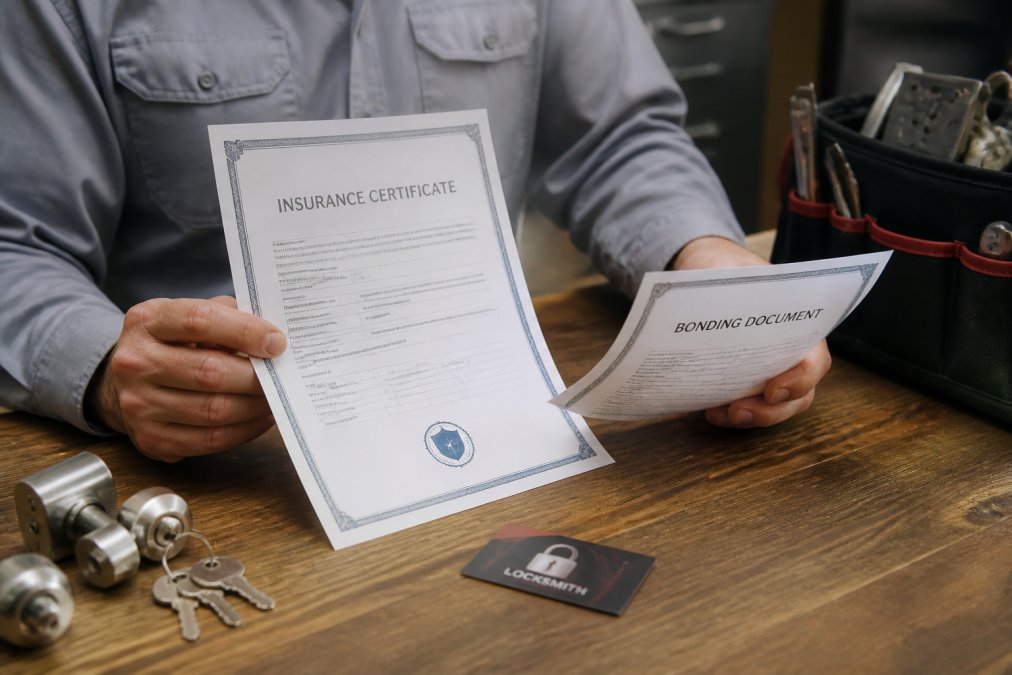
If a locksmith hesitates, makes excuses, or says "we don't do that," move on. The fact that they carry a bond is so fundamental to legitimate business that any professional will have proof ready. You can also contact the bonding company directly to verify the bond is active. Their contact information should be on the certificate.
Confirming Liability Insurance
Professional liability insurance covers bodily injury or property damage that occurs during the locksmith's work (iii.org). If a locksmith accidentally damages your door, wall, or vehicle during service, liability insurance covers the repair costs. This is separate from bonding and equally important.
Ask for a certificate of insurance showing the locksmith's liability coverage. The certificate should list the insurance company, the policy number, coverage limits, and the effective dates. Many locksmith companies provide this proactively on their website or business materials, if they don't, that's worth noting.
The coverage amount matters. Most states don't mandate a minimum, but reputable locksmiths typically carry professional liability coverage (nals.org). If a locksmith only carries a low amount or can't provide proof of any coverage, the risk to you increases significantly.
Step 3: Request Documentation Before Work Begins
Before a locksmith arrives at your door, especially in an emergency, establish a paper trail. This protects both you and the locksmith.
Ask the locksmith to provide a written estimate before they start work. The estimate should itemize the service (emergency lockout fee, lock change, rekeying, etc.), parts costs, labor costs, and the total. In an emergency situation, a verbal estimate is acceptable, but follow up with a written one as soon as possible.
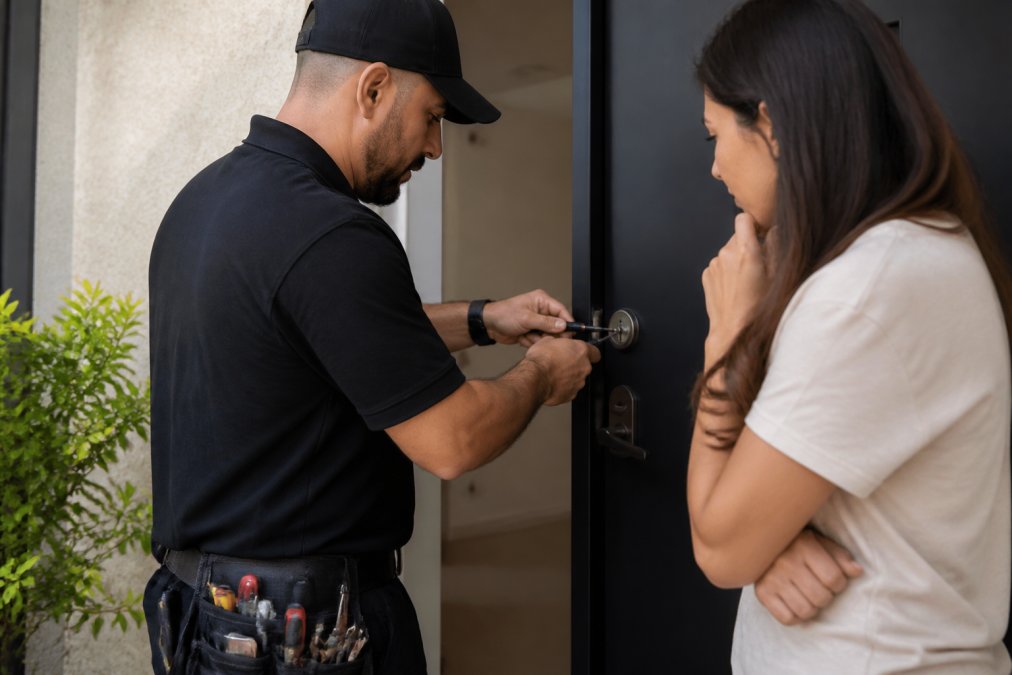
When the locksmith arrives, ask to see their identification. A professional carries a photo ID and often wears a uniform or company badge. This seems obvious, but in high-stress situations (like a 2 AM lockout), people skip this step. Don't. Verify the person's name matches their license record and their identification.
Request an invoice after the work is complete. The invoice should match the estimate, include the locksmith's license number and business name, and describe the work performed. Keep this invoice, it's proof of the service and becomes important if you need to file an insurance claim later.
Locksmith Scam Red Flags to Watch For
Not every unlicensed locksmith is running a scam, but many scammers specifically avoid licensing because it creates accountability. Knowing what to watch for helps you avoid the worst situations.
The biggest red flag is a locksmith who quotes an extremely low price over the phone, then dramatically increases it once they arrive and see the lock. This bait-and-switch tactic is one of the most common scams. A legitimate locksmith provides a detailed estimate upfront and sticks to it. If the situation changes (the lock is damaged, requires different tools, or has unexpected complications), they'll explain the change before proceeding.
Another major warning sign is a locksmith who arrives in an unmarked vehicle with no company name, logo, or identification visible. Reputable locksmiths advertise their business, it's how they build reputation and get repeat work. An unmarked van is often a sign the person isn't operating a legitimate business.
Pressure to pay in cash only is a scam indicator. While some locksmiths accept cash, legitimate businesses offer multiple payment methods and provide receipts. If a locksmith insists on cash and refuses to provide an invoice, they're likely avoiding a paper trail intentionally.
Watch out for locksmiths who damage locks unnecessarily or recommend expensive replacements when repair is possible. Some scammers intentionally damage a lock during the opening process, then pressure you to pay for a new lock installation. A skilled locksmith opens locks without damaging them, it's a core competency.
Finally, be wary of locksmiths who pressure you into security upgrades or additional services you didn't ask for. High-pressure sales tactics don't belong in emergency situations. A professional addresses your immediate need, then discusses additional security improvements at a calmer time.
Questions to Ask a Locksmith Before Hiring
Having a prepared list of questions eliminates confusion and helps you assess whether a locksmith is legitimate. Ask these before committing to service.
"What is your license number and which state licensing board issued it?" A legitimate locksmith answers immediately. If they hesitate or give a vague answer, they likely don't have a valid license.
"Can you provide proof of your surety bond and liability insurance?" This filters out a huge percentage of unlicensed operators. Legitimate locksmiths have these ready.
"What is your upfront estimate, and does it include all costs?" A good estimate breaks down labor, parts, and service fees separately. If the locksmith refuses to provide an estimate before starting work, that's a red flag.
"How long have you been in business?" This isn't a dealbreaker if they're new, but it's useful context. SOUTHMIAMILOCKSMTIH.COM has over 30 years of experience, which reflects our depth of expertise and track record.
"Are you available for emergency calls, and what is your response time?" This matters if you're locked out at an unusual hour. Some locksmiths operate 24/7; others have limited availability.
"What brands of locks do you work with?" If you have a high-security lock system, confirm the locksmith has experience with that specific brand. We're certified in Medeco and Multlock high-security locks, which many general locksmiths cannot service.
"What is your cancellation or callback policy?" If you call a locksmith and change your mind, understand the charges. Legitimate businesses have transparent policies.
How to Verify Credentials After the Service
Your verification doesn't end when the locksmith leaves. Taking a few minutes to confirm everything afterward protects you if issues arise later.
First, review the invoice carefully. Confirm the locksmith's license number, business name, and the date of service. Cross-reference the license number against the state licensing board one more time, verify it matches the person who served you.
Check your credit card or bank statement within a few days. Verify the charge matches the quoted estimate. If the amount is significantly higher or you see unexpected charges, contact the locksmith immediately. If they refuse to explain or adjust the bill, you can dispute the charge with your bank.
If the locksmith made any changes to your locks or security system, test them thoroughly. Make sure keys work in all locks, doors close properly, and any new hardware functions as expected. If you notice issues, contact the locksmith for follow-up service while the work is still fresh.
Finally, if you're satisfied with the work, consider leaving feedback. Online reviews and referrals help legitimate locksmiths build reputation and help other consumers make informed decisions. If you had a poor experience, document it, take photos of any damage, keep invoices, and report the locksmith to your state's licensing board if they violated regulations.
| Verification Step | What to Check | Why It Matters |
|---|---|---|
| License Status | Active license on state board | Confirms formal training and regulatory compliance |
| Bonding | Valid surety bond with proof | Protects you if work is incomplete or property is damaged |
| Insurance | Professional liability coverage | Covers injury or accidental damage during service |
| Estimate | Written breakdown of costs | Prevents surprise charges and establishes expectations |
| Identification | Photo ID matching license | Confirms the person is who they claim to be |
| Invoice | Itemized receipt with license number | Documents the service for your records and claims |
Hiring a locksmith is often an urgent decision made under stress, which is exactly when scammers exploit people. Taking 10 minutes to verify bonding, licensing, and insurance isn't bureaucracy, it's the difference between a legitimate professional and someone who disappears the moment something goes wrong. SOUTHMIAMILOCKSMTIH.COM maintains full licensing, bonding, and insurance specifically because we understand the trust this requires. When you need a locksmith you can count on, verification gives you confidence that the person entering your home or business is exactly who they claim to be.
Frequently Asked Questions
What does it mean for a locksmith to be bonded?
A bonded locksmith carries a surety bond, which is a financial guarantee backed by a third-party surety company. If the locksmith damages your property or fails to deliver promised services, the bond covers your losses up to the bond amount. This protects you financially and shows the locksmith has passed a background investigation and met professional standards.
How do I verify a locksmith's insurance policy?
Ask the locksmith for a Certificate of Insurance before they begin work. Contact their insurance company directly using the phone number on the certificate to confirm coverage is active. Verify the policy covers general liability and professional liability. Never rely on verbal assurance, request written proof. Legitimate locksmiths carry this documentation and are happy to provide it.
What are common locksmith scam red flags?
Watch for locksmiths who won't provide a written estimate, demand cash-only payment, lack verifiable credentials, or pressure you to pay before service. Be cautious of extremely low quotes, unlicensed vehicles without business identification, or technicians who refuse to show identification. Legitimate professionals display contractor license numbers, carry proper equipment, and provide itemized invoices with their business name and contact information.
What questions should I ask before hiring a locksmith?
Ask for their contractor license number and offer to verify it. Request proof of bonding and current liability insurance. Ask how long they've been in business and whether they're certified in high-security lock systems. Inquire about their service fees and whether they charge differently for emergency calls. Ask if they provide a written estimate and itemized invoice. A reputable locksmith answers all questions directly and provides documentation without hesitation.
This article was written using GrandRanker