 how-to
When to Replace Ignition Cylinder: 2026 Guide
Table of Contents
- Symptoms of Bad Ignition Lock Cylinder
- Ignition Cylinder vs. Ignition Switch: Key Differences
- Can a Locksmith Replace an Ignition Cylinder?
- Ignition Lock Cylinder Replacement Cost
- DIY vs. Professional Replacement: Tools and Safety
- Transponder and Immobilizer Re-syncing After Replacement
- Steering Column Disassembly Risks and Salvage Yard Parts
- When to Replace Ignition Cylinder: A Diagnostic Flowchart
- Frequently Asked Questions
Last Updated: September 13, 2026
Symptoms of Bad Ignition Lock Cylinder
A bad ignition lock cylinder rarely fails without warning. Long before your car refuses to start, it signals you: a key that grinds, a steering wheel that locks at odd angles, or a starter that cranks intermittently.
Technicians often see the same pattern: drivers ignore early symptoms, then call for emergency service once the key won't budge. The ignition cylinder is the mechanical lock that accepts your key and rotates to activate the electrical ignition switch; when its tumblers wear down, the whole starting sequence breaks.
Key Stuck in Ignition or Hard to Turn
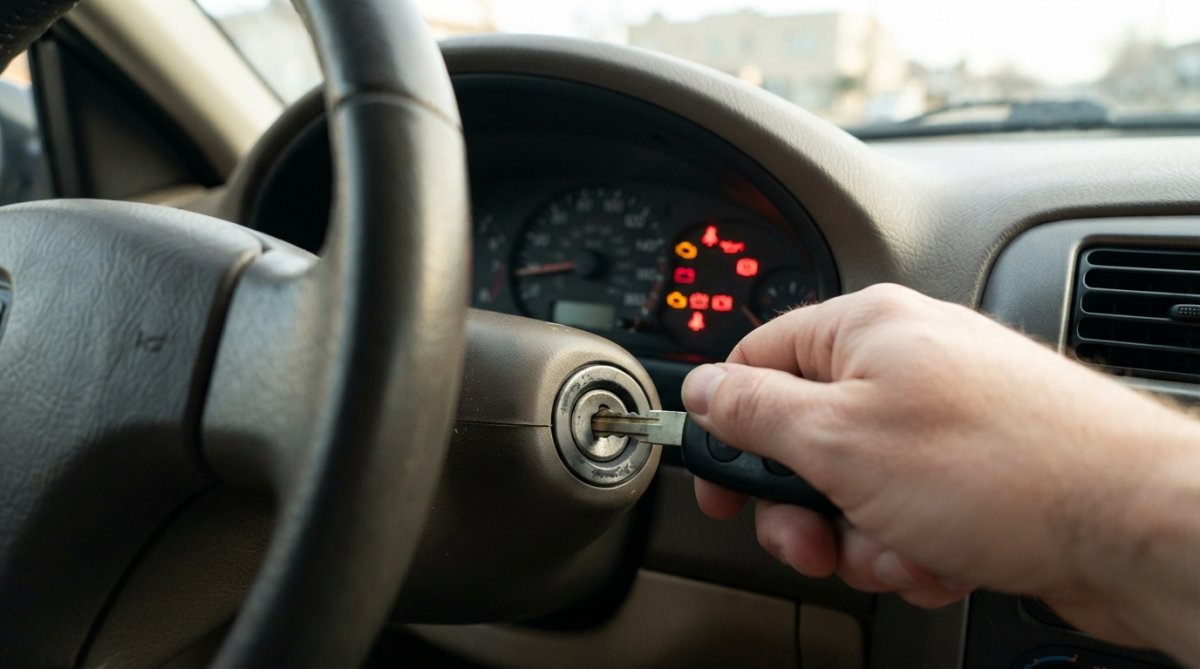
The first sign is resistance: your key catches, sticks, or needs jiggling before it turns. Worn tumblers and weak springs stop aligning with the key's cuts, so the cylinder binds. Don't spray in graphite or force the key, that accelerates wear and can snap the key off inside the housing.
Intermittent Cranking or No Start
When the cylinder's electrical contacts wear, the car may crank some days and stay silent on others, mechanical failure inside the lock assembly, not a dead battery. If the dashboard lights come on but the engine won't crank, the cylinder is a prime suspect.
Ignition Cylinder vs. Ignition Switch: Key Differences
The ignition cylinder is the keyed lock you insert the key into; the ignition switch is the electrical component behind it that sends power to the starter and ignition system.
A worn cylinder produces mechanical symptoms: a stuck key, binding, or a key that won't rotate. A failing switch produces electrical symptoms: the engine cranks but won't fire, accessories cut out, or the car starts in the wrong key position. A locksmith can test cylinder binding directly; a switch fault needs a multimeter.
| Symptom | Likely Culprit | Typical Fix |
|---|---|---|
| Key hard to turn, binding | Ignition cylinder | Replace or re-key cylinder |
| Cranks but won't start | Ignition switch | Test and replace switch |
| Key stuck, won't rotate | Cylinder tumblers | Cylinder replacement |
| Accessories cut out randomly | Electrical contacts | Switch or harness repair |
Can a Locksmith Replace an Ignition Cylinder?
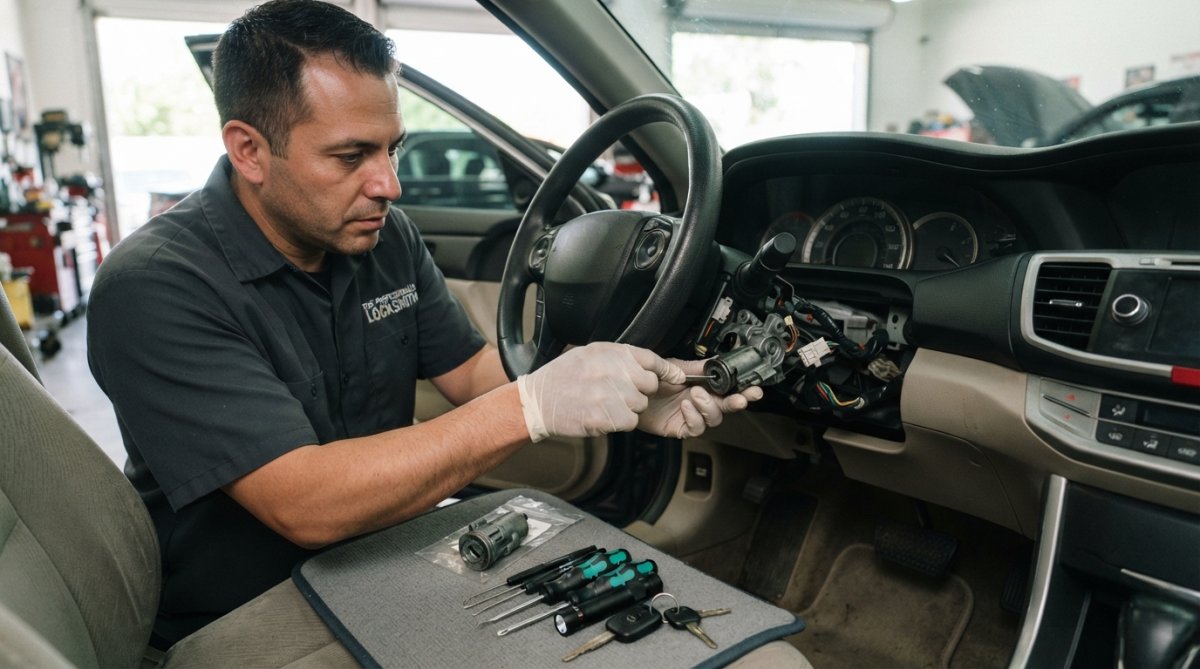
Yes. A licensed locksmith can replace an ignition cylinder, and for most drivers it's faster and cheaper than a dealership. A locksmith can remove the old cylinder, decode the existing key, and build a new cylinder to match, so you keep using the same key.
When to Call a Mobile Locksmith vs. a Dealership
Call a mobile locksmith when the car is drivable or parked at home and you want on-site service without towing. Call the dealership when the vehicle is under warranty, requires manufacturer-specific immobilizer programming, or needs a dealer-only pin code. For most out-of-warranty vehicles, a mobile locksmith saves the tow.
Ignition Lock Cylinder Replacement Cost
Replacement cost depends on the vehicle, the part source, and whether immobilizer programming is required. Three cost drivers matter:
- Parts: OEM cylinders cost more than aftermarket, but fit and durability are more predictable.
- Labor hours: A straightforward cylinder swap takes far less time than a column with a damaged housing.
- Programming: Transponder and immobilizer re-syncing adds labor on modern vehicles.
For a current quote on your specific vehicle, contact SOUTHMIAMILOCKSMTIH.COM directly. Pricing depends on quantity, dates, and delivery, and you can obtain a quote before any work begins.
DIY vs. Professional Replacement: Tools and Safety
DIY ignition cylinder replacement is possible on older vehicles without anti-theft systems, but it carries real risk. You'll need a steering wheel puller, a lock plate compressor, retaining pin tools, and a torque wrench, plus the knowledge to disable the battery and handle the airbag safely (nhtsa.gov).
For most drivers, professional replacement is the better call. The trade-off:
- DIY pros: Lower parts cost, no labor charge, full control of timing.
- DIY cons: Airbag and steering column hazards, risk of damaging the housing, no immobilizer programming.
- Professional pros: Correct tools, insured work, re-syncing included, warranty on the repair.
- Professional cons: Higher total cost than a solo parts swap.
A common mistake is prying at the retaining pin without compressing the lock plate first; that bends the steering column and turns a simple swap into an expensive repair.
Transponder and Immobilizer Re-syncing After Replacement
This step separates a successful cylinder replacement from a car that cranks forever and never fires. On any vehicle with an anti-theft system, essentially everything sold in the United States since the late 1990s, the ignition cylinder is only half the job (nhtsa.gov). The other half is convincing the immobilizer to trust the key again.
How the Immobilizer Actually Works
A transponder key contains a passive RFID chip in the head, separate from the metal blade (nist.gov). When you insert the key and turn it, an antenna ring around the ignition cylinder emits a low-frequency radio field that powers the chip to broadcast a unique alphanumeric code back. The immobilizer control module, sometimes built into the body control module, sometimes standalone, compares that code against its stored ones. Match confirmed, it releases the starter and fuel injection. No match, no start, even if the engine cranks.
That's why a brand-new cylinder with a freshly cut key can still leave you stranded: the lock turns, the switch closes, the starter spins, and the engine still refuses to fire because the immobilizer never got the code it wanted.
Three Key Types and What Each One Requires
- Non-transponder keys (older vehicles, typically pre-1998): No chip, no immobilizer. A mechanical cylinder swap is the whole job. This is the only category where a true driveway DIY replacement is realistic.
- Transponder keys (late 1990s through mid-2000s, still common on many domestic and Asian models): The chip must be programmed to the vehicle. Many locksmiths can do this with a handheld programmer through the OBD-II port in minutes. Some vehicles require a manufacturer PIN code, which a dealer must supply.
- Smart keys / push-to-start fobs (most vehicles from roughly 2008 onward): The fob communicates with the vehicle over a rolling-code protocol. Adding or re-syncing a fob typically requires a dedicated programming tool and, on many makes, an online subscription to the manufacturer's security server. This is the category where a general-purpose locksmith may have to decline the job.
What Re-syncing Looks Like in Practice
After the new cylinder is installed and the key is cut to match, the technician connects a programming tool to the OBD-II port and follows the vehicle-specific procedure. Depending on the make, that might be:
- A simple "add key" command that takes under five minutes.
- An all-keys-lost reset that erases every previously stored key and requires you to present every key you want to keep working.
- A two-step process requiring a security code from the manufacturer, which can add a day or more if the code has to be ordered.
The mechanical swap can take twenty minutes, and the programming can take five minutes to an hour depending on the platform.
Failure Modes to Watch For
- Security light stays illuminated or flashes after the swap. The immobilizer rejected the key. Do not keep cranking, repeated failed attempts can trigger a lockout timer on some vehicles.
- Engine cranks but never catches. Classic immobilizer symptom. The fuel and spark are being cut.
- Only one of your keys works. The programming procedure only registered the key that was present. Any spare keys you own need to be added in the same session.
- Remote buttons stop working. On some vehicles the remote and the immobilizer share a single programming step; if the technician skipped it, the fob needs to be re-registered.
Why This Step Is Where DIY Jobs Die
Most online guides stop at "install the new cylinder and reconnect the battery." That advice was accurate in 1995. On a modern vehicle, the mechanical portion is the easy part; the electronic handshake requires a tool you probably don't own and a procedure that varies by manufacturer. For any vehicle with a chip key, this decides DIY versus professional service.
Steering Column Disassembly Risks and Salvage Yard Parts
Two shortcuts can cause many problems. The first is aggressive steering column disassembly: forcing the lock plate, yanking the cylinder, or skipping the battery disconnect can damage the airbag clock spring or the electrical harness, creating faults far costlier than the original repair.
The second is salvage yard parts. A used cylinder from a wrecked car is cheap, but it arrives with unknown wear, a mismatched key, and no way to verify its tumblers. Aftermarket parts are a middle ground: cheaper than OEM, but quality varies by brand. For a security-critical part, a new OEM or quality aftermarket cylinder is safer. Re-keying a salvage cylinder is possible, but adds labor and rarely saves much.
When to Replace Ignition Cylinder: A Diagnostic Flowchart
Most drivers arrive at this question after a no-start and guess wrong about which part failed. This flowchart walks through the same decision sequence a technician uses, so you land on the right component instead of replacing parts by trial and error.
Start Here: What Happens When You Turn the Key?
Step 1, Does the key turn at all?
- No, the key will not rotate, or it binds and sticks. Go to Branch A.
- Yes, the key turns freely but nothing happens. Go to Branch B.
- Yes, the key turns and the engine cranks but will not fire. Go to Branch C.
Branch A: Key Won't Turn or Binds
- Try your spare key. If the spare turns smoothly and the original doesn't, the key blade is worn, not the cylinder. Have a new key cut from the code, much cheaper than a cylinder.
- If both keys bind equally, the tumblers inside the cylinder are worn or the cylinder is seized. This is the classic "time to replace the ignition cylinder" scenario.
- Is the steering wheel locked hard against the column? Turn the wheel firmly in one direction while gently turning the key. If that frees it, the lock is normal. If the wheel is locked and the key still won't budge, stop forcing it, you risk snapping the key inside the housing. Call a professional.
- Did the binding start suddenly after a theft attempt or a damaged door lock? A forced entry can drive debris or a broken tool into the cylinder. Replacement, not repair, is the answer.
Verdict: Steps 2 and 4 point to cylinder replacement. Step 1 points to a new key. Step 3 points to a professional call-out.
Branch B: Key Turns, Nothing Happens
- Do the dashboard lights come on when the key is in the run position?
- No lights at all. Suspect the battery, the battery terminals, or the main fuse. Test the battery voltage before touching the ignition system.
- Lights on, but no crank and no click. Suspect the ignition switch, the starter relay, or the neutral safety switch on automatic-transmission vehicles.
- Do you hear a single loud click but no crank? That's usually the starter solenoid engaging without the motor turning, a starter problem, not a cylinder problem.
- Do the accessories (radio, blower, wipers) cut out randomly while driving? That's an electrical contact fault inside the ignition switch, not the cylinder.
Verdict: Branch B rarely implicates the cylinder. Replacing it here is a common and expensive misdiagnosis.
Branch C: Cranks but Won't Fire
- Is the security light on, flashing, or staying lit after cranking? This is the immobilizer refusing the key. The cylinder is fine; the electronic handshake failed. See the transponder and immobilizer section above.
- No security light, good cranking, no start. Suspect fuel delivery (pump, filter, relay) or ignition spark (coil, plugs). Neither is a cylinder issue.
- Did this start immediately after a cylinder replacement? Almost always an immobilizer re-sync that was skipped or failed. Return to the installer.
Verdict: Branch C is an electronic or fuel/spark diagnosis, not a mechanical lock diagnosis.
Branch D: Intermittent Symptoms
Intermittent problems are the hardest to pin down. Use this filter:
- Intermittent no-crank, dashboard lights normal, happens more in cold or damp weather. Worn electrical contacts inside the ignition switch. Switch replacement, not cylinder.
- Intermittent binding or a key that sometimes needs jiggling. Worn cylinder tumblers. This is early-stage cylinder failure; schedule replacement before it becomes a full no-start.
- Intermittent no-start that clears after waiting ten to fifteen minutes. Often a security system lockout timer. The immobilizer is rejecting the key intermittently, frequently a sign of a failing transponder chip or a weak antenna ring around the cylinder.
The Short Version
Replace the ignition cylinder when the key itself binds, sticks, or won't rotate and a spare key doesn't fix it. Do not replace the cylinder when the key turns freely but the car won't crank or won't fire, those symptoms point to the switch, the battery, the starter, or the immobilizer.
If you've worked through the branches and landed on cylinder replacement, a certified technician can confirm the diagnosis on-site, replace the cylinder, and re-sync your immobilizer.
Frequently Asked Questions
How much does it cost to get an ignition cylinder replaced?
The cost to replace an ignition cylinder varies widely based on your vehicle's make and model, whether you use OEM or aftermarket parts, and labor rates. For a precise estimate, contact a licensed locksmith with your vehicle information. Pricing depends on quantity, dates, and delivery, and you can obtain a quote before any work begins.
Can you replace just the ignition cylinder?
Yes, in many cases you can replace just the ignition cylinder without replacing the entire ignition switch or steering column. The cylinder is the mechanical lock that accepts the key, while the switch is the electrical component. A locksmith can often remove and replace only the cylinder, then re-key it to match your existing key. This saves money and avoids unnecessary disassembly of the steering column.
How long does it take to replace an ignition cylinder?
The time it takes to replace an ignition cylinder varies depending on the vehicle's design and whether steering column disassembly is required. Some models with complex anti-theft systems may take longer due to transponder re-syncing. If you attempt the job yourself, expect it to take significantly longer without the right tools and experience.
Is it safe to drive with a faulty ignition cylinder?
Driving with a faulty ignition cylinder is unsafe. A cylinder that binds or fails to hold the key in the run position can cause the engine to shut off unexpectedly while driving, leading to loss of power steering and brakes. It can also prevent the vehicle from starting altogether. If you notice symptoms like a stuck key or intermittent cranking, have it inspected and replaced promptly.