 blog
blog
Emergency Locksmith Services: Fast Lockout Help
Table of Contents
- What to Look for in Emergency Locksmith Services for Lockout Assistance
- Average Response Time for Emergency Locksmiths: What to Expect
- Emergency Locksmith Cost Breakdown: What You're Paying For
- How to Verify a Licensed Locksmith Before You Let Them In
- Types of Lockout Situations and How Emergency Locksmiths Handle Them
- DIY vs Professional Emergency Locksmith: When to Call for Help
- Frequently Asked Questions
Last Updated: September 21, 2026
What to Look for in Emergency Locksmith Services for Lockout Assistance
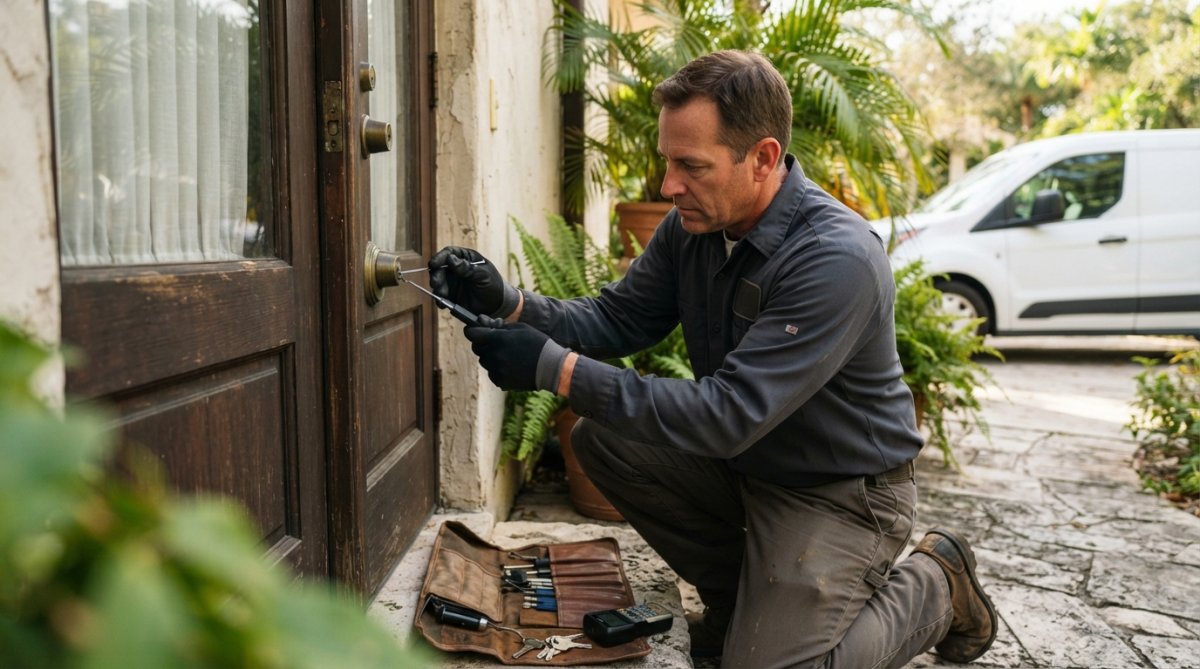
Emergency locksmith services for lockout assistance are professional, round-the-clock providers that get you back into your home, car, or business after a lockout without damaging your property. The best prompt emergency locksmith services for emergency lockout assistance share a few traits: they answer the phone at 3 AM, they quote a price before they drive out, and they carry the tools to open your lock without drilling it.
At SOUTHMIAMILOCKSMTIH.COM, we've handled lockouts across Miami-Dade County for over 30 years, and the difference between a good and bad experience almost never comes down to skill.
- Live 24/7 dispatch. A real person answers, not a call center that subcontracts.
- Verifiable credentials. A license, bond, and insurance you can check before they arrive.
- Upfront pricing. A quote on the phone that matches the final bill.
- Proper tools. Lock picks, transponder programmers, and damage-free entry gear.
- A local service radius. A short drive time matters more than a low headline rate.
Average Response Time for Emergency Locksmiths: What to Expect
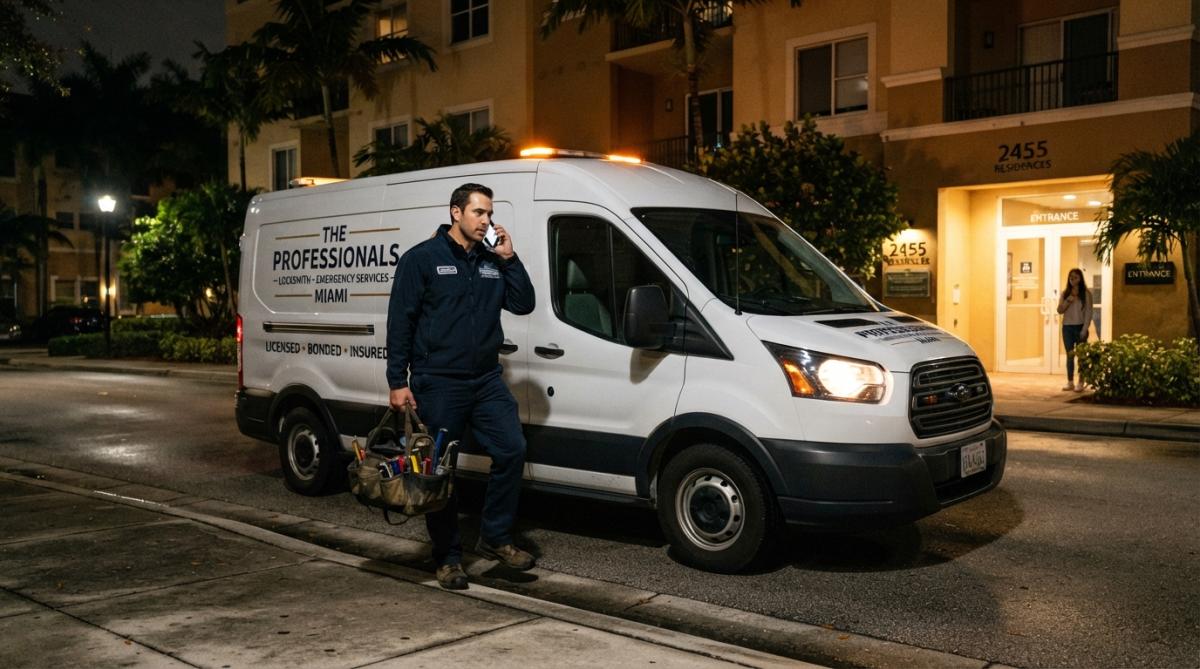
A realistic arrival window for emergency locksmiths is often 20 to 45 minutes in a dense metro area, and 45 to 90 minutes in outlying suburbs. That's the drive time, not the total service time. The useful part is understanding why that window moves, so you can tell the difference between a realistic estimate and a bait-and-switch.
What actually drives your arrival time
Four variables move the number more than anything else:
- Dispatch model. A company with its own technicians on rotation can quote a real ETA. A lead-generation call center that subcontracts to whoever answers first often cannot, they're calling around while you wait.
- Distance and traffic. A 6-mile drive at 2 PM and the same drive at 2 AM are different jobs. Ask whether the ETA accounts for current traffic or is a flat script.
- Time of day. Between roughly 11 PM and 6 AM, fewer technicians are on the road, so the same company that answers in 25 minutes at noon may take 45 at midnight.
- Lock type on arrival. A standard deadbolt is a 5-minute job. A high-security cylinder or a transponder key can add 20 to 45 minutes after the technician arrives.
Estimated arrival vs. actual service time
These are two different numbers, and conflating them is how customers end up angry. Dispatch might say "30 minutes." That's the drive. The technician may then need another 10 to 30 minutes on site depending on the lock.
| Situation | Typical On-Site Time | Why |
|---|---|---|
| Standard residential deadbolt | 5-15 minutes | Simple pin tumbler, hand tools |
| High-security lock | 15-30 minutes | Restricted keyway needs specialty picks |
| Car lockout, older model | 10-20 minutes | Manual entry tools |
| Car lockout, transponder key | 20-45 minutes | On-site key cutting and programming |
| Safe opening | 30-90 minutes | Depends on safe type and lock |
How to hold a dispatcher to a real ETA
When you call, ask three questions and write down the answers:
- "Is this your own technician or a subcontractor?"
- "What's the drive time, and what's the typical on-site time for my lock?"
- "What's the total price range, including any after-hours fee?"
Emergency Locksmith Cost Breakdown: What You're Paying For
Emergency locksmith pricing depends on the time of day, the lock type, and the work required, so most providers quote a range rather than a flat rate. A transparent emergency locksmith cost breakdown usually includes a service call fee, a labor charge, and any parts or key blanks.
The line items you should expect to see:
- Service call fee. Covers the drive to your location.
- Labor. Charged by the job or by the hour.
- After-hours surcharge. Late nights, weekends, and holidays cost more.
- Parts. New cylinders, deadbolts, key blanks, or transponder chips.
- Specialty work. Safe opening, ignition repair, and high-security locks price separately.
How to Verify a Licensed Locksmith Before You Let Them In
Verifying a licensed locksmith takes about two minutes and prevents the most common locksmith scam: an unlicensed operator who quotes low, then demands far more once the door is open. Learning how to verify a licensed locksmith is the single best protection you have.
The three scam patterns to recognize
Most locksmith fraud follows one of three scripts. Knowing them in advance is most of the defense.
- The lowball-then-surge. The phone quote is unusually cheap. On arrival, the technician claims the lock is "high-security" or "seized" and the price triples. You're standing outside at midnight with no leverage.
- The drill-first approach. A legitimate technician picks or bypasses a standard lock. A scam operator may drill it immediately, then charge for a replacement cylinder on top of the service call.
- The unmarked-vehicle visit. No company branding, no uniform, no business card. The person may be a subcontractor three layers removed from the company you called, or not affiliated at all.
What state licensing actually looks like
Locksmith licensing is handled at the state level, and requirements vary widely. Some states require a license, bond, and background check; others have little or no statewide licensing and leave it to counties or cities. That means "licensed" can mean different things depending on where you are. The practical move is to ask for the license number, then verify it through the state or local authority that issues it, not through a website the company controls.
- Ask for the company's license number and write it down.
- Confirm the business has a physical address, not just a phone number.
- Ask whether technicians are bonded and insured.
- Request the total price, including any after-hours fee, before dispatch.
- Ask for the technician's name and the vehicle description.
- Check for a marked vehicle and professional identification on arrival.
- Never pay in cash-only with no receipt.
What to do at the door
When the technician arrives, before you let them in:
- Match the vehicle. Does it match the description dispatch gave you? Is it marked with a company name?
- Ask for ID and a business card. A legitimate technician hands both over without being asked.
- Confirm the price again. State the range you were quoted on the phone and ask them to confirm it before any work starts.
- Watch the method. Picking and bypassing are normal. Immediate drilling on a standard residential lock is not.
- Get an invoice. Itemized, with the company name, license number if applicable, and a phone number you can call back.
A legitimate technician will often hand you a business card and an invoice without being asked. If someone pressures you, refuses to show ID, or insists on cash with no paperwork, consider calling someone else.
Types of Lockout Situations and How Emergency Locksmiths Handle Them
Lockouts fall into a handful of categories, and each one calls for different tools and techniques. Knowing which type you're facing helps you describe the problem accurately on the phone, which gets the right technician to you faster.
DIY vs Professional Emergency Locksmith: When to Call for Help
Call a professional for any lockout involving a deadbolt, a car with a transponder key, a safe, or a commercial building. Attempting these yourself usually causes more damage than the service call would have cost.
Here's the honest assessment:
- Try yourself: interior bedroom or bathroom knob, unlocked window access, spare key with a neighbor.
- Call a professional: deadbolts, car doors, ignitions, safes, high-security locks, commercial entry.
- Never attempt: drilling a lock, prying a car door, or forcing a safe. These cause permanent damage.
Frequently Asked Questions
How much will an emergency locksmith cost?
Costs vary based on time of day, lock type, and location. Emergency calls after hours typically cost more than daytime service. A transparent emergency locksmith cost breakdown includes a service call fee, labor, and any parts. Ask for a written estimate before work begins. SOUTHMIAMILOCKSMTIH.COM provides upfront pricing, so you know what you'll pay before the technician arrives.
How long does it usually take for an emergency locksmith to arrive?
The average response time for emergency locksmiths is often 20 to 40 minutes in urban areas, depending on traffic and your exact location. When you call, ask for a realistic arrival window and confirm whether the technician is already nearby. Reliable services track their vans and can give you live updates, so you're not waiting in uncertainty.
How do I verify a licensed locksmith before hiring?
Ask for the license number and verify it with your state or local consumer affairs office. A legitimate locksmith will also provide proof of bonding and insurance. Check for a physical business address and a professional website. Never hire someone who demands cash upfront or refuses to show credentials. SOUTHMIAMILOCKSMTIH.COM is licensed, bonded, and insured, and our technicians carry ID.
What should I have ready when calling for emergency lockout help?
Have your exact address, the type of lock or vehicle, and your identification ready. If it's a car lockout, know the make, model, and year. For a home lockout, describe the lock (deadbolt, knob, smart lock). Mention any security system or doorman. Also ask for the total price and arrival time. Being prepared helps the dispatcher send the right technician and tools.