 how-to
Lock Out Guide: LOTO Safety & Emergency Lockout Help
Table of Contents
- What Lock Out Means in Workplace Safety and Daily Life
- OSHA Lockout Tagout Requirements Every Employer Must Follow
- Step-by-Step LOTO Implementation Guide
- Lockout Devices: Padlocks, Hasps, and Safety Hardware
- Common Pitfalls in Lockout Procedures
- 1. Skipping the written procedure
- 2. Removing someone else's lock
- 3. Forgetting stored energy
- 4. Using a tag when a lock was possible
- 5. Not training new workers before they touch equipment
- 6. Leaving locks on after the job ends
- 7. No periodic audit
- 8. Treating lockout as a one-person job
- 9. Ignoring the human factors
- Emergency Locksmith Services When You're Locked Out
- What Lockout Service Cost Depends On
- Lockout Prevention Tips for Homes and Businesses
- Frequently Asked Questions
Last Updated: September 17, 2026
What Lock Out Means in Workplace Safety and Daily Life
A lock out is the practice of cutting off power or access to a machine, door, or system and physically locking it so no one can turn it back on or open it without permission. The term "lock out" is used in two main ways: industrial safety lockouts that protect workers, and everyday lockouts that leave homeowners and drivers stranded.
Lockout vs Tagout: The Difference That Matters
Lockout uses a physical lock to hold an energy switch in the "off" position. Tagout uses only a warning tag, with no lock.
| Feature | Lockout | Tagout |
|---|---|---|
| Physical barrier | Yes, a lock | No |
| Warning only | No | Yes |
| Strength of protection | High | Lower |
| When to use | Whenever possible | Only if locking isn't possible |
| Who removes it | The person who applied it | The person who applied it |
OSHA Lockout Tagout Requirements Every Employer Must Follow
The rules come down to a written program, trained workers, and the right hardware. The governing rule is OSHA's Control of Hazardous Energy standard, 29 CFR 1910.147, which applies to any employer whose workers service machines where unexpected energization, startup, or release of stored energy could injure them.
Here's what the standard actually requires:
- A written energy control program that covers energy control procedures, employee training, and periodic inspections
- A documented energy control procedure for each machine, unless the machine meets the narrow exception below
- Training for all affected and authorized workers, plus retraining when procedures or job assignments change
- Periodic inspections of the procedures, at least annually, and more often if the employer's program calls for it
- Proper locks, tags, and safety devices, with tags that meet the standard's durability and legibility requirements
- Clear steps to shut down, isolate, block, and secure every energy source
The Nine-Step Energy Control Procedure
OSHA requires the written procedure to include, at minimum, these steps in order:
- A statement of the intended use of the procedure
- Steps for shutting down, isolating, blocking, and securing equipment to control hazardous energy
- Steps for placing, removing, and transferring lockout or tagout devices, including who does it
- Requirements for testing the machine to verify the energy controls work
- Specific steps for verifying isolation before work begins
- Steps for releasing stored energy
- Steps for removing the lockout or tagout devices after the work is done
- Requirements for the authorized employee to notify affected workers before and after the lockout
- Requirements for testing the machine before restoring energy
The Exception for Simple Machines
An employer does not have to write a machine-specific procedure if the machine has no stored energy, has a single energy source that can be locked out, and can be isolated with that single lockout. Even then, a written program, training, and inspections are still required, just not a procedure per machine.
Tagout-Only Situations: The Six Authorized Actions
When a machine cannot be locked out, the standard allows tagout only if the employer uses at least one of these additional safety measures:
- Removing and isolating an isolating circuit element
- Blocking a controlling switch
- Opening an extra disconnecting device
- Removing a valve handle to reduce the chance of inadvertent actuation
- Following any other equally effective means of protection
- Documenting the tagout-only decision and the reason in the energy control procedure
Periodic Inspections and the Audit Cycle
The standard requires a periodic inspection of the energy control procedure at least annually, performed by an authorized employee other than the one using it, covering both the procedure and the employees' use of it. Employers must certify the inspection in writing, identifying the machine, date, employees included, and inspector.
Training Requirements
Authorized employees must be trained in recognizing hazardous energy sources, the type and magnitude of energy in the workplace, and the means of energy isolation and control. Affected employees must be trained in the purpose and use of the energy control procedure.
Who Counts as Authorized Personnel
Authorized personnel are the workers trained and permitted to apply locks and tags. They know how to shut down a machine, isolate its energy, and confirm it's safe to work on.
Other workers fall into different groups:
- Affected workers operate the machine or work nearby. They need awareness training, not lockout authority.
- Other workers are in the area but don't touch the machine.
Enforcement and Penalties
OSHA classifies lockout/tagout violations under its general duty and specific standard enforcement framework. Willful and repeated violations carry the highest penalties, updated annually for inflation, and serious violations are the most common citation category for 1910.147. Beyond fines, a preventable injury can trigger workers' compensation claims, third-party liability, and in some cases criminal referral.
Step-by-Step LOTO Implementation Guide
- Notify all affected workers that the machine is shutting down.
- Shut down the equipment using its normal stop procedure.
- Isolate every energy source: electrical, mechanical, hydraulic, pneumatic, chemical, and thermal.
- Lock and tag each energy control point.
- Release stored energy by bleeding lines, grounding parts, or blocking moving pieces.
- Verify the machine won't start by trying the controls.
- Do the work.
- Remove tools, then locks and tags in reverse order.
- Restore energy and notify workers the machine is back on.
Lockout Devices: Padlocks, Hasps, and Safety Hardware
The right hardware makes lockout reliable. Cheap or wrong devices fail when it matters.
Common lockout devices include:
- Safety padlocks with unique keys, so one worker's lock can't be opened by another.
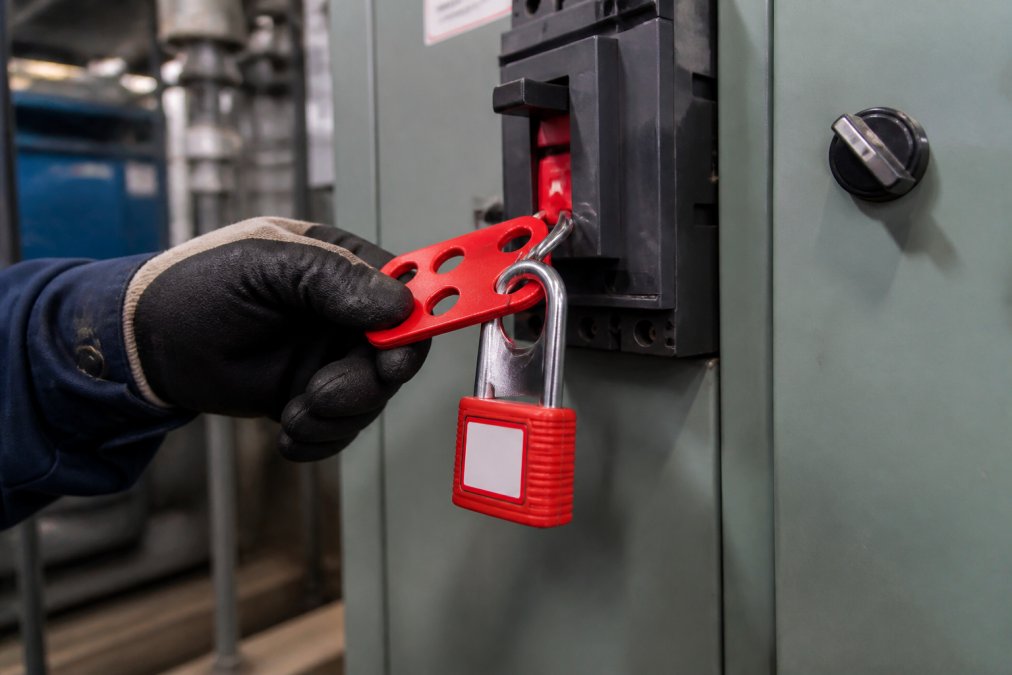
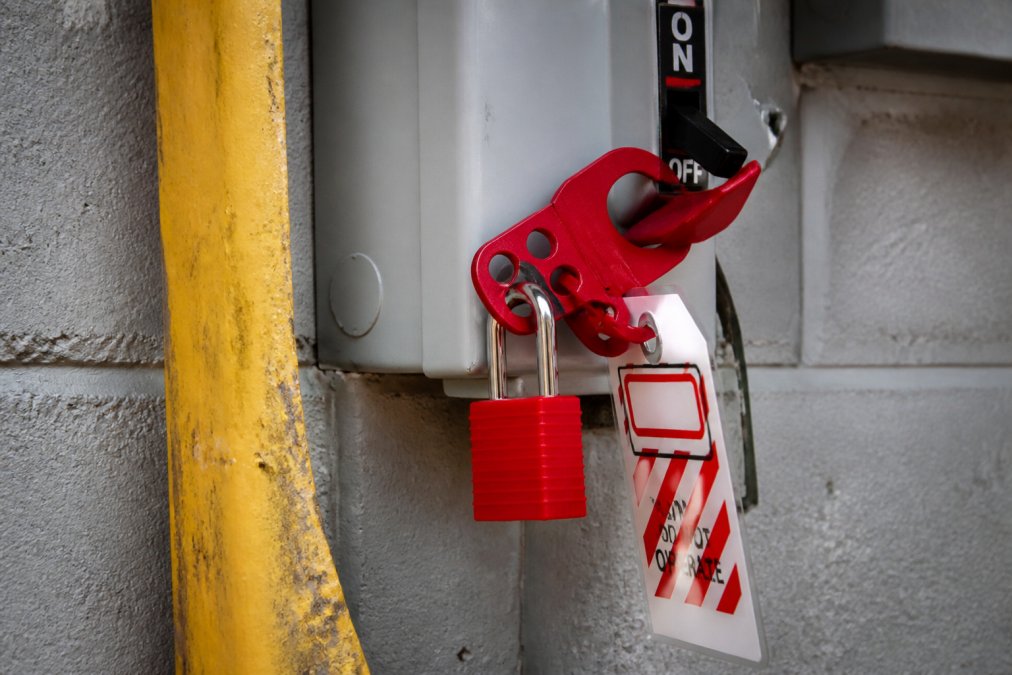
- Lockout hasps that let several workers lock the same switch, each with their own padlock.
- Plug locks that cover electrical plugs so they can't be inserted.
- Valve locks that hold a valve handle in the closed position.
- Cable locks for hard-to-reach switches.
- Tags that name the worker and the reason for the lockout.
Common Pitfalls in Lockout Procedures
Most lockout failures trace back to a handful of mistakes. Here are the ones we see most, with the mechanism behind each and the control that fixes it.
1. Skipping the written procedure
What happens: A worker who has done the job a hundred times shuts down the machine from memory, usually right, until the machine was rewired, a new energy source was added, or a valve was relocated.
2. Removing someone else's lock
What happens: A lock is left on after a shift ends. The next shift needs the machine running. Someone cuts the lock.
3. Forgetting stored energy
What happens: The disconnect is locked, the indicator light is off, and the worker reaches in. A capacitor, raised load, compressed spring, or pressurized line releases.
4. Using a tag when a lock was possible
What happens: A worker cannot find the padlock, so they hang a tag and start work.
5. Not training new workers before they touch equipment
What happens: A new hire is paired with an experienced worker and learns the shortcut, not the procedure.
6. Leaving locks on after the job ends
What happens: A lock is forgotten at the end of a shift. The next shift cannot start the machine.
7. No periodic audit
What happens: The program looks fine on paper for years. Then an incident reveals that half the procedures are outdated and two workers never received retraining.
8. Treating lockout as a one-person job
What happens: A crew of four works on a machine under one lock. The lock owner leaves for lunch and takes the key.
9. Ignoring the human factors
What happens: A worker is pressured to finish a job quickly, so they skip the verification step.
Emergency Locksmith Services When You're Locked Out
Not every lockout happens on a factory floor. Sometimes you're standing outside your condo at 2 a.m. with no key. That's where emergency locksmith services come in.
A good locksmith can handle:
- Home and condo lockouts
- Car lockouts and broken keys
- Rekeying after a move or a lost key
- Safe opening and repair
- Commercial lock and access control work
What Lockout Service Cost Depends On
There's no single price for a lockout. Several things change the number:
- Time of day. Late-night and holiday calls usually cost more.
- Type of lock. A basic deadbolt is quick. A high-security or smart lock takes longer.
- Location. Distance affects the trip charge.
- Vehicle type. Imported car keys often cost more than domestic ones.
- Whether a key needs cutting or programming.
- Whether the lock needs replacing rather than just opening.
Lockout Prevention Tips for Homes and Businesses
The best lockout is the one that never happens. A few simple habits go a long way.
For homeowners:
- Keep a spare key with a trusted neighbor, not under the mat.
- Rekey your locks when you move in.
- Upgrade to a smart lock with a backup key.
- Label your spare keys clearly.
For businesses:
- Set up a master key system so managers always have access.
- Install access control for high-traffic doors.
- Keep a lockout log for any equipment.
- Schedule regular lock and hardware checks.
A little planning now saves a late-night call later.
Frequently Asked Questions
What does lockout mean in the workplace?
Lockout is a safety procedure that stops machines from releasing hazardous energy while someone services or maintains them. Workers apply padlocks and hasps to energy isolation points so equipment cannot restart until every lock is removed. OSHA's standard for the control of hazardous energy, 29 CFR 1910.147, requires employers to establish a written program covering machinery shutdown, re-energization, and authorized personnel training. The goal is simple: no work stoppage turns into an injury.
How much does lockout service cost for a home or car?
Lockout service cost depends on the lock type, time of day, and travel distance, so no single figure applies. Emergency calls at night or on weekends typically run higher than daytime service. Before you approve work, ask for the total price, confirm the technician is licensed, bonded, and insured, and request a written quote. Reputable providers explain charges upfront rather than quoting one number and billing another.
What lockout prevention tips reduce emergency calls?
Keep a spare key with a trusted neighbor or a secure lockbox, and test every lock after moving in. For cars, keep a spare fob or key in a safe place away from the vehicle. Businesses should rekey after tenant turnover and track who holds master keys. These lockout prevention tips cost little and prevent most after-hours calls. If a lock sticks or a key jams, fix it before it fails completely.
Should I call a locksmith or try to pick the lock myself?
Call a locksmith. Picking a lock without training often damages the cylinder, and a broken lock costs more to replace than a standard lockout service. On cars, slim jims and improvised tools can trigger airbag or wiring damage. Licensed technicians carry the right tools and can open most residential and automotive locks without harm. If you are locked out, verify the provider's license and insurance before letting anyone work on your property.
Getting locked out is stressful, whether it's a machine at work or your own front door. SOUTHMIAMILOCKSMTIH.COM handles both sides of the problem with licensed, bonded, and insured technicians who've been at it for over 30 years. We offer prompt emergency locksmith services, expertise in domestic and imported car keys, and specialized safe repair. Get started with SOUTHMIAMILOCKSMTIH.COM and get back inside fast.