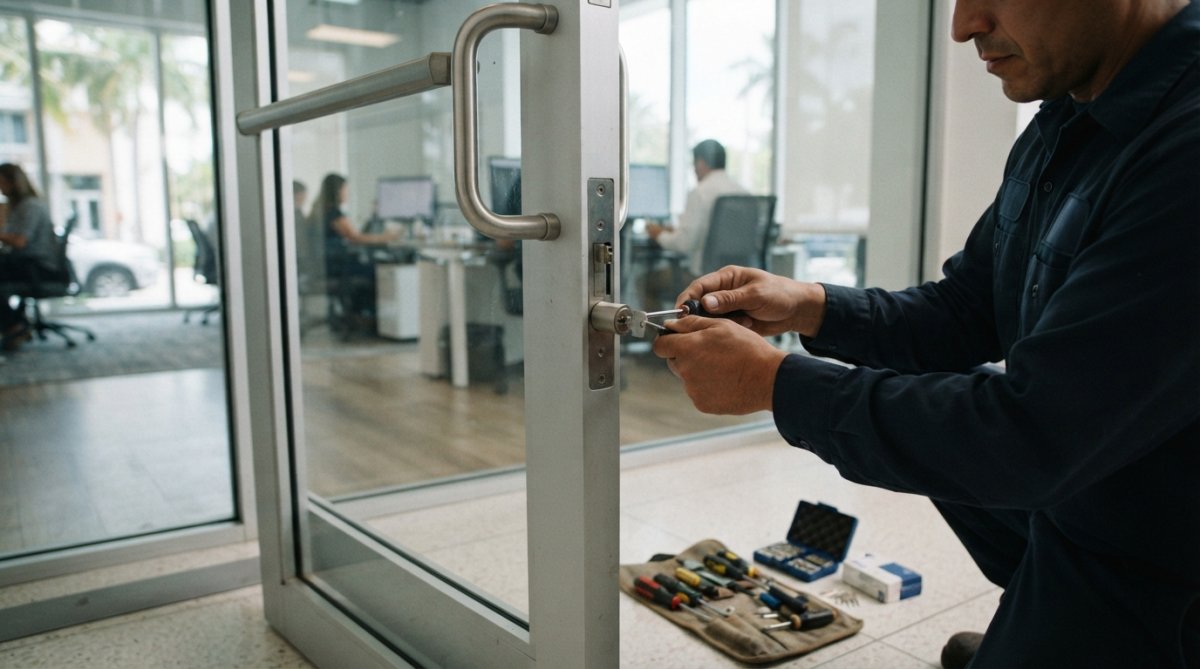
 ultimate-guide
Mul-T-Lock Installation for Businesses: 2026 Guide
Table of Contents
- Why Businesses Choose Mul-T-Lock Over Standard Locks
- The Commercial Locksmith Security Assessment Process
- Mul-T-Lock Master Key System Benefits for Facility Managers
- Mul-T-Lock Installation Steps for Commercial Properties
- Commercial High-Security Lock Installation Cost Factors
- Maintenance Schedules for High-Traffic Doors
- Choosing a Certified Mul-T-Lock Installer
- Final Considerations for Your Security Upgrade
- Frequently Asked Questions
Last Updated: September 7, 2026
Mul-T-Lock installation for businesses is a significant security upgrade that replaces standard locking cylinders with high-security, drill-resistant and pick-resistant mechanisms. This guide from SOUTHMIAMILOCKSMTIH.COM breaks down the entire process, from the initial security assessment to maintenance schedules, so you can make an informed decision about protecting your entry points.
A high-security locking system is defined by its resistance to forced entry, picking, and unauthorized key duplication. Mul-T-Lock cylinders use restricted keyways and telescoping pins that require specialized tools and training to install correctly. Below, we walk through the specific steps and considerations that determine whether your security upgrade is effective or merely cosmetic.
Why Businesses Choose Mul-T-Lock Over Standard Locks
Standard commercial locksets are vulnerable to bumping, drilling, and picking, which can be executed in under a minute (baltimorecountymd.gov). Mul-T-Lock cylinders address these vulnerabilities through hardened steel pins, telescoping pin technology, and drill-resistant plates. For a business, the decision comes down to liability and asset protection.
The key differentiator is key control. With a standard lock, anyone with access to the key can have duplicates made at any hardware store. Mul-T-Lock operates on a restricted keyway system, meaning blank keys are only available to authorized dealers, preventing unauthorized duplication and giving facility managers a clear audit trail. Many insurance providers recognize this as a proactive measure that reduces the risk of internal theft and after-hours break-ins.
The Commercial Locksmith Security Assessment Process
A professional commercial locksmith security assessment is the first step in any Mul-T-Lock installation for businesses, evaluating every entry point. A certified technician inspects existing doors and frames for alignment issues, wear, and fire code compliance, determining whether a simple cylinder swap is possible or a full retrofit is required.
The locksmith also reviews your key management practices, asking who has keys and whether a master key system is in place. This shapes the recommendation: a single high-security cylinder for a small office, or a complex master key system for a multi-tenant building. The assessment results in a written proposal outlining hardware, labor, and timeline.
Mul-T-Lock Master Key System Benefits for Facility Managers
Mul-T-Lock master key system benefits extend beyond simple access control, offering a hierarchical structure that reduces the number of physical keys in circulation. A facility manager can use a single master key to operate multiple locks, while individual employees are restricted to their specific areas, which is essential for zones like server rooms or supply closets.
A master key system simplifies operations and enhances security during staff turnover, as you only need to manage the specific key a departing employee held. However, this convenience introduces complexity, so professional installation is critical. A poorly designed system can create vulnerabilities, making a certified technician who understands shear lines and pin stacking necessary.
Mul-T-Lock Installation Steps for Commercial Properties
Facility managers with an in-house maintenance team need to understand the physical process to evaluate bids and verify work. This section provides a technical walkthrough of a standard Mul-T-Lock retrofit for the person coordinating the project.
Pre-Installation: Door and Frame Preparation
Before any cylinder is removed, the door and frame must be inspected for alignment and structural soundness. A Mul-T-Lock cylinder is a precision instrument; installing it into a warped door or misaligned strike plate causes premature wear and binding. Use a level to check the door for plumb and verify the gap is even, as a sagging door will prevent the bolt from seating cleanly.
Check the existing hardware for the ANSI/BHMA grade. Commercial doors typically use Grade 1 or Grade 2 locksets. Mul-T-Lock cylinders fit standard mortise and rim cylinders, but the condition of surrounding hardware matters. If the existing lockset is a low-cost Grade 2 unit with visible wear, a full lockset replacement is the correct move, not a retrofit.
Step 1: Cylinder and Keyway Selection
Selecting the correct cylinder and keyway affects security and future expansion. The keyway is the specific shape of the keyhole, and Mul-T-Lock offers several patented restricted keyways only available through authorized dealers. Your locksmith will help you choose based on your risk profile and integration with an existing master key system.
The cylinder type also matters, with choices between standard profile cylinders for mortise locks and rim cylinders for other hardware. The locksmith measures your door and lockset to ensure a precise fit, preventing gaps that could compromise the locking bolt. This step may require an installation jig for precise drilling.
Step 2: Professional Installation and Retrofit
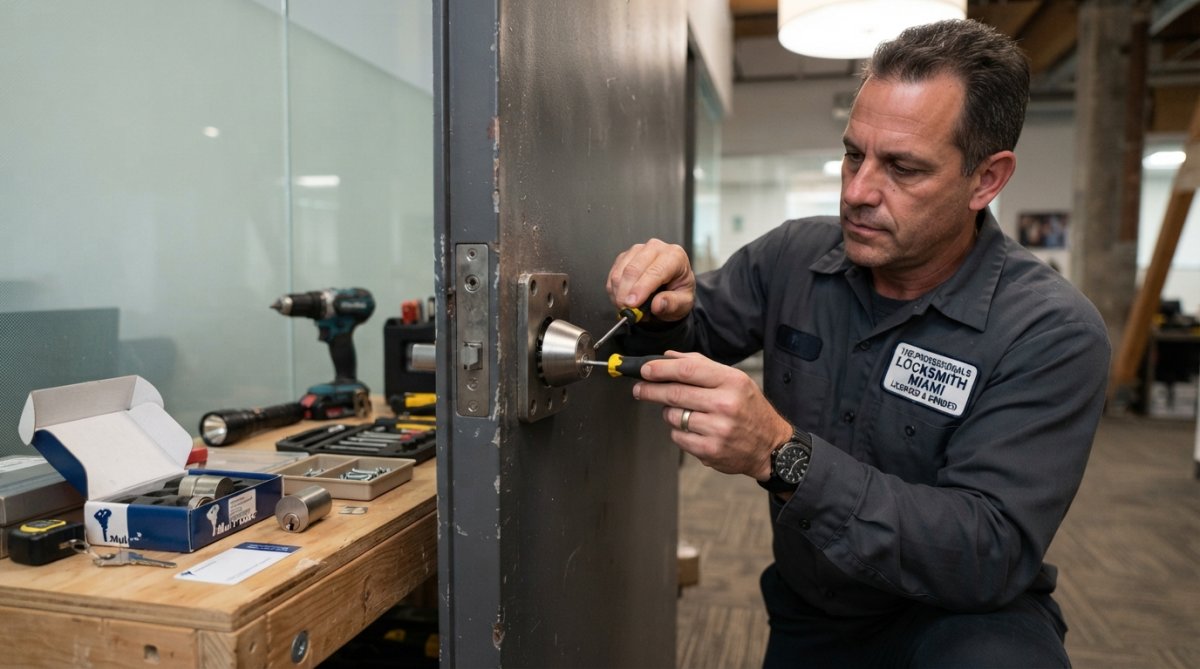
Retrofitting a Mul-T-Lock cylinder is delicate work. The technician removes the existing cylinder and inspects the mechanism for wear. If the door has a standard mortise lock, the new cylinder should slide in with minimal modification, but if dimensions differ, the locksmith may need a jig to bore new holes or adjust the faceplate.
During installation, the technician verifies the locking bolt engages smoothly with the strike plate and that there is no binding. The cylinder is secured with hardened steel screws and tested multiple times with the actual key. Forcing a cylinder into a misaligned door causes premature wear, so professional installation ensures correct function under daily stress.
Step 3: Key Control and Handover
The final step involves programming the key system and handing over control. For a master key system, the locksmith cuts keys on restricted keyway blanks and verifies each key operates the correct cylinders. They also provide a key registration card, which is essential for ordering future keys from an authorized dealer.
The handover includes a demonstration of lock operation and a maintenance briefing. The locksmith documents key codes and cylinder locations in a secure record for your facility files. This documentation is vital for future repair or expansion, allowing a technician to cut new keys or add cylinders without removing the locks.
Commercial High-Security Lock Installation Cost Factors
Commercial high-security lock installation cost is rarely a flat rate per lock. Primary factors include the number of doors, the cylinder model, the condition of existing hardware, and whether you require a master key system. Retrofitting a single cylinder into an existing compatible lock is the most economical option, while replacing entire locksets increases labor and material costs.
Restricted keyway blanks are more expensive than standard keys because they require a special card and authorization to cut. Emergency service calls also carry a premium. Businesses should request a detailed quote after a security assessment for an accurate picture. The investment is often offset by reduced insurance premiums and prevention of costly break-ins.
Maintenance Schedules for High-Traffic Doors
High-traffic commercial doors require a maintenance schedule to ensure the Mul-T-Lock cylinder performs reliably. A common recommendation is to have a certified technician lubricate and inspect cylinders every six to twelve months, depending on usage (fema.gov). This involves cleaning the keyway, applying a dry PTFE lubricant, and checking bolt alignment with the strike plate.
Neglecting maintenance leads to keys sticking, difficulty turning, or the mechanism seizing entirely, as dirt accelerates pin wear. Facility managers should also monitor for tampering signs, such as scratches around the keyway or a loose cylinder. Regular maintenance extends hardware life and ensures the upgrade does not become a liability.
The Real Cost of Skipping Maintenance
A commercial door can cycle 100,000 times per year, introducing microscopic dust and grit into the keyway. Over time, this abrasive material wears down the precision pins inside a Mul-T-Lock cylinder, which are engineered to tolerances measured in thousandths of an inch. When those pins wear, the lock becomes easier to pick and more prone to jamming.
The real financial impact is the emergency service call, lost productivity, and the potential security gap if the lock fails during off-hours. A scheduled maintenance visit costs a fraction of an emergency call-out and prevents the most common failure: a lock that stops turning on a Friday afternoon.
A Practical Maintenance Schedule for Facility Managers
Use a tiered schedule based on door traffic and environmental exposure.
Quarterly Inspection (High-Traffic Entrances and Exterior Doors):
- Clean the keyway with a compressed air duster to remove loose debris.
- Apply a dry PTFE lubricant (never use oil-based products like WD-40, which attract dust and gum up the pins).
- Check the cylinder for vertical or horizontal play. Any movement indicates loose set screws that need tightening.
- Verify that the locking bolt fully extends and retracts without binding.
- Inspect the strike plate for wear marks that indicate misalignment.
Semi-Annual Inspection (Interior Office Doors and Storage Areas):
- Repeat the cleaning and lubrication steps.
- Test all keys in the system, including the master key, to identify any worn or bent keys that could damage the cylinder.
- Confirm that the restricted keyway blanks are still in good condition and that no unauthorized copies have been made.
Annual Professional Service (All Commercial Doors):
- Have a certified locksmith disassemble the cylinder for a full internal inspection.
- Replace any worn pins or springs.
- Re-key any cylinders where key control has been compromised.
- Update your key system documentation.
Signs of Tampering That Require Immediate Attention
Maintenance is also about detecting attacks. Mul-T-Lock cylinders are drill-resistant and pick-resistant, but not indestructible. Train staff to report the following signs immediately:
- Scratches or gouges around the keyway: This indicates an attempted picking or bumping attack.
- A loose or wobbly cylinder: An attacker may have tried to torque the cylinder to break the housing.
- A key that suddenly does not work: This can indicate that someone inserted a foreign object or that the pins have been manipulated.
- Visible damage to the faceplate or deadbolt: This suggests a forced entry attempt.
If any of these signs appear, contact a certified technician immediately to inspect the lock and, if necessary, replace the cylinder. The cost of a single replacement is far lower than the cost of a successful break-in.
The Bottom Line on Maintenance
A Mul-T-Lock system is an investment that requires ongoing attention. The difference between a lock that lasts 15 years and one that fails after 5 years is almost always the quality of the maintenance schedule. Facility managers who implement a tiered inspection plan and document every service visit will extend hardware life, maintain key control integrity, and avoid costly emergency lock failures.
Choosing a Certified Mul-T-Lock Installer
Choosing the right installer is as important as choosing the lock itself, as a high-security cylinder is only as strong as its installation. A certified Mul-T-Lock installer has undergone specific training and has access to restricted key blanks and specialized tools. When vetting a locksmith, ask for proof of certification and verify they are licensed, bonded, and insured.
A reputable commercial locksmith will not recommend a system without first conducting a security assessment. They should explain the differences between keyways and why a master key system may or may not be appropriate. Be wary of providers who offer "generic" high-security cylinders or cannot provide a registration card. At SOUTHMIAMILOCKSMTIH.COM, our certified technicians are trained in Mul-T-Lock and Medeco high-security systems, offering expertise for complex commercial installations.
Final Considerations for Your Security Upgrade
Upgrading to a Mul-T-Lock system requires balancing immediate security needs with long-term facility management. Ensure the chosen system aligns with your access control goals and that you have a clear policy for key distribution and recovery. Consider how it will integrate with future electronic access control upgrades, as mechanical high-security locks often serve as the backbone for broader strategies.
The security upgrade is an ongoing process involving maintenance, key management, and periodic re-evaluation. Working with a single, trusted provider for installation, maintenance, and emergency repair ensures continuity and simplifies key system management. A professional team will document your system thoroughly, allowing for seamless expansion.
Upgrading your commercial property's entry points demands a partner who understands high-security locking systems and facility security. SOUTHMIAMILOCKSMTIH.COM brings over 30 years of experience to commercial projects, with certified technicians in Mul-T-Lock and Medeco high-security locks who manage everything from initial assessment to ongoing maintenance. Our licensed, bonded, and insured team uses current technology to ensure precise installation, and we support property managers with master key systems and access control maintenance. Get started with SOUTHMIAMILOCKSMTIH.COM and secure your business with a locking system built to resist forced entry and unauthorized duplication.
Frequently Asked Questions
How much does it cost to install a commercial lock?
The commercial high-security lock installation cost varies based on the number of doors, the specific cylinder model, and whether a master key system is required. A basic retrofit may cost less than a full system installation with key management. For an accurate quote, a certified technician must assess your entry points. Contact us for a detailed estimate tailored to your property.
Can Mul-T-Lock cylinders be installed on my existing commercial doors?
Yes, in most cases. Mul-T-Lock cylinders are designed to retrofit into standard commercial hardware, including mortise locksets and rim cylinders. A professional locksmith will verify that your existing door prep and locking mechanism are compatible. This approach lets you upgrade to a high-security cylinder without replacing the entire door or lockset, saving on hardware costs.
What makes Mul-T-Lock systems superior for commercial security?
Mul-T-Lock cylinders feature telescoping pins and a patented keyway, providing high drill resistance and pick resistance compared to standard locks. The restricted key control prevents unauthorized key duplication, a critical advantage for businesses. This level of security, combined with master key system benefits, gives facility managers control over access without needing to replace locks frequently.
How often should commercial high-security locks be serviced or rekeyed?
For high-traffic commercial doors, schedule professional maintenance at least once a year. Locks in harsh environments or with heavy daily use may need more frequent attention. Rekeying should happen whenever an employee with a key leaves on bad terms or a key is lost. Regular servicing keeps the locking mechanism lubricated and prevents premature wear.
Can Mul-T-Lock systems be integrated with electronic access control?
Yes. Mul-T-Lock offers electronic cylinders and escutcheons that can connect with building management systems. This allows you to combine the physical security of a high-security cylinder with the convenience of key cards or fobs. You can also track entry logs and manage user access remotely, creating a comprehensive security solution for your commercial property.